

Key Steps in the Risk Management Process
🔍 Learn how to identify, analyse, treat, monitor, and communicate risks effectively to safeguard your Kenyan organisation’s operations. Practical steps and local insights.
Edited By
Ethan Clark
Risk management is no longer a luxury; it’s a necessity for businesses facing an unpredictable world. Whether you are a trader on the Nairobi Securities Exchange, an investor managing a portfolio, or a broker handling clients’ assets, knowing how to handle risks can save you from heavy losses.
At its core, risk management helps identify potential threats before they hurt your business goals. It also guides you on assessing how serious those risks are and deciding on the best steps to reduce their impact. For example, a Kenyan exporter might worry about fluctuating foreign exchange rates affecting their profits. Proper risk management helps them monitor currency trends and set hedges to protect their earnings.

Understanding these steps is key. While the concept sounds straightforward, many fail because they jump straight to solutions without properly studying the threat or underestimating its likelihood. It’s like trying to fix a leaky tap without knowing where the water is coming from.
By following clear procedures, you can prepare better. This preparation includes creating backup plans, allocating resources smartly, and learning from past errors to avoid repeating them. As a result, your business becomes resilient, able to handle sudden shocks like a change in government policy or a disruption in supply chains.
Sound risk management supports better decision-making. When the facts are clear and steps organised, you are not left guessing or reacting last minute.
In this article, we break down these key steps of risk management in a practical way. You'll see how each phase plays a unique role in safeguarding your assets and achieving steady growth. Stay with us to learn how to keep your business secure amidst change and uncertainty.
Knowing what risk means in your business sets the foundation for managing it well. Risk involves any uncertainty that could affect your business goals, whether through losses, missed opportunities, or damage to reputation. For traders and investors, identifying these uncertainties clearly can prevent costly surprises and guide better decision-making.
Risk takes many forms, including market fluctuations, credit defaults, operational failures, or regulatory changes. For instance, an investor in NSE stocks faces market risk where prices can swing unexpectedly. Meanwhile, a small business owner might deal with operational risks like supply delays or employee strikes. Understanding these categories helps in tailoring the right controls.
When unmanaged, risks can lead to severe consequences such as financial loss, legal penalties, or loss of client trust. Consider a firm that ignored cybersecurity risks and got hit by a data breach: it suffered loss of client data and costly reputational damage. In short, unmanaged risks undermine a business’s survival and growth.
Having a clear process protects your assets and resources by identifying threats early. For example, using credit checks and setting payment terms can reduce defaults on receivables, safeguarding your cash flow. Similarly, managing currency risk with hedging tools protects foreign investments against exchange rate shifts.
Besides protection, structured risk management improves decision-making by providing a clearer picture of potential downsides. This helps investors and analysts weigh options more confidently. It also ensures business continuity by preparing backup plans for events like supply chain disruptions or political unrest.
Effective risk management is not about avoiding risk entirely but managing it smartly to support your business goals and resilience.
In short, defining and understanding risk equips businesses to act rather than react, turning uncertainty into manageable challenges. This foundation is vital before moving to identifying, assessing, and controlling risks in a structured way.
Identifying risks that could impact your business is a vital step in the risk management process. Without recognising potential threats early, mitigating their effects becomes a challenge. This stage helps organisations spot hazards before they evolve into serious problems, allowing smarter allocation of resources and smoother decision-making.
Risks come from two main sources: inside and outside a business. Internal risks originate within the organisation, such as staff turnover, faulty equipment, or process failures. For example, a jua kali workshop might face operational risks if a key artisan suddenly quits, disrupting production.
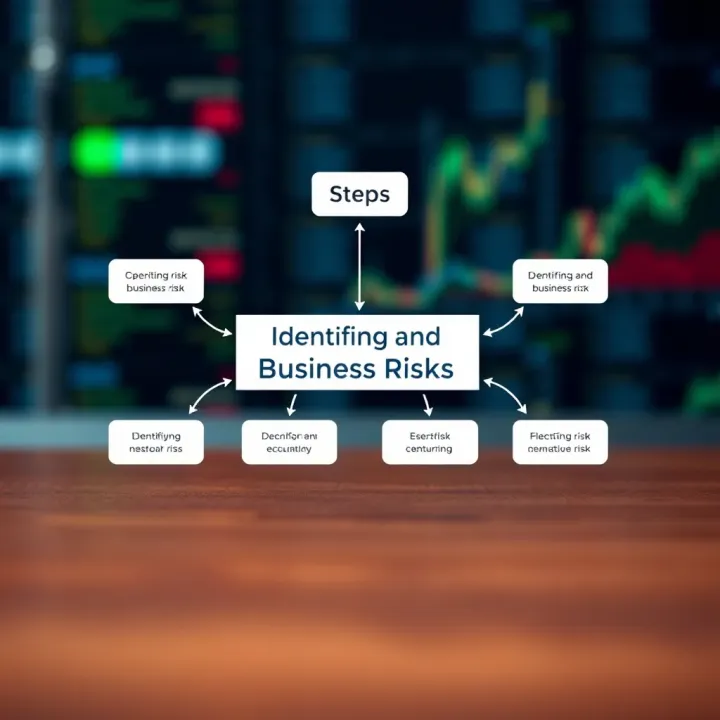
External risks arise from factors outside the business, including economic shifts, regulatory changes, or supplier failures. A Nairobi-based exporter could face external risks if trade regulations within the East African Community change unexpectedly, affecting shipment costs or customs procedures. Understanding whether risks are internal or external guides where to focus attention and control.
Breaking down risks into categories makes them easier to tackle. Operational risks relate to day-to-day activities—like a delivery delay due to matatu strikes disrupting supply chains. Financial risks concern money matters, such as currency fluctuations or delayed customer payments impacting cash flow.
Legal risks involve non-compliance with laws, licences, or contracts. For instance, a business that neglects KRA's tax requirements risks penalties. Strategic risks deal with the long-term direction of the company, such as entering a saturated market without adequate research. Getting familiar with these categories ensures risk identification covers all relevant angles.
Brainstorming with a diverse team helps uncover risks that might not be obvious individually. Bringing together people from sales, finance, and operations for an open discussion reveals different perspectives. Using SWOT analysis (Strengths, Weaknesses, Opportunities, Threats) adds structure to this process, helping businesses balance internal capabilities against external challenges.
For example, a trader might find that currency instability (a threat) coincides with strong supplier relationships (a strength), informing risk handling strategies.
Checklists serve as useful prompts, especially for routine risk identification. These can include key areas such as compliance checks, equipment condition, or supplier reliability. This method reduces the chance of missing common risks that can be overlooked in informal reviews.
Expert consultations bring specialised knowledge on complex risks. For example, a legal adviser can highlight recent laws affecting business contracts, while a financial analyst might point out market trends influencing investment choices. Engaging experts fits well when risks are technical or evolve rapidly, ensuring updated and precise insights.
Effective risk identification is the foundation for protecting your business. Missing this step is like sailing without a compass—unseen threats can cause costly setbacks or even force businesses out of the market.
By using these varied approaches, businesses build a thorough understanding of potential risks, positioning themselves to respond effectively and safeguard their goals.
Assessing and prioritising risks is a key step in managing threats that could derail your business goals. It allows you to understand which risks need urgent attention and which ones can be monitored over time. Without careful assessment, resources might be wasted on less important risks, leaving significant threats unchecked. In trading or investing, for example, understanding the likelihood and potential impact of market fluctuations helps focus efforts on the most pressing concerns.
Risk assessment involves measuring two main factors: the likelihood that a risk will occur and the impact it would have if it does. These can be evaluated using qualitative or quantitative methods. Qualitative assessment often involves expert judgment, categorising risks as high, medium, or low based on experience and observations. For instance, a stockbroker may consider political unrest in a country as a high-risk factor qualitatively, even without precise numbers.
On the other hand, quantitative methods use data and numerical analysis to estimate probabilities and losses. An investor might calculate the value-at-risk (VaR) to quantify how much portfolio value could be lost under normal market conditions. Combining qualitative insight with quantitative data balances intuition with hard facts.
Using a risk matrix helps map these assessments visually. This tool plots the likelihood on one axis and impact on the other, creating clear zones that prioritise risk. For example, a risk that is unlikely but has a severe impact, like a sudden regulatory change, will appear in a different area than a frequent but low-impact risk such as minor operational delays. This visual aid simplifies communication of complex information to decision-makers.
Determining risk tolerance levels means setting the threshold for how much risk your business can take. This varies depending on the organisation’s capacity and strategy. A young startup might have low tolerance for financial risk, preferring to avoid debt, while an established farmer could accept higher weather-related risks knowing they have insurance cover. Clearly defining tolerance helps in deciding which risks to avoid and which to accept.
Prioritisation frameworks organise risks systematically based on their assessment scores and tolerance. Using these frameworks, like risk scoring or ranking tables, enables businesses to allocate resources efficiently. A Nairobi-based investment firm could use such a framework to decide which sectors to watch closely or invest in, focusing more on high-priority risks that threaten returns. This approach ensures the firm does not spread its efforts too thin across less critical issues.
Effective risk assessment and prioritisation free up resources for the risks that truly matter — helping businesses weather uncertainties with focus and confidence.
In summary, measuring likelihood and impact, supported by risk matrices, combined with clear risk tolerance and prioritisation frameworks, equips businesses, traders and investors with a solid base for risk management decisions. This step moves beyond listing risks to smartly directing effort where it will make a real difference.
Developing effective strategies to manage and control risks is a vital part of protecting your investments and business operations. Once risks have been identified and assessed, the next step is deciding exactly how to handle them in a way that reduces potential losses without stifling growth opportunities. This stage moves from understanding threats to taking practical action, ensuring resources are used wisely to safeguard your goals.
When managing risk, there are generally four main approaches: avoidance, reduction, sharing, and acceptance. Avoidance means steering clear of activities or investments that carry too much risk. For example, a trader might avoid high-volatility stocks during uncertain markets to minimise potential losses. Reduction focuses on lowering either the likelihood or impact of a risk, such as diversifying portfolios to spread exposure or using stop-loss orders to limit downside on equities.
Sharing involves transferring risk to another party, commonly through insurance or outsourcing certain functions. A business might buy insurance to cover losses from fire or theft, effectively sharing that financial risk with the insurer. Acceptance happens when the cost of mitigating a risk outweighs the possible loss, so the business consciously chooses to bear it. For instance, an investor might accept minor currency fluctuations knowing the cost to hedge those risks is too high.
Selecting the right approach for each risk depends on its nature and the organisation’s capacity. Not every risk suits the same treatment; high-impact risks might require avoidance or sharing, while low-level risks could be accepted or reduced through simple controls. A trader dealing with foreign exchange exposure may prefer hedging (sharing risk) rather than complete avoidance, allowing business opportunities while managing threats. The key is aligning strategies with your risk appetite and operational reality to avoid overcommitting resources for negligible risks.
Once strategies are chosen, setting clear targets and responsibilities is essential. This means defining what success looks like—for example, reducing risk exposure by 30% within six months—and assigning individuals or teams to lead tasks. In a brokerage firm, this might involve compliance officers overseeing regulatory risks while portfolio managers handle market risks. Clear accountability fosters timely action and avoids risks falling through the cracks.
Resource allocation and timelines ensure your risk management plan isn’t just theoretical. Assign the necessary budget, technology, and personnel while establishing deadlines for each control or mitigation measure. For example, a business aiming to implement cybersecurity upgrades should budget for software, training, and hire or consult experts within a set timeframe. Without proper resources or realistic timing, even the best-laid plans struggle to deliver the intended protection.
Effective risk management moves beyond spotting dangers—it means making deliberate choices about handling risks, backed by clear goals and practical support. This approach helps safeguard assets and keeps business activities on track regardless of uncertainties.
Crafting and following through on risk management plans helps traders, investors, analysts, and brokers manage challenges proactively. It bridges strategy and action, ensuring risks are not just identified but controlled in ways that maintain confidence and support growth.
Monitoring, reviewing, and reporting risks continuously forms the backbone of an effective risk management process. This ongoing effort helps businesses stay alert to changes in their risk environment and measure whether their risk controls are performing as expected. Without regular oversight, even well-crafted risk strategies may become outdated or ineffective, exposing the organisation to unforeseen losses.
Regular reviews and audits ensure that the risk management plan remains relevant and that controls are adhered to properly. For instance, a trader monitoring market volatility needs periodic audits to confirm that stop-loss limits and hedging strategies are still suitable under current market conditions. These reviews also help detect any gaps or lapses caused by human error or process failures. Scheduling such checks quarterly or biannually can prevent small issues from escalating into major problems.
Using key risk indicators (KRIs) allows organisations to track specific metrics that signal risk levels. An investor might watch indicators like credit default swaps or liquidity ratios to gauge financial health. KRIs act like early warning signs, showing when risk exposure is rising beyond acceptable limits. Regularly updating KRIs helps decision-makers act promptly before risks turn critical, avoiding costly surprises.
Reporting to management and stakeholders is vital for maintaining transparency and informed decision-making. Through clear, concise reports, traders and analysts provide updates on risk exposures, emerging threats, and the effectiveness of mitigation strategies. This communication ensures that leadership can allocate resources wisely, adjust investment portfolios, or change operational tactics based on current information. Timely risk reporting supports confidence among stakeholders who rely on sound governance.
Feedback loops for improvement create a channel for learning and adapting the risk management process continuously. When risk officers share findings and receive input from different teams, the organisation can refine its approaches, address weaknesses, and build resilience. For example, after a market shock, a broker might give feedback on how well risk protocols held up, leading to improved procedures or training. Such collaborative refinement keeps risk management practical and responsive over time.
Continuous monitoring and open communication are not just bureaucratic tasks—they help organisations avoid blind spots and respond swiftly to the shifting realities of risk.
By integrating these practices, businesses can maintain a proactive stance on risk, ensuring protection and strategic advantage in an uncertain environment.
🔍 Learn how to identify, analyse, treat, monitor, and communicate risks effectively to safeguard your Kenyan organisation’s operations. Practical steps and local insights.
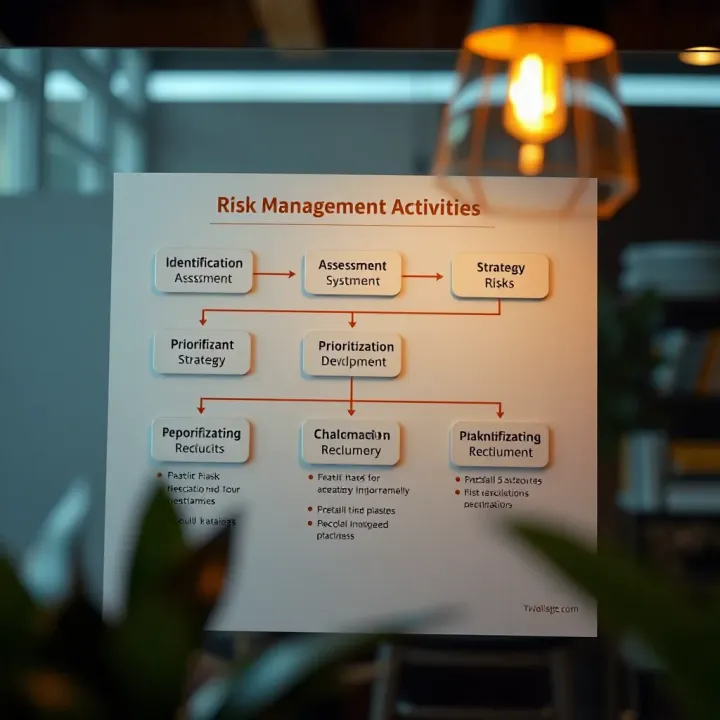
🌍 Learn how to spot, assess, and rank risks then create plans that protect your business or project from losses. Stay ready with practical risk steps fit for Kenya.

📊 Learn key steps of risk management to spot, assess, and manage business risks effectively in Kenya. Build resilience, reduce losses, and protect your assets confidently.

Learn practical steps Kenyan businesses can use to identify, assess, and manage risks effectively 🔍. Stay secure with constant monitoring and adapt to changes swiftly.
Based on 8 reviews