

Key Steps to Effective Risk Management
📊 Learn key steps of risk management to spot, assess, and manage business risks effectively in Kenya. Build resilience, reduce losses, and protect your assets confidently.
Edited By
Charlotte Bennett
Risk management is not just a box-ticking exercise but a vital activity to keep businesses stable and profitable, especially in Kenya's vibrant economy. Every trade, investment, or business faces uncertainties that could either disrupt operations or harm financial standing. Therefore, understanding how to manage these uncertainties through a clear risk management process can make the difference between thriving and struggling.
The risk management process consists of a series of well-defined steps that guide organisations through identifying potential threats, assessing their impact, and deciding how best to handle them. These steps work together like a cycle, ensuring risks are continuously monitored and controlled as conditions change.

Here’s a brief overview of the main stages involved:
Identify Risks: This involves recognising all possible threats that could affect the business. For instance, a farmer in Kericho might identify weather changes and pest outbreaks as major risks.
Analyse Risks: After identification, assess the probability and potential impact of each risk. This helps in understanding which risks need immediate attention and which ones are less pressing.
Evaluate Risks: Compare the analysed risks against the organisation’s risk tolerance levels. This evaluation helps in prioritising risks to determine the order and extent of response.
Treat Risks: Develop and implement strategies to mitigate, transfer, accept, or avoid risks. For example, a Nairobi-based retailer might use insurance or diversify suppliers to manage supply chain risks.
Monitor and Review: Risks and their environments evolve, so it’s necessary to keep track of existing risks and look out for new ones. This step ensures that the risk management approach remains effective over time.
Communicate and Consult: Effective risk management depends on clear communication across all levels of the organisation, including external partners. It ensures everyone understands the risks and their roles in handling them.
A risk overlooked can quickly escalate into a crisis. Regularly engaging in this process helps Kenyan businesses shield themselves from unexpected shocks and maintain steady growth.
For traders and investors, mastering these steps enables informed decision-making and helps avoid costly surprises. Brokers and analysts also benefit by advising clients with more confidence, supported by a thorough grasp of risk dynamics. This article will break down each step further, adding practical insights tailored to Kenyan contexts and market realities.
Identifying risks within your organisation forms the backbone of effective risk management. Spotting these risks early helps businesses avoid costly surprises and plan better responses. For example, consider a Kenyan tea exporter who fails to spot supply chain disruptions early—this oversight could lead to missed orders and financial loss. Recognising risks upfront equips decision-makers like traders, investors, and analysts with crucial insights to protect assets and operations.
Risks come in many shapes and sizes. Financial risks, such as currency fluctuations affecting M-Pesa transactions, can impact cash flow. Operational risks may involve equipment breakdown or staff shortages, while market risks relate to changing demand or new competitors entering the scene. Strategic risks might arise from poor business decisions or regulatory changes like new tax laws from Kenya Revenue Authority (KRA). Understanding these distinctions helps focus efforts where they're needed most.
Gathering teams for brainstorming sessions creates an open space to identify potential risks from various angles. For instance, a Nairobi-based investment firm might hold workshops involving portfolio managers, analysts, and compliance officers to list risks tied to market volatility or political events. This collaborative approach encourages sharing diverse perspectives, unearthing hidden risks that might be missed individually.
Workshops also promote ownership and awareness across departments, ensuring that risk identification isn't left to a single team. Such involvement increases responsiveness when risks emerge.
Using checklists developed from past experiences enables businesses to run through common risks systematically. For traders dealing with agricultural commodities, reviewing past harvest season disruptions caused by long rains or pest outbreaks helps flag similar threats ahead.
Historical data provides concrete evidence on risk frequency and impact. An insurance broker in Kenya might analyse claims data to identify emerging trends, guiding premium adjustments and client advice. This method keeps risk recognition grounded in reality rather than guesswork.
A SWOT (Strengths, Weaknesses, Opportunities, Threats) analysis highlights internal and external risk factors. For example, a startup looking to expand in Mombasa may identify poor logistics as a weakness and local competition as a threat, while recognising opportunities in untapped markets.
Using SWOT lets organisations take a balanced view, not only focusing on negatives but also understanding how strengths can mitigate risks. Traders and investors often use this tool to assess company fundamentals before committing funds.
Stakeholders, including employees, suppliers, customers, and regulators, offer valuable insights into risks that leadership might overlook. A supplier may alert a manufacturer early to potential raw material shortages, while customers can signal shifts in preferences or service quality problems.
Engaging stakeholders through surveys, feedback sessions, or regular meetings strengthens risk detection capabilities. For example, involving frontline staff in identifying operational risks often uncovers practical issues affecting daily functions. This inclusive approach ensures risk management stays connected to the actual business environment and improves communication across teams.
Early and precise identification of risks allows Kenyan organisations to allocate resources wisely and stabilise operations, especially in dynamic sectors like agriculture, finance, and trade.
By combining multiple methods and involving stakeholders, organisations lay a strong foundation for the subsequent stages of the risk management process.
Assessing and analysing risks is the backbone of effective risk management. After spotting potential threats, you need to measure how likely each risk is to occur and its possible impact. This helps traders and investors focus resources on the threats that matter most, rather than spreading effort thinly across low-risk issues. For example, a stockbroker analysing currency fluctuations will prioritise those affecting the Kenyan shilling more heavily than less relevant foreign currencies.
Determining how probable a risk is and the extent of damage it could cause sets the stage for smart decision-making. Likelihood refers to the chance that an event will happen—such as a sudden change in Central Bank of Kenya (CBK) policy—while impact measures the effect on business goals or investment portfolios. Say you’re an investor with shares in an energy company; a drought affecting hydroelectric power might be unlikely but highly damaging, demanding attention regardless. Rating risks this way prevents surprises and helps allocate contingency funds effectively.

Risk analysis can be either qualitative or quantitative, each with distinct uses. Qualitative methods rely on descriptive assessments—like expert opinions or risk ranking scales—to understand risks quickly when numbers are hard to get. For example, an analyst might classify geopolitical risks in East Africa as "high" or "medium" without precise stats. Quantitative analysis, however, involves data and calculations such as probabilities, expected losses, or value-at-risk (VaR) to give measurable estimates. Stock valuation models or credit risk scores in Kenya’s banking sector often use quantitative approaches. Combining both gives a fuller picture.
A risk matrix is a straightforward tool that maps risks on a grid based on their likelihood and impact, usually in categories from low to high. This visual helps investors and traders prioritise at a glance what demands urgent focus. For instance, a Nairobi-based business may identify a flood risk as low likelihood but high impact, placing it in the matrix’s top-right corner to flag it for mitigation strategy. It simplifies communication across teams, enabling quicker consensus.
Scenario analysis involves creating detailed stories about possible future events and assessing how they might affect portfolios or operations. This technique lets managers prepare for various outcomes, such as a political election or a major regulatory change in Kenya’s financial sector. By running different scenarios—best case, worst case, and moderate—decision-makers get insights into potential vulnerabilities and response options. It’s especially useful for complex risks where many factors interact.
Statistical models use historical data and patterns to estimate future risk behaviours. For example, Monte Carlo simulations or regression analysis might forecast price volatility for NSE-listed shares or estimate credit default probabilities for loan portfolios. These models help quantify uncertainty and refine risk limits. However, accurate data is key, and models may struggle with sudden shocks like economic disruptions caused by unforeseen events. Hence, they best serve alongside other qualitative inputs.
Thoughtful assessment and thorough analysis ensure that risk management efforts target actual threats efficiently and prevent wasted time on unlikely or minor issues. For traders and investors in Kenya’s dynamic markets, this process is not just about avoiding losses but also about spotting opportunities amid uncertainties.
Not all risks demand equal attention, so it’s crucial to prioritise them to focus resources where they matter most. Prioritising risks helps organisations avoid spreading themselves too thin and ensures critical threats are addressed promptly. In the Kenyan context, this might mean focusing on risks linked to market fluctuations, regulatory changes, or operational weaknesses that directly impact cash flow or client retention. Effective decision-making hinges on how well risks are ranked based on their potential severity and urgency.
To rank risks properly, organisations must consider two main factors: the severity of the potential impact and how soon the risk might materialise. Severity assesses how badly a risk could harm the organisation — for instance, a sudden policy change by the Kenya Revenue Authority (KRA) could disrupt tax compliance and lead to heavy penalties. Urgency reflects the timeframe for action; some risks, like seasonal drought affecting supply chains, require prompt attention, while others might be longer-term concerns.
In practice, risk matrices are often used to plot risks according to these dimensions, helping teams visualise which risks need urgent, large-scale action and which can be managed gradually. For example, a small brokerage firm might prioritise cyber security breaches — which can cause big, immediate damage to client trust and operations — over less immediate risks such as changes in foreign exchange rates.
Prioritising risks involves clear criteria tailored to the organisation's context. Key considerations include:
Financial impact: Risks that could cause significant loss, like market crashes or defaulting clients, take priority.
Operational disruption: Risks threatening core activities, such as infrastructure failure or supply chain interruptions, should be managed first.
Regulatory compliance: With evolving Kenyan laws, non-compliance risks may lead to fines or licence revocations.
Reputational damage: Negative publicity or poor service can erode customer confidence rapidly.
Stakeholder concerns: Some risks might carry weight due to investor or partner sensitivities.
For example, an investment company might weigh regulatory compliance risk higher during election season due to unstable policies. This prioritisation leads to better resource use, ensuring limited funds or personnel concentrate on risks that could halt business or cause legal troubles.
Remember, a risk with lower likelihood but catastrophic impact might outrank more frequent but minor risks. Prioritising involves balancing these factors smartly.
Understanding these priorities guides effective decisions, ensuring Kenyan traders, investors, and analysts protect their interests without overcomplicating risk responses. Prioritising risks turns an overwhelming list into a clear action plan tailored to business realities and local conditions.
Developing strategies to manage risks is a critical phase in the risk management process. It translates the identification and assessment of risks into practical actions that protect an organisation's operations. In Kenya’s trading and investment environment, where markets can be volatile and regulatory changes frequent, having clear risk management strategies helps stakeholders avoid losses and seize opportunities confidently.
A thoughtful risk strategy defines how your business will approach the threats it faces, whether by avoiding, reducing, sharing, or accepting those risks. Without these strategies, risks remain unmanaged and can affect growth, reputation, and financial stability. For example, a trader dealing in agricultural commodities might adopt risk reduction by diversifying suppliers to avoid stockouts caused by weather disruptions.
Risk Avoidance
This approach involves changing plans or processes to steer clear of risks altogether. It’s useful when the potential damage is too high or unpredictable. For instance, a Kenyan investor might avoid putting funds into a volatile sector such as oil exploration due to the exposure and regulatory uncertainties. Avoidance isn’t always feasible but is often the safest option when risks could cripple the business.
Risk Reduction
Risk reduction focuses on lowering either the likelihood or impact of a risk. It allows organisations to continue operations while minimising threats. A good example is installing security systems in warehouses to reduce theft or adapting contractual terms to limit liability. Traders in Nairobi might use stop-loss orders as a risk reduction tool to limit potential financial losses during market downturns.
Risk Sharing
Here, the organisation distributes risk with other parties, commonly through insurance or partnerships. Kenyan SMEs often use insurance to share risks related to fire or theft. Similarly, joint ventures spread financial and operational risks among partners. Risk sharing doesn’t eliminate the danger but softens its effect, allowing better resource allocation and resilience.
Risk Acceptance
Sometimes, it’s practical to accept certain risks, especially those minor or unavoidable. Accepting risk means planning to handle consequences without special measures. For example, a small-scale business in a rural area might accept occasional power outages as part of operations costs. This approach saves resources for bigger risks but requires continuous monitoring.
Choosing the right response depends on the risk’s severity, organisation’s capacity, and cost-benefit considerations. A careful balance ensures resources are not wasted on negligible risks, nor are serious threats ignored. In practice, a Kenyan export company might combine risk reduction and sharing by using hedging for currency fluctuations and insurance for cargo damage. Selecting responses also requires ongoing review to adapt to changing market and operational dynamics.
Effective risk management strategies aren’t a one-off exercise; they need to evolve with your business environment and experiences.
Organisations should always consider multiple perspectives, including financial, operational, and reputational impacts when settling on risk responses. This approach helps build resilience and supports sustainable growth in Kenya’s dynamic markets.
Monitoring risk and evaluating controls form a key part of managing risks effectively. Without ongoing oversight, even the best strategies can become outdated or ineffective as business environments shift. This step ensures that risk levels are tracked continuously so that changes—whether arising from new threats or altered circumstances—do not catch an organisation off guard. Traders and investors who neglect risk monitoring may find themselves exposed to unexpected losses, while analysts and brokers rely on updated risk information to advise appropriately.
Risk levels are not static; they fluctuate with internal changes like operational shifts and external factors such as market volatility or regulatory updates. Track risk levels regularly to spot trends early—for instance, a rise in political tensions can increase country risk for investors. Monitoring can involve setting baseline risk measures and comparing ongoing performance to detect deviations. Tools like risk dashboards and frequent risk reports help maintain a clear picture. For example, a Nairobi-based fund manager might observe shifts in currency risk daily due to fluctuating forex rates influenced by East African Community trade dynamics.
Routine audits and inspections are practical ways to verify that risk controls are working as intended. This involves periodic checks—either internally or by external agents—to assess control processes and compliance. For instance, a bank’s compliance team might conduct quarterly audits on anti-money laundering controls to ensure they meet KRA and Central Bank of Kenya requirements. Such audits help spot gaps early, like lapses in record-keeping or ineffective staff training, giving management a chance to address problems before they escalate.
Audits also build confidence for stakeholders, showing that the organisation takes risk management seriously. Instead of guessing whether controls function well, audits provide concrete evidence, which supports better decision-making and regulatory compliance.
Key performance indicators (KPIs) linked to risk management provide quantifiable measures of control effectiveness. These could include metrics like the number of incidents reported, days lost to risk-related disruptions, or speed of response to identified risks. For example, an investment company might track how fast risk reports reach decision-makers after an alert triggers.
Using KPIs allows organisations to benchmark current performance against targets or past results. If a safety-related KPI shows an increase in workplace accidents, it signals the need to reassess risk controls immediately. These metrics make risk management more transparent and ensure continuous improvement, which is vital in the dynamic Kenyan business environment.
Effective risk monitoring and control evaluation help organisations stay ahead of threats and protect investments, making these steps indispensable for anyone involved in managing risks.
By keeping a steady eye on risk changes and regularly checking if controls hold up, organisations—especially those exposed to market and operational uncertainties—can minimise surprises and keep their operations steady.
Effective communication of risk information is essential for keeping all stakeholders informed and involved in the risk management process. It ensures that those responsible for decision-making, from traders to investors and analysts, clearly understand the nature and potential impact of risks. This clarity promotes timely and appropriate responses, reducing surprises and enabling smoother business operations.
Risk reporting should be tailored to suit the needs of various stakeholders, such as company executives, investors, brokers, and regulatory bodies. For example, investors are primarily interested in risks that affect financial performance and market reputation, while regulators focus on compliance-related risks. Presenting risk information in formats these groups understand—such as dashboards for board members or detailed reports for analysts—encourages better engagement.
A practical example is a Nairobi-based investment firm that creates monthly risk summary reports highlighting market volatility and portfolio exposures. These reports allow fund managers and clients alike to make informed decisions. Using simple visuals like risk heat maps or trend lines can help communicate complex data quickly.
Clear communication prevents misunderstandings that can lead to costly mistakes. When risk information is conveyed precisely, it ensures everyone shares the same understanding and can act accordingly. Timeliness also matters: relaying risk updates regularly or immediately after significant changes means decision-makers stay ahead of potential problems.
Take, for instance, an energy company noticing supply chain disruptions due to weather. Swift communication to supply managers, investors, and partners can lead to quick mitigation actions such as sourcing alternative suppliers or adjusting forecasts, limiting losses.
Clear communication includes using straightforward language, avoiding jargon, and verifying that messages reach the intended audience. In Kenya’s busy business environment, where many firms rely on mobile communication, integrating SMS alerts or WhatsApp updates can enhance reach and responsiveness.
Transparent and timely communication of risk information strengthens trust among stakeholders and increases organisations’ resilience against emerging threats.
Understand stakeholder needs and customise messages accordingly
Use visuals and examples that make risk data relatable
Maintain regular communication schedules plus urgent alerts when necessary
Ensure clear language and avoid assumptions about prior knowledge
Use convenient communication channels suited to each group
With these practices, organisations can navigate risks more confidently, keeping everyone informed and ready to act.
📊 Learn key steps of risk management to spot, assess, and manage business risks effectively in Kenya. Build resilience, reduce losses, and protect your assets confidently.
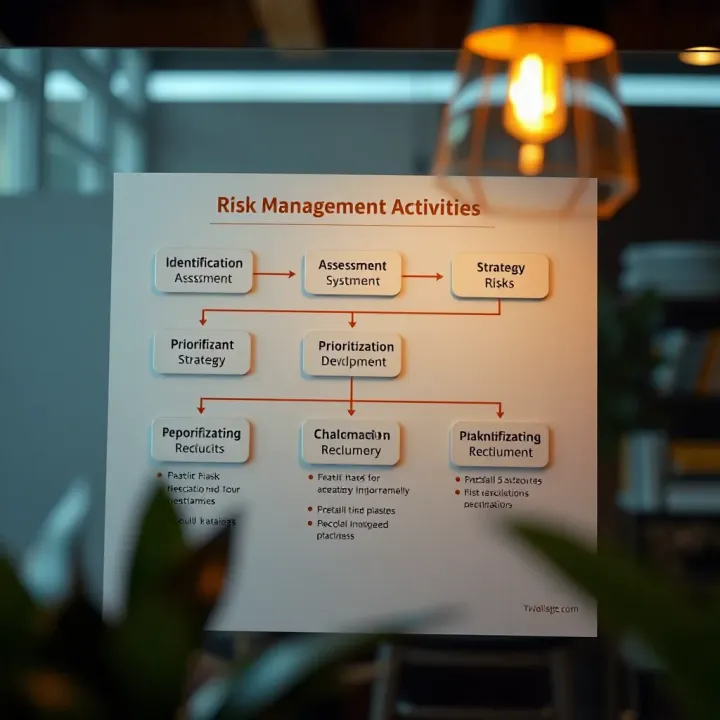
🌍 Learn how to spot, assess, and rank risks then create plans that protect your business or project from losses. Stay ready with practical risk steps fit for Kenya.

Learn practical steps Kenyan businesses can use to identify, assess, and manage risks effectively 🔍. Stay secure with constant monitoring and adapt to changes swiftly.

📊 Learn how Kenyan businesses can plan for risks effectively, managing financial and operational challenges with practical steps and local insights to stay resilient.
Based on 9 reviews