
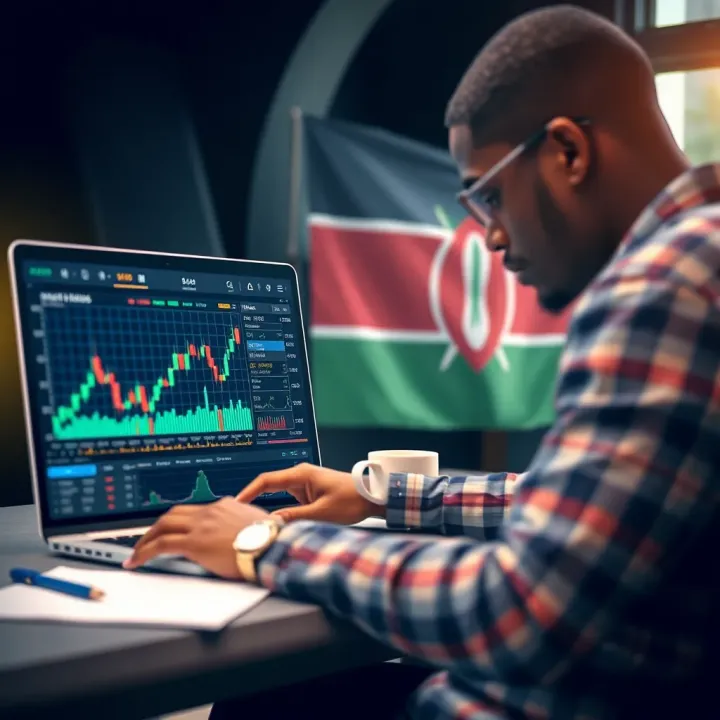
Start Forex Trading in Kenya: A Beginner's Guide
Start forex trading in Kenya with practical tips on brokers, account setup, risk management, and following local rules. 💹 Trade smart and secure your KSh profits today!
Edited By
Emily Carter
Starting forex trading in Kenya doesn't require a fortune, but knowing the minimum capital to begin is crucial. Brokers often set their own minimum deposit levels, which can range from as low as KSh 1,000 to KSh 50,000 or more. However, having just the minimum deposit doesn’t always cut it for a smooth trading experience.

The capital you need depends on several factors:
Broker Requirements: Some brokers accept micro accounts with as little as KSh 1,000, but others require higher deposits.
Leverage Offered: Higher leverage allows you to control larger positions with less capital, but it also increases risk.
Trading Strategy: Scalpers or day traders might need more capital to handle frequent trades and spread costs than long-term traders.
Risk Management: To protect your money, it’s wise not to risk more than 1-2% of your capital on a single trade.
Starting with low capital means tight risk control to avoid wiping out your account quickly.
Kenyan forex brokers usually have these deposit tiers:
Micro Accounts: Starting from KSh 1,000 to KSh 5,000, suitable for complete beginners testing waters.
Standard Accounts: Between KSh 20,000 and KSh 50,000, ideal for those serious about consistent trading.
VIP or Professional Accounts: Over KSh 100,000, designed for experienced traders with advanced strategies.
Choose brokers that allow micro or mini accounts to start small.
Use leverage wisely; don't overextend your positions.
Focus on learning and practising with demo accounts before committing real money.
Allocate capital for at least 3-6 months of trading to avoid rushing due to lack of funds.
Knowing the minimum amount to start forex trading in Kenya sets a realistic foundation. While some brokers accept very small deposits, successful trading depends on more than just funds—it requires prudent risk management and consistent learning. Starting with KSh 5,000 to KSh 20,000 provides a good balance between accessibility and practical trading capacity for most new traders.
The minimum capital needed to start forex trading depends on several practical factors that influence how much you should realistically set aside before opening a trading account. Understanding these elements helps Kenyan traders avoid common pitfalls like overtrading or choosing unsuitable accounts that drain their funds quickly.
Standard vs Mini and Micro Accounts: Brokers usually offer different account types catering to varying budgets. Standard accounts typically require higher initial deposits, often starting from KSh 50,000 or more. These accounts trade lots in full units, so each point movement significantly affects your profits or losses. On the other hand, mini and micro accounts allow trading with smaller lot sizes and lower deposits, sometimes as low as KSh 1,000 to KSh 5,000. This makes them more suitable for beginners or traders with limited capital.
For instance, if you open a micro account at a broker accepting M-Pesa deposits starting at KSh 1,000, you can get hands-on experience while risking less. However, smaller accounts face challenges like higher relative costs and limited position size.
Minimum Deposit Policies by Popular Brokers in Kenya: Kenyan traders should check the specific minimum deposit amounts set by brokers, especially those who accept local payment methods like M-Pesa or bank transfers. Brokers such as HotForex and FXTM often allow deposits starting at KSh 1,000 or equivalent in USD, which is accessible for many. Meanwhile, some international brokers may require KSh 30,000 or more as a minimum deposit. These policies impact the size of the trading account you can maintain and the flexibility you have in selecting trading instruments.
How Leverage Works in Forex Trading: Leverage enables traders to control a large position with a relatively small amount of capital. For example, a leverage of 1:100 means for every KSh 1,000 in your account, you can trade up to KSh 100,000 worth of currencies. This magnifies potential profits without needing huge upfront capital.
Kenyan regulators and brokers usually offer leverage ranging from 1:50 up to 1:500. While higher leverage lets you enter trades with smaller funds, it's a double-edged sword.
Risks of High Leverage for Small Accounts: Using high leverage increases the risk of losing your capital fast, especially if your account is small. Sudden market moves can trigger margin calls, wiping out your deposit. For example, with a KSh 5,000 deposit and 1:500 leverage, a small price swing could wipe out your entire balance. Kenyans starting with limited funds must therefore use leverage cautiously and focus on risk management.
Remember, leverage is not free money—it multiplies both gains and losses.
Scalping and Day Trading Needs: These fast-paced trading styles require quick decision-making and frequent trades throughout the day. Because multiple trades are opened and closed quickly, starting capital tends to be higher to cover spreads, commissions, and avoid to many stopped-out positions. For example, a trader using scalping strategies may need at least KSh 30,000 for sufficient margin and to absorb small losses while capitalising on many small gains.
Swing Trading and Longer-Term Strategies: Swing traders hold positions for days or weeks and usually make fewer trades compared to scalpers or day traders. Because fewer transactions incur fewer costs, swing trading can be done with smaller capital, sometimes starting at KSh 10,000 or less. This approach suits Kenyan traders with limited time and smaller budgets better.
Understanding these key factors helps you decide the minimum amount to start forex trading in Kenya and avoid taking unnecessary risks while planning your entry into the market effectively.
When starting forex trading in Kenya, knowing the typical minimum deposits required by brokers is essential. This determines the initial capital you need to fund your account and directly impacts your trading options. Brokers usually set minimum deposits to ensure clients have enough margin to open and maintain positions, but these amounts can vary widely depending on the broker’s policies and account types.
Many Kenyan traders prefer brokers who allow deposits through M-Pesa, Safaricom’s widely-used mobile money service. This convenience removes the hassle of bank transfers or international payment methods that may incur additional fees or delays. Brokers like Exness, FXTM, and HotForex are among popular international firms that support M-Pesa deposits, making it easier for Kenyans to start with as little as KS,000 to KS,000.
M-Pesa compatibility matters because it influences how quickly you can fund your account or withdraw profits. For beginners or those with limited budgets, instant deposit options reduce downtime and help take advantage of timely market movements.
Choosing a broker under proper regulatory oversight adds a layer of safety to your investment. While many well-known international brokers are regulated by bodies such as the Financial Conduct Authority (FCA) in the UK or Cyprus Securities and Exchange Commission (CySEC), Kenyan traders should also consider brokers authorised by the Capital Markets Authority (CMA) Kenya.
Local regulatory approval offers protection aligned with Kenyan laws and easier resolution of disputes. However, international brokers often have stricter compliance and investor protection schemes. Balancing regulation with deposit requirements and payment options helps you pick a broker suited to your needs and risk appetite.
Minimum deposit amounts typically range from KS,000 to over KS0,000, depending on account types like micro, mini, or standard accounts. Micro accounts require less capital and let you trade smaller lot sizes, which suits traders starting on tight budgets. For example, FXTM’s micro account accepts minimum deposits around KS,000, while more advanced standard accounts might need KS0,000 or more.
Considering your budget and trading style helps narrow down brokers. Traders focusing on long-term positions benefit from accounts with higher minimum deposits but lower spreads, while scalpers might prefer low-deposit, high-leverage accounts despite slightly wider costs.
Even if a broker offers a low minimum deposit, hidden charges can eat into your tiny trading capital quickly. Look out for:
Withdrawal and deposit fees, which can be a fixed amount or percentage
Inactivity fees applied after months of no trading
High spreads or commission costs on popular currency pairs
These fees might seem small but can be significant for accounts starting with just a few thousand shillings. For instance, a broker charging KS00 withdrawal fees for a KS,000 account takes away 10% of your balance just to cash out. Always ask for a full fee breakdown before committing your money.
Choosing a broker with transparent fees and convenient deposit options, like M-Pesa, can make your first forex trading experience smoother and less costly.
In the Kenyan context, weighing the minimum deposit against fees and regulatory safety helps you start trading without surprises. Keeping a close eye on these factors improves your chances of building a successful forex trading journey on a reasonable budget.
Starting with the minimum deposit is just part of the story when budgeting for forex trading. Many new traders sometimes assume that depositing KSh 1,000 or KSh 10,000 into their trading account means they're fully ready. The truth is, trading costs and risk management need careful planning to protect your capital and improve your chances of profit.
Managing risk is fundamental in forex trading, especially when your starting capital is limited. The risk-to-reward ratio helps you decide how much to risk on a trade compared to the potential reward. For example, a typical conservative trader might risk KSh 100 on a trade expecting to make KSh 300 (a 1:3 ratio). This careful balance ensures losses don’t eat away your capital quickly while giving room for meaningful gains over time.
Without sticking to appropriate ratios, traders with small accounts can quickly wipe out their funds by overcommitting to risky trades. Even with KSh 10,000, risking 10% per trade (KSh 1,000) can be risky because losing just a few trades in a row can drain your funds. Many experienced advisers recommend risking no more than 1-2% of your capital on any single trade to extend your trading lifespan and learn steadily.
Stop losses are orders to close a trade if the price moves against you beyond a certain point. They guard against devastating losses and help manage your risk-to-reward plan. When your capital is small, setting stop losses needs to be precise — tight enough to limit losses but wide enough to avoid being triggered by normal market fluctuations.
For example, if you only have KSh 5,000 in your account, setting a stop loss that risks KSh 100 per trade keeps your exposure low. This discipline stops losses from snowballing. Without stop losses, you might hold losing trades hoping for a turn, which often leads to bigger losses and blown accounts.
Trading isn’t free. Brokers charge in various ways, primarily through spreads (difference between buy and sell price), commissions (fixed fees per trade), and swap fees (charges for holding positions overnight). These can nibble away your profits or deepen losses, especially if your capital or trade sizes are small.
For instance, a spread of 3 pips on a currency pair can cost KSh 30 in a trade size worth KSh 100,000. For a trader starting with KSh 10,000 and trading micro lots, this might seem small but it adds up over several trades. Knowing these costs beforehand helps in budgeting realistically and avoiding surprises.
Some currency pairs and trading instruments have lower spreads and fees, making them more suitable for traders with limited capital. Majors like EUR/USD or GBP/USD often have tighter spreads compared to exotic pairs, so trading these can reduce cost burdens.
By focusing on cost-effective pairs and avoiding instruments with high swaps or commissions, you improve your chances of staying profitable. This is particularly important in Kenya where small capital means every shilling counts. Plus, brokers offering competitive spreads and reasonable fees suit beginner traders better.
Effective budgeting goes beyond just the deposit. Integrating risk management with an understanding of all trading costs helps Kenyan traders protect small accounts and build sustainable strategies.
Starting forex trading with limited funds in Kenya requires practical advice tailored to small-scale investors. Having a clear, manageable approach helps avoid common pitfalls that can drain your money quickly. With just KSh 1,000 to KSh 10,000, every shilling counts, so understanding how to begin smartly can increase your chances of success and build your confidence.
Choosing a broker that accepts low minimum deposits and offers micro or nano accounts is essential for traders with small capital. Brokers like XM or Exness, which allow deposits as low as $1 (approximately KSh 110), provide access without demanding large upfront money. Such accounts support smaller trade sizes (lots), enabling you to manage risk more easily. Ensure your broker accepts convenient deposit methods popular in Kenya, like M-Pesa, to avoid unnecessary delays or fees.
Micro accounts also offer simpler platforms tailored for beginners, reducing overwhelming features. By picking a broker with clear fees and good customer support, you protect your limited funds from hidden charges that can quickly eat into your capital.
Before risking real money, practise on demo accounts to familiarise yourself with trading platforms and strategies. Demo accounts simulate live market conditions without financial risk. For example, you could use the demo mode on MetaTrader 4 or 5 to try out trade executions and test indicators.
This practice helps you spot mistakes early, learn how market events affect prices, and develop trading discipline. Kenyan traders benefit especially as it builds confidence to avoid emotional, rash decisions when real money is on the line.
Growing a small forex account demands discipline. Kenyans often hear stories of quick wins, but the truth is steady growth wins the race. Stick to a trading plan, avoiding the temptation to chase losses or open oversized positions, which can wipe out your limited capital.
Patience means waiting for the right trades that fit your strategy instead of forcing action every day. By controlling emotions, you protect your account from rapid depletion and set a foundation for slow but steady gains.
Keep a detailed record of each trade including entry, exit, reasons for the trade, and outcomes. This journal helps you analyse which strategies or setups work best and learn from mistakes without repeated losses.
Periodic review provides insight into your trading habits and areas for improvement. Kenyan traders who consistently review their results tend to improve faster and avoid repeating poor choices, which is vital when working with a tight budget.
Start small but smart; with the right broker, patience, and a solid habit of reviewing trades, even KSh 1,000 can grow into a bigger trading pot over time.
By applying these practical steps, Kenyan traders with small capital can enter forex trading with realistic expectations and effective money management, improving their chance of long-term success.
Mistakes around starting capital often trip up new forex traders in Kenya. Understanding these pitfalls can save you from losing money unnecessarily and help you build a strong foundation for successful trading. Two main issues tend to dominate: overtrading with insufficient funds and ignoring the broker's terms and conditions. Both directly affect how well your trading account can grow or even survive.
Small trading accounts, say around KS,000 to KS0,000, demand a conservative approach because they simply don't have enough room to absorb big losses. Placing large or multiple trades without proper position sizing can quickly wipe out your capital. For example, if you risk 10% of a KS,000 account on a single trade, one wrong move could cost you KS00 — a sizable chunk that's hard to recover.
Traders with limited funds must use smaller trade sizes and stick to strict stop-loss orders to protect their accounts. Beginners often feel tempted to chase quick profits by increasing trade sizes, but that increases exposure to high volatility, and more often than not, leads to losing streaks that drain their accounts fast.
The stress of trading small amounts makes many traders prone to emotional decisions. When your capital is slim, one loss feels like a heavy blow, pushing some to revenge trade — trying to recoup losses impulsively. This behaviour typically results in further losses and bad trading habits.
Keeping emotions in check is essential. It helps to have a trading plan and to stick with it regardless of short-term ups and downs. Some Kenyan traders find journalling their trades helpful for self-reflection and maintaining discipline. Managing emotional trading could be the difference between preserving your capital and blowing it all in a few trades.
Many brokers serving Kenyan clients have specific rules on minimum deposits, withdrawal limits, and payment methods. Ignoring these can lead to frustration or delays when accessing your funds. For instance, some brokers require a minimum withdrawal amount of KS,000 or restrict withdrawals to certain payment channels like M-Pesa or bank transfers. If your trading account balance is low, you might find it difficult to withdraw profits or even your initial capital.
Kenyan traders should carefully read and understand these rules before committing funds. Confirm if brokers accept M-Pesa deposits and how long withdrawals typically take. Missing this step can turn what should be a smooth process into a headache when you actually want to cash out.
A common overlooked detail is the broker's policy on account inactivity. If you don't trade or login for a certain period — typically 3 to 6 months — your account may be classified as dormant. This often triggers inactivity fees that slowly eat into your balance. For traders starting with limited capital, these charges can be damaging.
Some brokers deduct these fees monthly, which means even a small initial deposit can disappear if the account isn't active. Kenyan traders who take breaks or are trying out demo accounts must keep this in mind. Regularly logging in or making occasional trades can avoid losing money unnecessarily.
Always read the fine print with your broker to avoid surprises that could cost you your hard-earned KSh.
By avoiding these common mistakes — chasing trades beyond your means and neglecting broker terms — you'll protect your starting capital better and set yourself up for steady progress in forex trading.
Start forex trading in Kenya with practical tips on brokers, account setup, risk management, and following local rules. 💹 Trade smart and secure your KSh profits today!

📈 Learn how to start forex trading in Kenya with a trusted broker, set up your account, master key terms, and manage risks for better chances of profit. 🇰🇪
📊 Discover top forex trading PDFs tailored for Kenyan traders! Find trustworthy guides, practical tips, and reliable resources to boost your forex skills today.

🔍 Learn how to start forex trading in Kenya with the right broker, manage risks smartly, set up your account securely, and comply with local rules for steady gains.
Based on 13 reviews