

Top Forex Trading Apps for Kenyan Traders
Explore top forex trading apps for Kenyan traders 📱. Learn to choose safe platforms, spot key features, and boost your trading skills effectively.
Edited By
James Thornton
Forex trading has gained popularity among many Kenyans looking to grow their wealth beyond traditional investment options like equities and real estate. The foreign exchange market, or forex, involves buying and selling different currencies to profit from price changes. Unlike the Nairobi Securities Exchange (NSE), forex operates 24 hours a day, five days a week, offering flexibility for traders who may juggle other commitments.
Before jumping in, it’s vital to understand how the forex market works and what risks you face. Many new traders rush in without learning, only to lose money quickly. Gaining knowledge and practising with demo accounts can build confidence without jeopardising your cash.

Kenyan traders commonly use online platforms such as MetaTrader 4 or 5 and rely heavily on M-Pesa for depositing and withdrawing funds. This local payment integration makes starting relatively smooth for those familiar with mobile money.
Remember: Forex is not a guaranteed way to get rich fast. It requires discipline, constant learning, and risk management. Take it step by step.
Here are the practical points to consider as you begin:
Understand currency pairs: Forex trades happen in pairs, like USD/KES or EUR/USD. Each pair has its own characteristics influenced by local and global events.
Learn key concepts: Pips, spreads, leverage, and margin are terms you’ll encounter. Knowing these helps you make smart decisions.
Choose a regulated broker: Ensure your forex broker is licensed by relevant authorities such as the Capital Markets Authority (CMA) in Kenya or internationally respected regulators.
Start with a demo account: Practise trading without risking real money. It helps you familiarise yourself with platforms and test strategies.
Set a trading plan: Decide your risk tolerance, investment goals, and most suitable trading times.
As you progress, focus on building a solid foundation while avoiding common pitfalls like overtrading or chasing losses. This guide will walk you through practical steps, essential tools, and useful Kenyan resources to help you navigate forex trading confidently.
Getting a solid grasp of forex trading basics forms the backbone of every successful trader’s journey. Without understanding what forex is, how it works, and the local realities in Kenya, it’s easy to get lost or make costly mistakes. This section breaks down the essentials so you get a clear picture before putting your money on the line.
Forex trading involves buying and selling currencies on the global foreign exchange market to profit from changes in exchange rates. In practical terms, you could trade the US Dollar against the Kenyan Shilling (USD/KES), hoping to buy low and sell high or vice versa. This market is the largest financial market worldwide, with daily volumes exceeding $6 trillion.
Most forex trading happens in currency pairs, representing the value of one currency against another. Understanding these pairs and how they influence each other is key to navigating the market efficiently.
Major currency pairs are those most often traded due to their liquidity and tight spreads. Examples include EUR/USD (Euro/US Dollar), USD/JPY (US Dollar/Japanese Yen), and GBP/USD (British Pound/US Dollar). For Kenyan traders, pairs involving the US Dollar, Euro, and British Pound are especially relevant due to import-export ties and economic factors.
The forex market operates 24 hours a day, five days a week, flowing through global financial centres from Sydney to New York. This continuous operation means trades can happen anytime, offering flexibility but also requiring awareness of different market sessions and their characteristics.
In Kenya, forex trading happens mainly through licensed brokers, many of which partner with local banks for deposits and withdrawals. Kenyan banks play a supportive role by facilitating fund transfers between traders’ accounts and forex firms. For instance, banks like KCB and Equity enable smooth transactions via bank transfers or M-Pesa, the popular mobile money platform.
Regulation is crucial for protecting traders. The Capital Markets Authority (CMA) oversees forex brokers to ensure fair operations and transparency. The Central Bank of Kenya (CBK) also monitors forex flows to maintain economic stability. Traders should stick to CMA-regulated brokers for safety, as unregulated firms can be scams.
Trading hours in Kenya align with global forex sessions, opening in the Asian session early morning Nairobi time, then moving through the European and American sessions later. The market is accessible virtually 24/5, and many broker platforms offer mobile apps, meaning Kenyan traders can join the market anytime and from anywhere, including on the matatu or at home.
Knowing how forex trading fits within Kenya’s financial system and regulations builds confidence and helps you choose reliable partners. It also says a lot about when and how you should trade to match your schedule and financial goals.
Understanding these basics equips you to make smarter decisions and avoid common pitfalls early on.
Having the right tools and platforms is a key step for anyone looking to succeed in forex trading. These elements help you execute trades efficiently, analyse the market, and manage risks well. In Kenya, where internet connectivity varies, choosing tools that suit your environment makes a considerable difference to your trading experience.
When selecting a forex broker, reliability and trustworthiness matter most. You want a broker licensed by Kenya’s Capital Markets Authority (CMA) or reputable international bodies like the Financial Conduct Authority (FCA). This reduces the risk of fraud and ensures your money stays safe. Also, check for clear fee structures and good customer service to avoid surprises after you start trading.
Several brokers operate in Kenya and offer access to major currency pairs. Popular names include FXPesa, HotForex, and XM. These brokers support local deposits through methods like M-Pesa and bank transfers, which makes funding your account convenient. Before committing, try demo accounts they provide to test the platform and services without risking real money.
Account types and leverage vary among brokers and should be chosen carefully. A basic standard account typically suits beginners, featuring low minimum deposits and moderate spreads. Leverage gives you the power to control larger positions, but it can multiply losses just as fast. For instance, a 1:100 leverage means your KSh 1,000 controls KSh 100,000 in the market, so use this tool carefully.
MetaTrader 4 (MT4) and MetaTrader 5 (MT5) are staples in forex trading worldwide, and Kenya is no exception. MT4 offers a user-friendly interface ideal for beginners, focusing on forex and CFDs. MT5 is the newer version with features like additional timeframes, more technical indicators, and better order management. Both allow automated trading with expert advisors, which can help if you want to test strategies automatically.

Apart from MetaTrader, platforms like cTrader and NinjaTrader have gained traction, especially favoured for their advanced charting tools and customisation options. Kenyan traders who prefer web-based access often go for brokers’ proprietary platforms, which simplify trading without software installation. For example, FXPesa’s platform is browser-based and integrates local payment options seamlessly.
Mobile trading apps play a big role in Kenya, where many people rely on phones for internet access. Most brokers offer MT4 or MT5 mobile versions, which work well even on modest data bundles and slower networks. This means you can monitor trades or respond to market movements anywhere, whether you are commuting by matatu or waiting at a duka. A good mobile app should be stable, easy to navigate, and offer real-time alerts for your trades.
Choosing suitable tools and platforms isn’t just a technical step; it builds your confidence and ensures you trade smartly within your local context.
By focusing on reliable brokers and practical platforms, you equip yourself to handle forex trading with informed decisions and less hassle. Always test with demo accounts and stay updated about new tools emerging in Kenya’s growing forex trading scene.
To succeed in forex trading, especially in Kenya's dynamic market, mastering a set of key skills and strategies is essential. These tools not only help you navigate complex price movements but also safeguard your investments against unnecessary risks. Without a proper grasp of these elements, traders can easily lose track or fall prey to emotional decisions.
Technical analysis involves studying price charts and using indicators to predict future market behaviour. Familiarity with charts such as candlestick or line charts is vital. For example, a Kenyan trader following the USD/KES pair should understand how patterns like "head and shoulders" or "double tops" signal potential market turns. Indicators such as Moving Averages or the Relative Strength Index (RSI) offer insight into price trends and possible reversals, helping you time trades better.
Fundamental analysis focuses on economic events influencing currency values. For Kenyan traders, news like CBK’s monetary policy decisions, inflation reports, or geopolitical developments in the region can sway forex markets. Imagine the Kenyan shilling unexpectedly weakening after a surprise interest rate cut by CBK – a trader aware of such news can adjust their positions promptly or avoid losses.
The best traders don’t rely solely on one method. Combining technical and fundamental analysis provides a clearer market picture. For instance, a strong economic report might confirm an upward trend seen in your technical charts. Using both lets you confirm signals, improving your chances of profitable trades and lowering risks.
Day trading involves opening and closing positions within a single day, capitalising on small price movements. Scalping is an even faster form, aiming for tiny profits by making many trades throughout the session. Kenyan traders with limited time or wanting quick returns might find these appealing, but both require sharp focus, quick decision-making, and strict discipline to avoid losses.
Swing trading takes a broader view, where positions last for days or weeks to catch bigger moves. This suits traders who can’t monitor markets constantly but want to benefit from medium-term trends. For example, tracking the impact of sugar and tea export reports on the shilling might open swing trading opportunities.
Managing risk is the backbone of lasting success. Setting stop loss orders limits potential losses if the market moves against you. Moreover, proper position sizing ensures that no single trade threatens your overall capital. Kenyan traders should be particularly cautious with leverage – it magnifies both profits and losses. Keeping risk per trade to a small fraction (say 1-2%) of your account helps preserve capital through volatile market swings.
Successful forex trading in Kenya is about blending solid analysis skills with realistic strategies and sharp risk control. Practising these consistently will build the confidence and discipline you need in this fast-moving market.
Getting started with forex trading in Kenya means more than just understanding charts and trends. You need clear, practical steps to open an account, fund it, and place your first trades confidently. This section breaks down those steps so you can transition quickly from theory to action.
Opening an account with a forex broker is straightforward yet crucial. Most brokers operating in Kenya will require you to provide identification documents like your national ID or passport, proof of residence, and sometimes details on your source of funds. Registration usually happens online via the broker’s website or trading platform. For instance, if you pick a broker like HotForex or XM, you simply fill out their form, upload the necessary documents, and wait for verification.
Verification can take from a few minutes to a couple of days depending on the broker. Once approved, you gain access to a personal dashboard where you manage your trading activities. This process is practical because it ensures your account is secure and complies with Kenyan regulations by the Capital Markets Authority (CMA).
Funding your account is another key step. Most brokers accept funding through M-Pesa, which is convenient and widely used in Kenya. You can transfer funds directly from your M-Pesa account to your trading account, often instantly. Alternatively, bank transfers from Kenyan banks like KCB, Equity, or Cooperative Bank are also accepted but tend to take longer, sometimes up to three business days.
Using M-Pesa offers flexibility for small and medium investments since you can fund amounts as low as KSh 500. For example, if you want to start small, you can send funds from your phone without needing to visit a bank branch. This practical funding system encourages more Kenyans to dip their toes into forex trading without worrying about complicated payments.
Before risking real money, it’s wise to use demo accounts offered by most brokers. These accounts simulate real market conditions but use virtual funds, letting you test your skills without financial risk. Setting up a demo account requires only a few clicks and no document verification.
This practice environment is vital for getting acquainted with trading platforms and strategies. For instance, if you’re new to MetaTrader 4 or MetaTrader 5, a demo account lets you place buy or sell orders and see how stop losses and take profits work. Using the demo account regularly improves trading confidence before stepping into live markets.
Once your trading account is funded, understanding how to place buy and sell orders is essential. A buy order means you expect the price of a currency pair to rise, so you profit if the market goes up. Conversely, a sell order profits when the price drops. For example, you might buy EUR/USD if you believe the euro will strengthen against the US dollar.
Most platforms provide clear options to select the order type, the size (lot), and instant execution or pending orders. Knowing when to buy or sell, supported by your analysis, determines your success. Taking the time to place an order correctly helps avoid costly mistakes such as entering at the wrong price or with the wrong volume.
Risk management starts with stop loss and take profit orders. A stop loss limits your losses by automatically closing a trade if the market moves against you beyond a set level. Take profit closes your trade when the price hits a desired gain. For example, if you buy GBP/USD at 1.3500, you might set a stop loss at 1.3450 and take profit at 1.3600 to manage risk and lock in profits.
Using these tools prevents emotional decisions during volatile market movements and safeguards your capital. Wise traders always plan their exit points before entering trades.
After placing trades, monitoring them closely is crucial. Market conditions can change quickly, especially during major news releases or outside Kenyan trading hours. You can choose to close trades manually if you see market signals that suggest it is time to exit early rather than waiting for stop loss or take profit.
Regular monitoring helps you learn how your strategies perform under real conditions and adjust accordingly. Many Kenyan traders use mobile apps to stay updated on their positions throughout the day, making managing trades more flexible. Closing trades at the right time is just as important as opening them since this determines your ultimate profit or loss.
Starting forex trading requires careful preparation, from setting up your account and funding it to placing and managing trades effectively. Taking these practical steps seriously gives you a solid foundation to build profitable habits.
By following this guide, Kenyan traders can approach forex markets with clarity and confidence right from the start.
Understanding the risks involved in forex trading and steering clear of common errors are key to long-term success. The forex market can change quickly, and without proper risk management, traders can face significant losses. By managing risks carefully and learning from typical pitfalls, Kenyan traders improve their chances of steady profits and avoid draining their accounts prematurely.
Market volatility refers to how much and how fast price levels change in the forex market. The currency pairs you trade can swing wildly within minutes, influenced by global news, economic data, or political events. For example, during the Kenyan general election period, the shilling may experience sudden volatility affecting forex pairs involving KES. This unpredictability means a trade that looks promising can quickly turn against you if you’re not prepared.
Leverage risks pose a serious challenge because leverage lets you control large positions with a small deposit. While this magnifies potential profits, it also increases losses equally. Say you use 100:1 leverage to trade a position worth KS00,000 with just KS,000 in your account. A small 1% adverse move wipes out your entire deposit. Many Kenyan traders fall into the trap of over-leveraging, treating forex like gambling without understanding risk. The key is to use leverage cautiously and never risk money you can’t afford to lose.
Psychological challenges in trading often cause losses even with a sound strategy. Fear and greed can lead to poor decisions like holding losing trades too long or closing winning trades prematurely. Stress from trading can cause emotional burnout, especially when dealing with currency moves outside your control. Staying disciplined, following your trading plan, and keeping emotions in check is just as vital as technical skills in forex.
Setting realistic goals helps you stay grounded and avoid chasing impossible returns. Many new traders expect to double their money quickly, only to face frustration when profits don’t come fast. A more practical approach in Kenya’s growing forex community is to aim for steady gains, such as 5-10% per month. This pace builds experience and capital without exposing your account to reckless risks.
Avoiding overtrading means not making too many trades or increasing position sizes beyond your risk tolerance. It’s tempting to “catch every move” in fast markets, but this leads to burnout and losses from poor setups. Instead, focus on high-quality trades that meet your criteria. For instance, a Kenyan trader might choose to trade only during London and New York sessions when liquidity is best.
Continuing education and using trusted resources is critical to stay updated and sharpen your skills. The forex market evolves, and what worked last year may not work today. Following credible Kenyan and international sources like the Capital Markets Authority (CMA) updates, reading analysis from recognised experts, and practising regularly on demo accounts all keep your knowledge fresh. Never stop learning — it separates beginners from consistent traders.
Responsible trading isn't just about profits — it’s about protecting your capital and growing it steadily with discipline, knowledge, and patience.
By managing risks carefully and learning from common mistakes, you build a solid foundation. This approach turns forex trading from a risky gamble into a viable investment option within Kenya’s dynamic economy.
Explore top forex trading apps for Kenyan traders 📱. Learn to choose safe platforms, spot key features, and boost your trading skills effectively.

Explore top forex trading companies in Kenya 🇰🇪, learn about regulators, pick trusted brokers, and get practical tips to start smart and safe 📈💡.
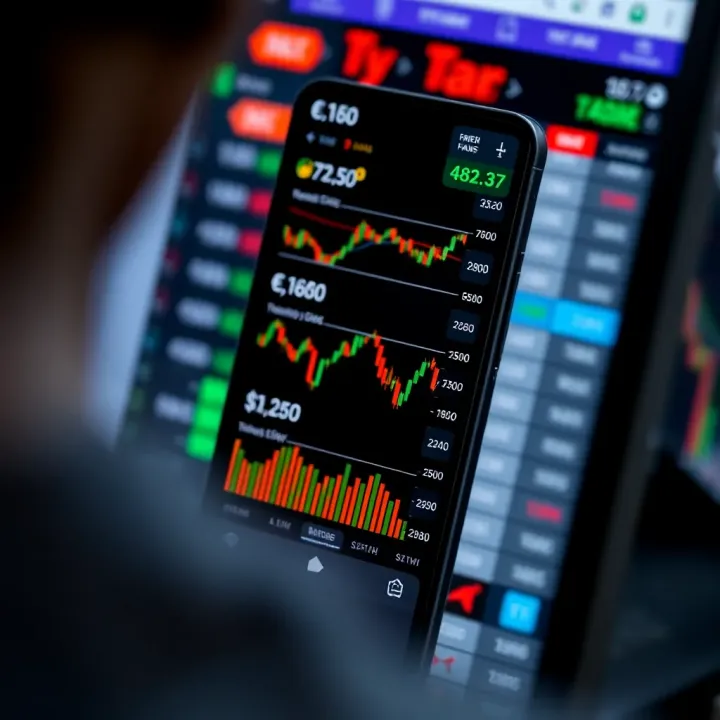
Explore top forex trading apps tailored for Kenyan traders 📱. Learn to choose wisely, ensure security 🔒, and trade confidently in Kenya’s forex market!

📚 Discover essential books for learning forex trading in Kenya! From basics to advanced tips, master strategies and risk management confidently.
Based on 15 reviews