

Top Forex Trading Apps for Kenyan Traders
Explore top forex trading apps for Kenyan traders 📱. Learn to choose safe platforms, spot key features, and boost your trading skills effectively.
Edited By
Benjamin Davies
Getting started with forex trading in Kenya can be a promising way to grow your finances, but it requires clear understanding and careful steps. Forex trading involves buying and selling foreign currencies in pairs, aiming to make a profit from the changes in exchange rates. Unlike the stock market, forex runs 24 hours during weekdays, making it flexible for many traders.
Kenyan traders need to familiarise themselves with the basics first, such as what moves currency prices and the risks involved. For example, economic indicators like inflation, interest rates, and political events in both Kenya and partner countries directly affect forex prices. Knowing this helps you anticipate market moves better.

Choosing the right forex broker is vital. Ensure your broker is licensed by the Capital Markets Authority (CMA) Kenya or reputable international regulators like the Financial Conduct Authority (FCA) in the UK. Brokers provide the platforms where you trade, so look out for low spreads (the difference between buy and sell prices), reliable customer support, and easy deposit methods like M-Pesa or bank transfers.
Setting up your trading account is straightforward but requires attention. Most brokers offer demo accounts—practice setups using virtual money before risking your own KSh. When comfortable, open a live account funded with an amount that won’t hurt your finances if lost. Remember, forex trading can be volatile, and losses can happen quickly.
Risk management should be your daily focus. Techniques such as setting stop-loss orders, not risking more than 1-2% of your capital on a single trade, and regularly reviewing your trades reduce the chances of big losses. Like in any business, discipline separates successful traders from those who burn cash.
Starting forex trading without understanding local regulations and risks is like driving a matatu without brakes—dangerous and costly.
This guide will walk you through practical steps to start trading forex within Kenya’s legal framework, helping you avoid common pitfalls and build a solid foundation for your trading career.
Getting a solid grip on forex trading basics is the first step to making smart decisions when trading currencies. It helps you understand what you’re actually buying and selling, and why prices change. Without this foundation, you risk jumping in blindly and losing money.
Definition of forex trading: Forex trading, or foreign exchange trading, involves buying one currency while selling another simultaneously. It’s the world’s largest financial market, with daily trades worth trillions of dollars. The goal is to profit from changes in currency values relative to each other. For instance, if you think the US dollar will strengthen against the Kenyan shilling, you buy USD/KES, hoping to sell at a higher rate later.
Major currency pairs traded globally and locally: Globally, traders mainly focus on major pairs like EUR/USD, USD/JPY, and GBP/USD because they offer liquidity and tight spreads. Locally, in Kenya, pairs involving the Kenyan shilling such as USD/KES and EUR/KES get significant attention. This is practical since Kenyans often deal with these currencies for import, export, and travel purposes.
Role of currency value fluctuations: Forex trading thrives on the ups and downs in exchange rates influenced by economic data, interest rates, political events, and market sentiment. When the Central Bank of Kenya adjusts the policy rate, for example, it affects KES value and forex prices. Traders aim to buy low and sell high, capitalising on these fluctuations.
Leverage and margin explained: Leverage allows you to trade with more money than you actually have by putting down a fraction, called margin. For example, with a 1:100 leverage, a KSh 10,000 margin controls KSh 1,000,000 worth of currency. While leverage can boost profits, it also magnifies losses, so managing it wisely is key.
Working hours and market sessions relevant to Kenyan traders: The forex market runs 24 hours a day, five days a week, divided into sessions: Asia, Europe, and US. Kenyan traders are most active during the London and New York sessions because these periods see high trading volumes and volatility, offering better opportunities to enter and exit trades.
Opportunities and potential gains: Many Kenyans see forex as a chance to supplement income or build wealth due to its 24-hour nature and ability to trade from home with small capital. Success stories abound, especially when traders understand fundamentals and use the right strategies.
Risks involved: Like any investment, forex comes with risks. Volatile markets can lead to sudden losses. Beginners often fall prey to poor risk management or scams. That’s why learning and disciplined trading can’t be overlooked.
Common misconceptions: Some believe forex is a quick way to get rich, but in reality, consistent profits require time, patience, and skill. Others think high leverage is a free ticket to big gains without downsides. Understanding these myths helps prevent costly mistakes.
Knowing the basics equips you to approach forex trading as a serious endeavour, where knowledge and strategy outshine guesswork or luck.
Selecting the right forex broker is key to a successful trading experience in Kenya. Your broker acts as the bridge between you and the forex market, so trustworthiness, cost-efficiency, and user-friendly systems play a big role. A suitable broker ensures your funds are safe, trading is smooth, and you get fair prices without hidden charges.
The Capital Markets Authority (CMA) regulates forex brokers operating in Kenya to protect investors from fraud and malpractice. A CMA-regulated broker follows set rules on how to handle clients' funds and report trading activities. This means if a broker is registered with CMA, you have legal backing to seek support or raise complaints if things go wrong. Always check the CMA website for a broker’s licence status before signing up.
The trading platform is where all your action happens. Popular platforms like MetaTrader 4 or 5 are widely used because they are reliable and have features that support technical analysis. For Kenyan traders, ease of use matters since learning curves can be steep. A good platform offers clear charts, real-time price feeds, and fast execution of orders without glitches.
Spreads are the difference between the buy and sell price of a currency pair and represent the broker’s charge. Some brokers also levy commissions per trade. Lower spreads and fees mean cheaper trades, so your profits are not eaten up by costs. Compare brokers to find those with tight spreads especially on major pairs like USD/KES and EUR/USD, as these pairs are most traded in Kenya.

Prompt customer support is vital when you face technical issues or need clarifications. Brokers with 24/7 support through phone, live chat, or email are more reliable. Given the time zone differences, brokers accessible during Kenyan trading hours (8 am to 5 pm EAT) are preferable. Local language support can also be a plus.
Local brokers regulated by CMA offer security since they comply with Kenyan laws and maintain segregated client accounts. They generally understand the Kenyan market and payment methods like M-Pesa, which makes deposit and withdrawal easier. However, they might offer fewer currency pairs and limited trading tools compared to big international firms.
International brokers often provide a wider range of instruments and sometimes better trading platforms. Yet, they might not be regulated by Kenyan authorities, so you must rely on foreign regulations that don’t always safeguard Kenyan clients effectively. Also, deposit and withdrawal processes may be slower and charge extra fees.
Verifying broker legitimacy starts at the CMA's official list of authorised forex brokers. Only deal with those whose licence is current. This reduces chances of falling victim to scams. You can also check if the broker is a member of industry bodies like the Kenya Forex Brokers Association.
Beyond official records, look at what other traders say about the broker online. Forums and review sites provide useful insights on reliability, withdrawal speed, and hidden costs. However, be cautious of overly positive or negative reviews as they can be biased. Cross-check multiple sources to form a balanced view.
Picking a trustworthy broker who meets your needs and local realities is the first step toward profitable forex trading in Kenya. Choose wisely, trade safely.
This section has outlined practical factors Kenyan traders must consider when choosing forex brokers, focusing on safety, cost, usability, and support to help you navigate the market confidently.
Setting up your forex trading account is a key step that lays the groundwork for your trading activities. It’s not just about opening an account; it’s about choosing the right type, providing the correct documentation, and funding it securely. Getting this right helps you avoid delays, gives you access to tools you need, and positions you better for success.
To start, brokers in Kenya usually require basic documents: a valid national ID or passport and proof of residence, such as a recent utility bill or bank statement. These documents help the broker verify your identity and comply with anti-money laundering regulations. For example, if you live in Nairobi and submit your ID plus a water bill dated within the last three months, registration tends to go smoothly.
Many brokers now simplify verification by integrating with platforms like eCitizen, Kenya’s government portal. Through eCitizen, you can authenticate your details digitally, cutting down the usual hassle of physical document submission. This means you can register and verify your account from your phone or computer without visiting offices—handy for those busy with other commitments.
Forex brokers offer different account types mainly to match traders’ experience and capital size. Standard accounts usually require larger deposits (often starting at KSh 50,000) and let you trade full contract sizes. They come with tighter spreads but may be risky for new traders starting out.
Mini and micro accounts lower the entry bar: mini accounts allow trading smaller lots, and micro accounts break this down even further, sometimes allowing trades worth as little as KSh 500. For beginners or those testing strategies, micro accounts are ideal—they let you get a feel for the market with minimal risk.
A clear example is a new trader beginning on a micro account with KSh 1,000 to practise executing trades and understanding platform features without committing large funds.
Demo accounts simulate real trading but use virtual money. They’re vital for learning: you can try strategies without losing actual money. Transition to a live account when comfortable, as demo trading doesn’t reflect the emotional pressure of real cash being at stake.
Funding your forex account in Kenya is convenient thanks to options like M-Pesa, bank transfers, and mobile banking apps. M-Pesa is especially popular for quick deposits without needing a bank visit. Some brokers allow direct M-Pesa payments to their Paybill or Till numbers, making it easy even for those outside major towns.
Bank transfers remain common for larger deposits or withdrawals, particularly if you want to move bigger sums to a standard account. Mobile banking apps linked to Kenyan banks like Equity, KCB, or Co-operative also offer seamless transfers at no extra charge.
Different account types have minimum deposits set by brokers. Micro accounts might start from as low as KSh 500, while standard accounts often ask for KSh 50,000 or more. It’s good practice to check these minimums before registering, as they affect accessibility.
Choosing an account with a minimum deposit you can comfortably afford helps you avoid overextending yourself. For instance, if you’re just testing the forex waters, starting with a micro account and KSh 1,000 gives you trading exposure without putting your financial stability on the line.
Setting up your forex account correctly from the start helps you trade confidently and avoid unnecessary hurdles. Take time to understand requirements, pick the right account type, and fund it safely using Kenya's popular payment options.
Starting forex trading without the right skills and risk control is like driving in Nairobi without knowledge of the matatu routes—you'll likely get lost or stuck in traffic. Learning to trade equips you with the tools to interpret price movements and market trends, while managing risks protects your hard-earned shillings from major losses. In Kenya’s volatile economic environment, these skills are essential for lasting success.
Basic technical analysis involves studying charts and historical price data to predict future currency movements. For example, a trader observing the USD/KES pair might use past trends to identify when the Shilling typically weakens due to key local economic indicators. Fundamental analysis, on the other hand, focuses on economic news, such as Central Bank of Kenya interest rate decisions or inflation reports, to gauge currency values. Combining these approaches helps a trader make well-rounded decisions rather than relying solely on guesswork.
Using indicators and charts makes trading more manageable. Indicators like Moving Averages or the Relative Strength Index (RSI) help spot trends and potential reversals. For instance, if the 50-day Moving Average crosses above the 200-day average (a golden cross), it could suggest an upward trend for that currency pair. Charts visually display price movements, making it easier to see support and resistance levels where prices tend to bounce or break through. These tools guide traders on when to enter or exit trades without just following hunches.
Setting stop losses and take profits is crucial for controlling losses and locking in gains. A stop loss automatically closes a trade when losses reach a preset amount, limiting damage if the market moves against you. For example, if you buy EUR/USD at 1.10 and set a stop loss at 1.08, your trade closes if the price falls below that, protecting your capital. Take profit orders work similarly but close trades once you hit your target profit, helping you avoid losing unrealised gains when the market flips.
Determining the right position size helps you manage risk per trade. Instead of risking half your account on a single trade, you might risk only 1–2% of your total funds, meaning fewer chances of a devastating loss. This way, a few losing trades won’t wipe out your capital, allowing you more time to learn and adjust strategies. Position sizing depends on your account balance, stop loss distance, and acceptable risk level.
Avoiding common emotional mistakes like chasing losses or overtrading is vital. Fear and greed can prompt rash decisions; for example, increasing trade size after a loss to “win back” money often leads to bigger losses. Keeping emotions in check through discipline and sticking to your trading plan can protect your wallet and sanity.
Forex courses and online tutorials provide structured knowledge for beginners. Platforms like Udemy or local training centres offer lessons in Swahili or English, covering everything from chart reading to strategy development. These resources break down complicated concepts into bite-sized lessons, helping Kenyan traders gain confidence.
Local seminars and webinars bring traders together and provide chances to ask questions specific to the Kenyan market. Usually hosted by forex brokers or trading schools in Nairobi and Mombasa, these events offer practical advice and updated market insights tailored to Kenyan currency pairs and economic conditions.
Demo trading is especially helpful for beginners to practice without risking real money. Using demo accounts from brokers like IG or HotForex, you can execute trades in real-time market conditions. This hands-on learning builds skills and confidence before committing your actual funds. It's like practising the matatu routes before actually sitting in one during rush hour.
Learning and managing risk go hand in hand. Without proper foundations and controls, even the most promising forex opportunities can quickly turn into losses. Start small, learn continuously, and protect your capital every step of the way.
Operating within Kenya’s regulatory framework is vital for anyone venturing into forex trading. Understanding the legal backdrop helps you avoid pitfalls, safeguard your investments, and trade confidently. The financial market here is overseen by several bodies ensuring transparency, fairness, and protection for traders like you.
The Capital Markets Authority (CMA) regulates forex brokers operating in Kenya. They enforce licensing requirements, making sure brokers meet established standards before offering services to the public. This oversight reduces the risk of dealing with unscrupulous firms that may operate without proper safeguards.
For example, only brokers registered and licensed by the CMA are legally allowed to solicit clients in Kenya. If a broker does not appear on the CMA register, it should serve as a red flag. The authority conducts regular audits and monitors broker activities to ensure compliance with local laws.
Besides licensing, CMA protects investors by enforcing rules that promote transparency. Brokers must clearly disclose trading terms, fees, and risks involved. The authority also provides avenues for complaint resolution and investor education.
This protection matters because the forex market can be volatile and complex—having CMA impose rules means you’re less likely to fall victim to unfair practices or hidden charges, which can erode your capital unexpectedly.
Forex trading profits in Kenya are subject to taxation like any other income. You’re required to report any earnings from forex activities as part of your annual income tax return to Kenya Revenue Authority (KRA). The tax rate will depend on your overall income bracket.
Failing to declare forex profits can attract penalties, so keep detailed records of your trades and gains. Using accounting software or keeping a simple log of transactions can help you track earnings accurately.
To work effectively with KRA, consider registering your forex trading activity if it grows beyond casual trading. Filing returns through iTax reflects that you’re compliant, reducing the risk of audits or fines. Remember, large deposits or consistent inflows may attract the taxman’s attention, so it pays to stay transparent.
Kenyan traders must be vigilant against common forex scams. These include false promises of guaranteed returns, unlicensed brokers, pyramid schemes disguised as forex investment, and bots offering unrealistic profits.
Scammers often lure victims with flashy ads or unsolicited calls asking for upfront deposits. They may impersonate well-known brokers or use fake testimonials. Keeping an eye out for these signs prevents losses that can be hard to recover.
Identifying such fraud starts with verifying broker licences on the CMA site and cross-checking reviews from other Kenyan traders on forums or social media groups. Beware of pressure tactics pushing for immediate deposits or discouraging withdrawals.
If you suspect a scam, report it promptly to the CMA and the police. Acting fast can help protect not only you but others who might fall prey. Staying informed and cautious is the surest way to navigate the forex market safely.
Staying on the right side of regulation and understanding the legal landscape lets you focus on growing your trading skills and profits without unnecessary headaches.
By keeping these points in mind, you build a sturdy foundation for trading in Kenya's forex market with greater confidence and security.
Explore top forex trading apps for Kenyan traders 📱. Learn to choose safe platforms, spot key features, and boost your trading skills effectively.

Explore top forex trading companies in Kenya 🇰🇪, learn about regulators, pick trusted brokers, and get practical tips to start smart and safe 📈💡.
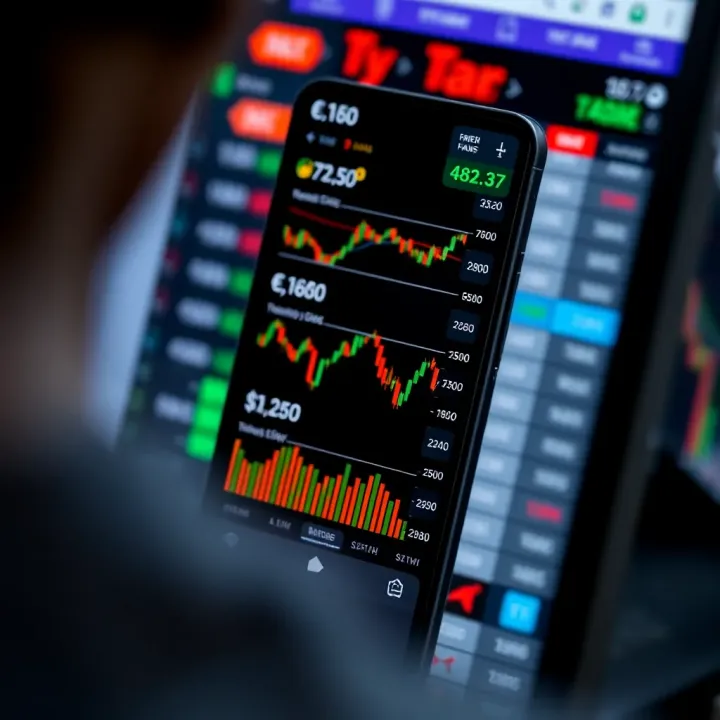
Explore top forex trading apps tailored for Kenyan traders 📱. Learn to choose wisely, ensure security 🔒, and trade confidently in Kenya’s forex market!

📚 Discover essential books for learning forex trading in Kenya! From basics to advanced tips, master strategies and risk management confidently.
Based on 8 reviews