

How to Learn Forex Trading in Kenya: Practical Steps
Learn forex trading in Kenya step-by-step 📈. Understand basics, master strategies, access tools & resources, manage risks, and trade confidently starting today!
Edited By
James Whitaker
Forex trading involves buying and selling currencies with the aim of making a profit. For Kenyans interested in this market, learning forex trading can be a practical way to diversify income and engage with global finance directly. The forex market operates 24 hours, five days a week, allowing flexibility that fits well with various lifestyles, including after-hours trading for those working day jobs.
Starting forex trading requires understanding the basics: currency pairs, exchange rates, pips (the smallest price moves), and leverage. Common pairs like USD/KES or EUR/USD are popular among Kenyan traders because of their high liquidity and relevance to the local economy.
Kenyan beginners should begin by selecting a trustworthy trading platform. Many local brokers offer access to international forex markets alongside educational resources. Examples include HF Markets, Pepperstone, and local banks that integrate forex trading with M-Pesa payments for easy deposits and withdrawals.
Risk management is key. It’s wise to start small, use stop-loss orders to limit potential losses, and avoid trading with money you cannot afford to lose. This approach protects your capital and builds confidence.
Practical steps to get going include:
Opening a demo account to practise without risking real cash.
Learning technical analysis tools—like moving averages and RSI—to spot potential trade opportunities.
Keeping up with global news affecting currencies, such as US Federal Reserve interest rate decisions or political changes in Kenya.
Consistency in your trading approach is vital. Keeping a trading journal helps track wins, losses, and lessons learned. Over time, this practice will sharpen your decision-making and strategy adaption.
Understanding key terms, local regulations, and using Kenyan-targeted resources can make forex trading less daunting and more effective. This guide will break down these elements, giving you a foundation to start trading smartly in Kenya’s dynamic market.
Grasping the basics of forex trading sets a firm foundation for anyone keen on entering this market. Without clear understanding, traders often stumble, losing hard-earned money or falling for misleading schemes. In Kenya, where many are exploring forex as an income source, knowing these essentials helps separate serious trading from mere speculation.
Forex trading involves buying one currency while simultaneously selling another. These trades happen in pairs, like the US dollar (USD) against the Euro (EUR). The goal is to benefit from changes in exchange rates — for example, if you buy USD/EUR and the US dollar strengthens against the Euro, you gain when you sell back.
This market operates 24 hours a day, offering flexibility. However, it requires attention to global events affecting currency values, such as economic reports or geopolitical tensions. Traders in Kenya might focus on key pairs like USD/KES since exchange rates impact import costs and business decisions locally.
Unlike stocks or bonds, forex trading deals only with currencies, not company shares or debt. This means market movements are influenced more by national economies and political stability than company profits. For instance, Kenya’s shilling may weaken if inflation rises or crop production drops, affecting USD/KES pairs directly.
Forex also boasts higher liquidity than many markets. This means you can buy or sell currency pairs quickly at desired prices, with minimal delays. In comparison, finding a buyer for certain stocks in the NSE can take longer, especially for less popular firms.
Every forex trade involves two currencies known as a currency pair, expressed like USD/KES or EUR/USD. The first currency is the base, and the second is the quote currency. The exchange rate tells you how much of the quote currency you need to buy one unit of the base currency.
For example, if USD/KES is 110, it means it costs 110 Kenyan shillings to buy 1 US dollar. This rate fluctuates based on supply and demand, influenced by factors like trade balances, interest rates, and market sentiment.
The forex market includes different players: commercial banks, central banks, hedge funds, brokers, corporations, and retail traders like many Kenyans. Central banks stabilize their currencies through interventions. Commercial banks facilitate large currency transactions, while retail traders seek profit from short-term moves.
Understanding this mix is crucial because large institutions have significant influence on currency values. For instance, if the Central Bank of Kenya adjusts interest rates, this could make the shilling stronger or weaker, impacting your trades.
Forex trading offers chances to earn by taking advantage of price changes. Both rising and falling markets can be profitable if you predict the direction right. For example, if you expect the shilling to weaken against the dollar due to inflation worries, you might sell KES/USD and gain when the pair drops.
However, profits are not guaranteed. The market moves fast, and without sound strategy, losses can mount quickly, especially if you use leverage (borrowed money).
One attractive feature of forex is that it’s highly accessible. In Kenya, you can start trading with as little as a few thousand shillings via platforms accessible on smartphones or computers. Funding your account using M-Pesa or bank transfers makes it easy to join.
Besides, the forex market is the most liquid worldwide, handling billions daily. This liquidity ensures that you can enter and exit positions anytime during market hours without significant delays or price changes, which benefits even small traders.
Understanding these basics gives Kenyan beginners a clearer picture, helping avoid common pitfalls and making informed trading decisions.
Embarking on forex trading in Kenya requires practical steps to ensure success and security. This section guides you on setting up your trading journey with the right tools, focusing on brokers, account setup, and platforms. These elements matter to keep your investments safe, ease your trading process, and connect you to global markets effortlessly.
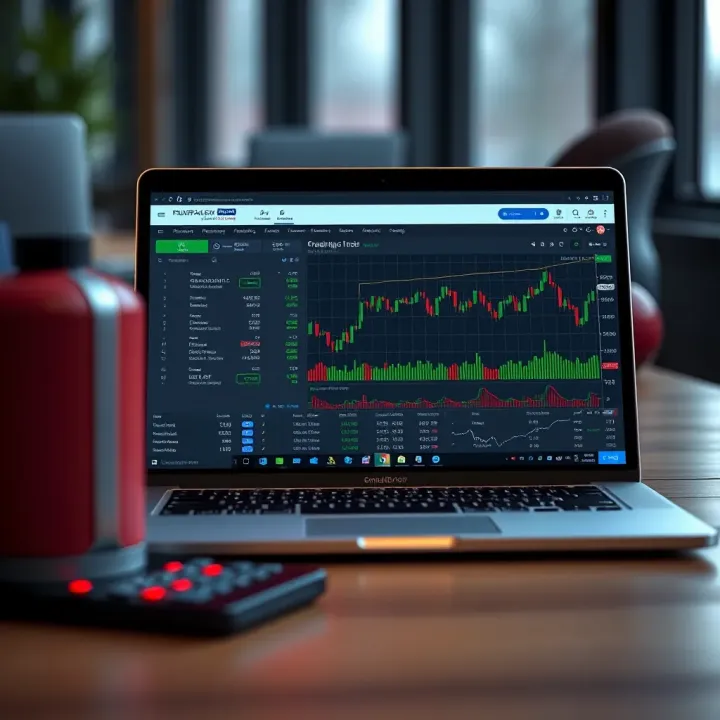
Picking a trustworthy broker is vital because they handle your money and provide the platform for your trades. You should check the broker’s licences, reputation among Kenyan traders, and customer reviews. Also, see if their trading conditions, such as spreads and commissions, are competitive. For instance, brokers regulated by reputable authorities like the CMA (Capital Markets Authority) tend to offer better security and fair practices.
Popular brokers used by Kenyan traders include XM, HotForex, and FBS. These brokers accept deposits through easy methods like M-Pesa and offer platforms familiar to Kenya’s market. They also provide support in local time zones, helping you resolve issues faster. Choosing such brokers means you avoid the hassle of unreliable services or dealing with brokers unfamiliar with Kenyan payment options.
Trading accounts come in different types, each tailored for varying trading goals and capital amounts. A standard account might suit experienced traders who want more features, while a mini or micro account allows beginners to start with smaller investments. Some brokers offer demo accounts where you can practise with virtual money before committing real funds.
Funding your account locally is straightforward, thanks to the widespread use of M-Pesa and bank transfers. Most Kenyan brokers and international ones accept deposits from M-Pesa, making it fast and cost-effective to top up your trading wallet. For example, transferring KSh 5,000 via M-Pesa is usually quicker and safer than international bank transfers, which may take days and incur high fees.
The most common platforms in Kenya are MetaTrader 4 (MT4) and MetaTrader 5 (MT5). Both platforms offer user-friendly interfaces, charting tools, and automated trading options. MT4 remains popular due to its simplicity and strong community support, while MT5 adds improved features like more timeframes and order types.
You can use these platforms via desktop or mobile apps. Mobile trading apps allow Kenyans to monitor the markets and place trades on the go, which is handy given how many rely on smartphones for internet access. Desktop versions provide richer charting and analytical tools, preferred by traders who dedicate longer hours to market analysis. Having access on both devices helps balance flexibility and depth of trading.
Starting with the right broker, funding options, and platform ensures a smoother entry into forex trading. Kenyans benefit from localised payment methods and widely adopted tools that match global standards.
These foundational steps set you up to trade with more confidence and around your schedule. Next, you can explore key forex concepts and risk strategies to refine your skills further.
Grasping the key concepts of forex trading is necessary before putting money on the line. These fundamentals shape how traders interpret market movements and execute trades effectively. Kenyan beginners, especially, benefit from understanding these concepts clearly to avoid costly mistakes and to build a solid foundation.
Forex trading always involves currency pairs, which represent how much of one currency you need to buy a unit of another. The pairs are grouped into majors, minors, and exotics based on their popularity and liquidity. Major pairs like USD/KES (US Dollar/Kenyan Shilling) or EUR/USD (Euro/US Dollar) are widely traded and typically have lower spreads. Minor pairs exclude the US dollar but include actively traded currencies like GBP/JPY (British Pound/Japanese Yen). Exotic pairs pair a major currency with a less common one, such as USD/ZAR (US Dollar/South African Rand). Exotic pairs tend to have higher spreads and more volatility, meaning they might cost more to trade but also present unique opportunities.
Knowing the type of currency pair helps you manage trading costs and understand market behaviour. For instance, trading USD/KES on a broker that supports local currency can be more straightforward for Kenyans due to easier deposits and withdrawals.
When you see a forex quote, there are two prices: the bid and the ask. The bid price is what buyers are willing to pay for a currency pair, while the ask price is what sellers want. The difference between these two is called the spread — this is usually where brokers make their money. For example, if the EUR/USD bid is 1.1000 and the ask is 1.1003, the spread is 0.0003 or 3 pips. Knowing how to read these prices helps traders decide when to enter or exit trades and understand transaction costs involved.
Leverage lets you control a large position with a relatively small deposit, called margin. In Kenya, many brokers offer leverage ratios like 1:100, meaning you can trade KSh 100,000 worth of currency by putting down just KSh 1,000. This boosts potential returns but also magnifies risks.
Using leverage wisely is critical. While it can multiply profits, it can just as quickly amplify losses. Losing beyond your trading balance is possible if you're not careful. That’s why setting strict limits and using tools like stop losses is vital to manage these risks effectively.
Forex charts show the price movement of currency pairs over time. Common chart types include line charts, bar charts, and candlestick charts, with candlestick charts being the most popular among traders for their visual clarity. Each candlestick shows the open, close, high, and low prices in a chosen time frame, helping traders spot patterns and trends.
Traders use technical indicators to understand market momentum and possible reversals. Popular tools such as the Moving Average (MA), Relative Strength Index (RSI), and Bollinger Bands help identify overbought or oversold markets and potential entry or exit points. For instance, if the RSI for USD/KES rises above 70, the pair might be overbought, signalling a possible price drop.
Understanding these concepts — currency pairs, quotes, leverage, and charts — equips Kenyan forex traders with practical tools to navigate the market confidently and protect their capital effectively.
Managing risks is the backbone of successful forex trading. Without protecting your capital, no amount of skill or strategy can save you when the market turns against you. For Kenyan traders, this means understanding and preparing for the ups and downs in currency prices, and never risking more than you can afford to lose. Taking care of your trading money isn't just cautious — it’s central to staying in the game for the long haul.
Setting risk limits per trade helps you keep control. A common practice is to risk no more than one to two percent of your total trading capital on a single trade. For example, if you have KSh 100,000 in your trading account, risking KSh 1,000 or KSh 2,000 on one trade helps to protect you from big losses that could wipe your account quickly. This disciplined approach means your account can survive several losing trades without being wiped out.
Managing risk reduces the chance of losing excessively and helps you stay calm when markets get choppy. A sudden drop in the value of the US dollar against the Kenyan shilling, for example, could catch many traders off guard. If you have set limits on your losses, the impact won’t be devastating. Without these safeguards, emotional decision-making can kick in, often leading to bad choices like chasing losses.
Risk management also allows you to trade more confidently knowing you have a cushion. It keeps your capital intact for opportunities ahead rather than gambling everything on a single bet. Many newbie traders overlook this and rush into the market hoping for quick wins, only to lose poorly managed funds fast.
Deciding the amount of money to risk per trade depends on your total capital and risk tolerance. Start small and increase as you gain experience. For example, a trader with KSh 50,000 can risk KSh 500 or KSh 1,000 per trade safely. This way, even a streak of five loss trades won’t drain your entire account.
You can use your trading platform’s tools to calculate position size automatically based on your risk limits and stop loss levels. This adds discipline and removes guesswork. Remember, it’s about surviving the market, not betting big for quick gains.
How to Set Stop Loss: A stop loss is an automatic order to close a trade at a certain price to limit loss. Setting it requires looking at recent price swings or chart support levels. For example, if you buy the EUR/USD pair at 1.1000, a stop loss could be set at 1.0950 to cap loss at 50 pips. This prevents the trade from running you down if the market moves unfavourably.
Using stop loss means you won’t need to monitor markets every second to prevent heavy losses — the platform takes care of it. Kenyan traders especially find this useful amid busy days or when internet connections falter.
Benefits of Take Profit Orders: Take profit locks in gains by closing a trade automatically once it hits a desirable profit level. It’s wise to set take profits while planning your trade, balancing realistic profit targets against risk. For example, if risking 50 pips, setting a take profit at 100 pips gives a 2:1 reward-to-risk ratio.
This approach helps avoid the trap of holding on hoping for more gains, only to watch profits evaporate when the market changes direction. It’s a way to safeguard your hard-won earnings.
Emotional Trading Pitfalls: Emotions like fear, greed, or frustration often cloud judgement and lead to rash decisions. For instance, after a losing trade, some jump into revenge trading with higher stakes to recover losses quickly. This usually results in even bigger losses. Keeping calm and sticking to your plan helps prevent emotional responses from ruining your capital.
Overtrading and Poor Money Management: Trading too frequently to chase profit or ignoring risk limits can drain your funds quickly. Some traders open several positions with little research or proper fund allocation, hoping one will pay off. Often, this backfires as losses accumulate. Good money management means planning your trades, spacing them out, and never risking money you can't afford to lose.
Managing your risks and protecting your capital isn’t an option — it’s the foundation of lasting forex trading success. Without it, even the best strategies fail. Kenyan traders who build this discipline early will find their trading journey much smoother and less stressful.
To succeed in forex trading, developing consistency and steadily improving your skills is vital. Without a clear strategy and a disciplined approach, even the best traders can lose money quickly. Consistent trading helps you stick to your plan, avoid knee-jerk decisions, and build confidence over time. Kenyan traders who treat forex as a serious business, not just a game of chance, tend to perform better.
A solid trading strategy is your roadmap in the forex market. There are different types of strategies you can consider, such as trend following, scalping, or breakout trading. For example, trend followers look to ride longer price movements by identifying currency pairs moving steadily upwards or downwards. On the other hand, scalpers make many quick trades to profit from small price changes, which demands quick decision-making and a good platform.
Choosing the right strategy depends on your personality, time availability, and goals. A Kenyan trader juggling a day job might prefer swing trading, which involves holding positions for days, unlike scalping which requires constant monitoring.
Once you have a strategy, testing it against historical data or in a demo account helps. This process reveals if the strategy is profitable and what adjustments are needed. Over time, refining your approach by reviewing trades and market conditions improves your edge.
A trading journal is critical for tracking your trades and their outcomes. Write down details like entry and exit points, position sizes, strategy used, and emotional state. This practice helps you spot patterns in your successes and failures, which often go unnoticed if you rely on memory alone.
For instance, if you notice consistently losing trades in volatile sessions around Kenyan market opening times, you might adjust your strategy or avoid trading then. A journal also encourages discipline and accountability, two qualities that separate professional traders from amateurs.
Besides tracking, reviewing your journal regularly allows you to learn from mistakes and reinforce successful habits. You may discover that certain currency pairs suit your style better, or that emotions like fear lead you to exit trades prematurely.
Before risking real money, demo accounts let you practice trading with virtual funds. This hands-on experience builds your comfort with platforms like MetaTrader 4 or 5, and familiarises you with order types, indicators, and chart reading.
Demo trading is especially useful for Kenyan beginners who may be testing strategies or just learning how different currency pairs move. It removes the pressure of losing money, so you can focus on understanding market dynamics.
However, transitioning from demo to live trading requires care. Real money triggers emotions that demo accounts do not. Start with small amounts and gradually increase as your confidence and skills improve. This cautious approach helps you handle the psychological challenges of live trading without blowing your capital.
Consistency grows from disciplined habits: develop a strategy, keep a detailed journal, practise on demo accounts, and steadily refine your skills as you trade live. This approach can build solid foundations for any Kenyan forex trader aiming to succeed.
Access to solid resources and support is vital for Kenyan forex traders aiming to grow their skills and navigate the market confidently. Whether you're struggling to understand technical concepts or seeking guidance on the latest trends, having a reliable network and up-to-date information is a real advantage. Localised support also helps traders tackle challenges unique to the Kenyan market, such as regulations, payment methods like M-Pesa, and access to timely market news.
Online courses provide flexible, structured learning for beginners and intermediate traders alike. Platforms such as Udemy and Coursera offer forex trading courses that cover key basics and advanced strategies. These courses often include video lessons, quizzes, and community discussions, making it easy to learn at your own pace. Some Kenyan training providers also offer tailored forex courses that consider local market nuances and common challenges faced by traders here.
Local workshops and seminars bring valuable face-to-face learning opportunities. Organisations like the Nairobi Securities Exchange and local forex education centres occasionally host events where you can interact directly with experienced traders and instructors. Attending these workshops allows you to ask questions, network with fellow traders, and get hands-on mentoring, which is hard to replicate in online-only courses.
Joining Kenyan forex trading groups can be a game-changer. These online communities, often found on WhatsApp and Facebook, provide daily tips, market discussions, and emotional support. Being part of such a community keeps you motivated and helps you learn from other traders' successes and mistakes in real time. It also creates a platform for sharing local broker feedback and updates on regulatory changes affecting Kenyan traders.
International forex communities offer broader perspectives on global market trends and trading strategies. Platforms like Forex Factory and BabyPips host forums where traders from around the world exchange views, analyse economic events, and offer advice. These spaces can complement local groups by exposing you to diverse trading styles and deeper market analysis.
Keeping up with forex news is crucial. Sources like Bloomberg, Reuters, and local business newspapers such as Business Daily provide timely updates on economic events, central bank policies, and geopolitical developments that impact currency prices. Following credible news sources prevents surprises and helps you make informed trading decisions.
Economic calendars and reports help you track scheduled events like interest rate announcements, GDP releases, and inflation data. Websites hosting these calendars provide time-stamped entries that alert you to upcoming market movers. By planning your trades around these known events, you can better manage risk and avoid unexpected volatility.
Staying connected to the right resources and communities gives you an edge in the forex market. It helps you trade smartly, avoid common pitfalls, and build a solid foundation for consistent success.
Learn forex trading in Kenya step-by-step 📈. Understand basics, master strategies, access tools & resources, manage risks, and trade confidently starting today!

📈 Learn how to start forex trading in Kenya with a trusted broker, set up your account, master key terms, and manage risks for better chances of profit. 🇰🇪

📈 New to forex trading in Kenya? Learn how to start safely with clear steps, local rules, key terms, smart strategies, and free PDF guides for beginners.
📊 Explore forex trading in Kenya with practical steps, learn about local regulations, manage risks, and discover strategies to trade forex confidently in the Kenyan market.
Based on 10 reviews