
Understanding Forex Trading for Kenyan Traders
📈 Learn how forex trading works and the best methods for Kenyan traders. Discover platforms, strategies, risks, and tips to trade forex safely using local practices.
Edited By
Matthew Clarke
Forex trading in Kenya has gained significant attention as more people seek to diversify income sources beyond traditional jobs. This market offers opportunities to trade currencies, with the aim of making profits from fluctuations in exchange rates. For Kenyan traders, understanding how forex works and the unique local factors involved is essential before diving in.
The currency market operates 24 hours a day, five days a week, allowing flexibility for traders who balance other commitments. Most trading happens through online platforms, which have grown more accessible thanks to mobile internet and popular payment options like M-Pesa and bank transfers. For instance, platforms such as XM, HotForex, and FXTM are commonly used by Kenyan traders due to their ease of funding and withdrawal.
Kenyan regulatory bodies like the Capital Markets Authority (CMA) have taken steps to oversee forex trading locally, but caution remains necessary. Many brokers operating in Kenya are offshore, making it crucial for traders to verify licences and customer protections to avoid scams. Checking broker registration with CMA offers one layer of security.
A crucial first step for anyone considering forex trading is education. Learning about currency pairs, leverage, margin, and stop-loss orders helps manage risks better. For example, understanding that trading on high leverage can quickly escalate losses will prevent costly mistakes. Workshops and online courses tailored for Kenyan traders are available, often highlighting local case studies.
Remember, forex trading is not a get-rich-quick scheme but a skill that requires patience, discipline, and continuous learning.
Starting small and practising using demo accounts lets you build confidence without risking real money. Keep in mind that the Kenyan shilling differs in volatility compared to major currencies like the US dollar or euro, so studying the behaviour of USD/KES and EUR/KES pairs can give insights into the local market dynamics.
Beyond platforms and knowledge, reliable internet and payment infrastructure matter. M-Pesa remains the preferred payment method for many, thanks to its ubiquity and speed. However, traders based outside major towns need to ensure stable data connections to avoid missing trading opportunities or making costly errors.
In summary, forex trading in Kenya offers practical chances if approached with clear understanding and caution. You need to pick the right broker, use sound trading strategies, stay informed on regulation, and leverage local tools such as M-Pesa to manage your finances effectively.
Forex trading has caught the attention of many Kenyans over the past decade, especially those looking to diversify income sources beyond traditional jobs. Understanding what forex trading is and why it appeals locally helps new traders navigate this market confidently, avoiding common pitfalls.
Forex trading involves buying and selling currencies to profit from changes in their exchange rates. Unlike stock markets, the forex market operates 24 hours a day on weekdays, allowing traders to respond to news and economic events almost instantly. This continuous operation makes it attractive for those who want flexible trading hours.
In forex, currencies are traded in pairs, like USD/KES (US Dollar/Kenyan Shilling) or EUR/USD (Euro/US Dollar). The first currency in the pair is the base, while the second is the quote. When you buy a pair, you’re buying the base currency and selling the quote; selling means the opposite. The aim is to buy low and sell high, or vice versa, to make a profit from the difference in rates.
For Kenyan traders, understanding the USD/KES pair is vital since many importers, exporters, and investors track it closely. Sharp movements in this pair can offer opportunities but also risks.
The forex market opens on Sunday evening and closes on Friday evening, running continuously in between. It’s divided into major sessions: Asia (Tokyo), Europe (London), and North America (New York). Kenyan traders commonly find the London session (3 pm to 12 am EAT) most active, offering good liquidity and price movements.
One of the biggest draws for Kenyans is that forex trading is accessible via smartphones and internet. Platforms like MetaTrader 4 and MetaTrader 5 have mobile apps compatible with most devices. With Safaricom's reliable network and M-Pesa for seamless deposits and withdrawals, many Kenyans can start trading with just KSh 5,000 or less, even from rural areas.
Forex trading can be a side hustle for many Kenyans juggling multiple jobs or businesses. Since trading doesn't require fixed office hours, it fits into the busy lives of boda boda riders, market vendors, or university students. While profits aren't guaranteed and require skill, successful traders often supplement income without quitting their main jobs.
Young Kenyans are progressively getting involved in forex due to increased awareness through social media groups, online courses, and peer recommendations. Many view trading as a way to break out of limited job opportunities. This growth comes with a need for reliable education to avoid scams and unrealistic promises often shared online.
Forex trading in Kenya stands out because it matches the lifestyle and economic realities of many traders. Access through mobile platforms, flexible hours, and potential earnings make it a popular choice — but solid understanding and cautious approach remain key.
Starting forex trading in Kenya means understanding key steps that influence success and security in the market. This section guides you through finding the right broker, setting up your account, funding it properly, and choosing the tools best suited for your trading style. These details are essential because they affect everything from transaction costs to the safety of your money.
Key features to look for include transparency in pricing, fast execution speeds, and accessible customer support. For instance, a broker offering clear spreads and commissions helps you understand exactly what you’re paying. A broker with quick order execution is crucial because forex markets change rapidly; delays could cost you. Also, consider brokers with localised support that maybe communicate in English and Swahili to ease your queries.
Popular brokers accessible to Kenyan traders often include firms like XM, HotForex, and FXTM. These brokers have tailored services for African clients, offer M-Pesa deposits, and comply with regulatory standards. Choosing among them depends on the specific account features you want, such as low minimum deposits or particular trading platforms.
Role of licensing and trustworthiness can’t be overstated. Licensed brokers regulated by reputable authorities like the Capital Markets Authority (CMA) or international bodies such as the Financial Conduct Authority (FCA) offer safeguards against fraud. Before investing real money, verify if the broker holds a valid licence and check for any client complaints or blacklists. Trustworthy brokers minimise the risk of scams common in unregulated markets.
Account types and their differences matter because they suit different trader experience levels. A standard account might require higher capital but offer lower spreads, while micro accounts let beginners trade with smaller amounts and lower risk. Some brokers also provide Islamic accounts that adhere to Sharia law, important for Muslim traders in Kenya.
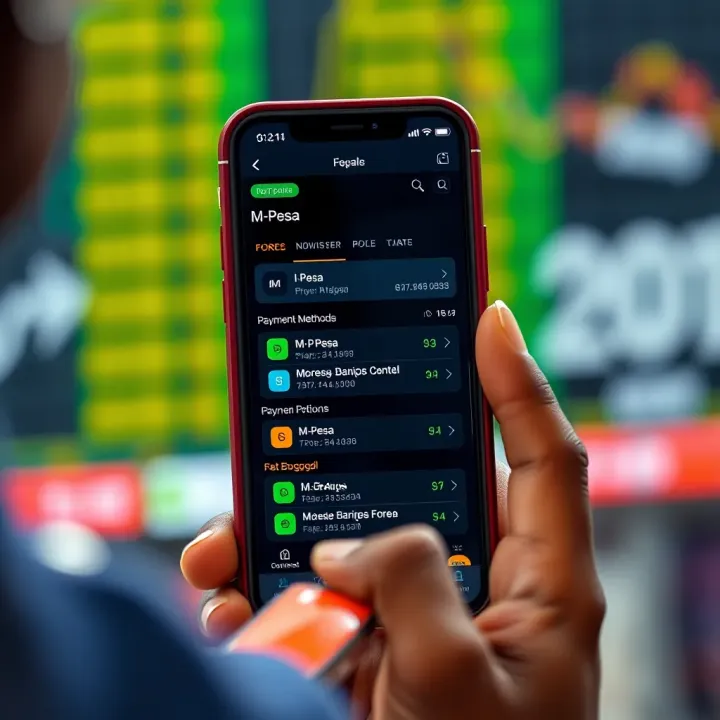
Payment methods including M-Pesa are critical to ease of deposit and withdrawal. M-Pesa is widely used in Kenya, making it a straightforward choice for funding your forex account. Additionally, options like bank transfers, credit cards, and mobile wallets are usually available. Always check the deposit time and fees; instant deposits through M-Pesa save time and allow you to react faster to market moves.
Minimum deposit requirements vary, with many brokers offering accounts from as low as KS,000, which lowers the barrier for entry. However, selecting an account with a very low deposit might come with higher spreads or limited features. It pays to balance affordability with the features that support effective trading.
MetaTrader and other trading software are standard choices, especially MetaTrader 4 and 5. These platforms offer user-friendly interfaces, technical analysis tools, and automated trading options. Knowing how to navigate them is essential since they form your primary link to the market.
Mobile apps vs desktop platforms serve different needs. Many Kenyan traders prefer mobile apps for trading on the go, especially during daily commutes in matatus or while at work. Desktop platforms typically offer more comprehensive tools and are better suited for in-depth analysis. It's common to use both depending on your trading routine.
Demo accounts for practice provide a risk-free environment to test strategies without investing real money. They replicate live market conditions to help you learn how trades execute and how markets behave. For example, a new trader can spend weeks on a demo account, experimenting with stop-loss settings before going live.
Getting started properly with a trusted broker, funding your account securely, and mastering your trading tools set the foundation for a more confident and controlled forex experience in Kenya.
Understanding the regulatory environment is key for anyone looking to trade forex in Kenya. The oversight ensures traders deal with legitimate brokers and safeguards their investments. Without clear regulation, traders risk falling prey to scams or untrustworthy platforms. This section covers how Kenya’s regulatory framework influences forex trading and the specific roles played by authorities like the Capital Markets Authority (CMA).
The Capital Markets Authority (CMA) is the main regulatory body overseeing forex trading in Kenya. A big part of its role is licensing forex brokers that operate locally or offer services to Kenyan traders. When a broker is licensed by the CMA, it means they have met certain standards designed to protect investors. This includes having transparent operations, proper risk management, and adequate capital reserves. For example, brokers like EGM Securities and SBG Securities are some of those licensed, providing traders more confidence.
CMA also enforces investor protection measures. These include ensuring brokers keep client funds separate from their own business money, providing clear information on fees and risks, and offering dispute resolution channels. Such measures help limit losses caused by broker insolvency or malpractice. For the everyday trader, this means having more security and recourse if something goes wrong.
In recent years, the CMA introduced updated rules to keep pace with growing forex activities. This includes stricter licensing requirements and regular audits of brokers to ensure continued compliance. One notable update is the requirement for brokers to report suspicious trading activities and implement stronger Know Your Customer (KYC) procedures. These changes aim to reduce fraud and promote a safer trading environment for Kenyans.
Trading through unregulated brokers carries significant risks. There have been multiple reported cases of fraud where unlicensed platforms vanished with traders’ funds or manipulated trades unfairly. Such scams often lure victims by promising high returns with little risk, only to disappear once deposits are made.
To avoid these risks, verifying broker legitimacy is crucial. Kenyan traders should check the CMA's official list of licensed brokers before opening any accounts. Besides this, online reviews and community forums can offer practical insights. Ensuring the broker provides clear contact details and transparent terms is also helpful.
Using regulated platforms brings tangible benefits. Besides having legal backing, these brokers usually follow international best practices for security and transparency. This reassures traders that their money is safer and trading conditions fairer. Additionally, regulated brokers often provide customer support and educational resources, which are valuable for both beginners and experienced traders.
Always prioritise broker regulation by the CMA when choosing where to trade forex. It is the first line of defence against fraud and unfair practices in the Kenyan market.
In summary, the regulatory environment shaped by the CMA in Kenya offers traders both protections and confidence. Traders should actively use this knowledge to navigate the forex market safely and avoid potential pitfalls posed by unregulated brokers.
Understanding various trading strategies and practical tips is key for Kenyan traders aiming to succeed in the forex market. By adopting approaches suited to their goals and risk tolerance, traders can improve their chances of consistent profits while managing the risks inherent in volatile currency markets.
Day trading and scalping basics: Day trading means opening and closing positions within the same day to benefit from small price moves. Scalping is an even faster style, where trades last just minutes or seconds. Both methods work well for traders who can monitor the markets closely and act quickly. For instance, a Kenyan trader might scalp during overlapping London and New York sessions when liquidity and volatility peak, enabling frequent small gains. These approaches demand focus, fast decision-making, and a solid grasp of technical indicators.
Swing trading for medium-term gains: Swing trading involves holding trades for several days or weeks to capture larger market moves, suitable for those who cannot watch markets all day. A trader in Nairobi might analyse economic reports or political developments that influence currencies like USD/KES over the medium term. Since swing trading requires less constant monitoring than day trading, it suits individuals balancing forex with full-time jobs or other hustles.
Using technical and fundamental analysis: Technical analysis focuses on reading charts and patterns to predict price movement, common among traders for timing entry and exit points. For example, a Kenyan trader may use moving averages or RSI (Relative Strength Index) on platforms like MetaTrader to decide when to buy or sell. Fundamental analysis looks at economic factors such as interest rates, inflation, or Kenya’s balance of trade to assess currency strength. Combining both analysis types helps traders build a better view of market direction.
Setting stop-loss and take-profit points: Stop-loss orders limit potential losses by automatically closing a trade at a predefined price. Take-profit points secure gains by closing positions when a target price is reached. For example, starting traders could set stop-loss at 1% below their entry price on USD/KES and take profit at 2% above to protect capital in unpredictable markets.
Managing risk efficiently prevents losses that can quickly wipe out trading accounts, especially with the often volatile shilling paired in forex.
Starting with small investments: New traders in Kenya often begin with modest capital, sometimes as low as KSh 5,000, using demo accounts or low minimum deposits. This cautious start helps them learn without risking too much money, which is crucial given forex’s complexity and rapid price swings.
Avoiding emotional or impulsive decisions: Emotional trading, such as chasing losses or overtrading, commonly leads to poor outcomes. Kenyan traders benefit from a disciplined approach, following their trading plans strictly and avoiding rash moves after market shocks or rumours. Practising patience and sticking to set strategies helps maintain a steady growth curve.
Adopting these strategies and tips with consistency can set Kenyan forex traders on a path to sustainable trading. Always remember, forex is not a quick rich scheme but a skill developed over time with disciplined effort.
Forex trading can be rewarding, but Kenyan traders face some specific challenges that affect their success. Understanding these hurdles helps traders prepare better and avoid common pitfalls, especially given the volatility of the currency market and local infrastructure issues. Besides, the threat of scams is real, so knowing how to spot and report fraud is essential.
The Kenyan shilling (KES) often experiences sudden value shifts due to local economic changes like inflation rates, government borrowing, or agricultural output. For forex traders dealing with KES pairs, these swings can amplify profits but also results in heavier losses if not carefully managed. For example, during election seasons, political uncertainty can cause the shilling to weaken, impacting forex positions tied to it.
Reliable internet access is a lifeline for forex traders. However, many parts of Kenya still struggle with unstable connectivity, especially rural areas. Interrupted internet during a crucial trade can mean missing entry or exit points, costing money. Traders often use mobile networks like Safaricom's 4G, but even these sometimes drop signal or slow down during peak hours.
Global happenings such as changes in US Federal Reserve interest rates, oil price shocks, or geopolitical tensions affect currency pairs worldwide. Since many Kenyan traders engage with major pairs like USD/KES or EUR/USD, international events directly impact their trading. For instance, a sudden hike in US interest rates tends to strengthen the dollar, influencing how USD/KES trades and requiring traders to keep updated with global financial news.
Scam brokers often promise guaranteed returns or unusually high profits with little risk, which should raise alarms. Other signs include requests for excessive personal information early on, pressure to deposit large sums quickly, and lack of transparent terms. Also, unregulated brokers may not offer clear withdrawal procedures, trapping traders’ funds.
Kenyan traders benefit greatly from online forums and communities where they share broker experiences. Platforms like local Facebook groups, Twitter, and specialised forex forums help identify active scam reports or trustworthy brokers. Engaging in these groups can give you practical insight beyond official sources.
If you suspect a broker is fraudulent, reporting the matter to the Capital Markets Authority (CMA) is vital. CMA oversees forex trading regulation in Kenya and can investigate complaints. In addition, alerting fellow traders through community channels helps protect others from falling victim. Timely reporting can sometimes help freeze assets or prevent further scams.
Staying alert to market factors and fraud risks creates a stronger foundation for forex trading in Kenya. Being aware of shilling volatility, infrastructure challenges, and global influences keeps your trading realistic and adaptive. At the same time, recognising scams protects your capital and builds confidence.
Traders who actively monitor these challenges tend to make more informed decisions and avoid costly mistakes.
📈 Learn how forex trading works and the best methods for Kenyan traders. Discover platforms, strategies, risks, and tips to trade forex safely using local practices.
📈 New to forex trading in Kenya? Learn how to start safely with clear steps, local rules, key terms, smart strategies, and free PDF guides for beginners.
📊 Explore forex trading in Kenya with practical steps, learn about local regulations, manage risks, and discover strategies to trade forex confidently in the Kenyan market.
📈 Learn online forex trading in Kenya! Get practical tips on platforms, strategies, risk management & Kenya's regulations for smarter forex decisions.
Based on 11 reviews