

Forex Trading Charts Explained for Kenyan Traders
📊 Master forex trading charts with our practical guide for Kenyan traders! Learn to read charts, use indicators, and choose the right timeframes to boost your strategy.
Edited By
Benjamin Davies
Forex trading offers a chance to earn profit by exchanging one currency for another. In Kenya, many traders have tapped into this market to supplement incomes or build a career in financial markets. However, profiting consistently requires more than just luck; it calls for clear understanding and practical strategies tailored to local realities.
To make profits in forex, you must grasp how currency pairs move, plus factors influencing exchange rates such as interest rates, political events, and economic data. For example, during election periods in Kenya, the shilling might fluctuate due to market uncertainty, presenting either risk or opportunity.

Trading profit arises mainly from correctly predicting these price movements—buying a currency at a lower price and selling it at a higher one, or vice versa in short-selling. But the thing is, the forex market can be volatile with frequent ups and downs. That’s why risk management is central—protecting your capital from large losses while aiming for reasonable gains is key.
Local Kenyan traders should also consider payment methods that fit the market. M-Pesa, widely used across Kenya, allows fast and secure deposit and withdrawal of funds on many forex platforms, reducing delays common with international bank transfers. Choosing reputable brokers regulated or with a solid track record helps avoid scams. MFA (Mutual Fund Association) and CMA (Capital Markets Authority) guidance can steer you towards safer options.
Successful forex trading in Kenya hinges on blending good market knowledge, practical tactics, disciplined money management, and choosing the right local-friendly platforms.
Here is a quick checklist for new traders:
Understand currency pair basics and what moves the market
Use demo accounts to practise without risking real money
Adopt risk controls such as stop-loss orders
Stick to trading plans and avoid emotional decisions
Use payment methods like M-Pesa for quick transactions
Always verify broker reputation and regulation status
By focusing on these practical elements, Kenyan traders can navigate forex markets more confidently and increase chances of earning consistent profits over time.
Understanding how forex trading generates profit is key for Kenyan traders aiming to succeed in this fast-moving market. Forex trading revolves around buying and selling currency pairs, where profit comes from changes in exchange rates. Knowing the specific elements that affect profits helps traders make informed decisions and effectively plan their trades.
Exchange rate movements are the core of forex profits. When you buy a currency pair expecting the base currency to gain value against the quote currency, profit arises if the exchange rate moves in your favour. For example, if you buy USD/KES at 110.5 and it rises to 112.0, selling at this point nets a profit. Movement can be rapid or slow depending on market conditions such as economic news, interest rate changes, or geopolitical events. Kenyan traders often watch the US Dollar closely since it influences many local and regional transactions.
Leverage and margin effects amplify profit potential but also increase risk. Brokers typically offer leverage ratios such as 1:100, meaning you can control KS00,000 worth of currency with just KS,000 margin. This magnifies gains if currency moves favourably. For instance, a 1% move on a KS00,000 position equals KS,000 profit instead of just KS0 without leverage. However, the same principle applies to losses. Kenyan traders must be cautious not to over-leverage and risk wiping out their accounts on sudden market swings.
Spread and transaction costs directly impact profitability. The spread is the difference between the buying (ask) and selling (bid) prices quoted by brokers, often measured in pips. For instance, if the spread on EUR/USD is 2 pips, this cost must be overcome before a trade becomes profitable. Frequent trading, like scalping, makes spreads a key factor as costs accumulate quickly. Additionally, some brokers charge commissions or overnight swap fees, which Kenyan traders should consider when planning their trading frequency.
Currency pairs vary in profit potential depending on their category. Major pairs like EUR/USD, USD/JPY, and USD/KES involve the most traded currencies with high liquidity and tighter spreads, making them popular for steady profits. Minor pairs exclude the US Dollar but involve other strong currencies like EUR/GBP with moderate volatility and slightly wider spreads. Exotic pairs incorporate currencies from emerging or smaller economies such as USD/ZAR or USD/TRY; these typically offer greater volatility and higher spreads, which can mean both bigger profit opportunities and higher risks.
Volatility impact on profit opportunities is significant in forex. Volatility measures how much and how quickly prices change. Higher volatility means bigger price swings, allowing for larger profits if timed correctly. Kenyan traders might spot more volatility during times of major economic reports or unexpected events like a Central Bank of Kenya policy review or political changes. That said, high volatility demands strong risk controls, as erratic price movements can erode gains quickly if not managed properly.
Successful forex trading is about balancing these elements—understanding exchange rate behaviour, managing leverage carefully, accounting for trading costs, and choosing the right currency pairs matched to your risk appetite and market conditions.
In Kenya's dynamic trading environment, mastering these factors can help you turn forex trading from guesswork into a systematic profit-building activity.
To grow your earnings in forex trading, having clear strategies is essential. Without a plan, traders risk making decisions based on emotions or guesswork, which often leads to losses. Employing effective methods like technical and fundamental analysis helps you understand market behaviour, while choosing the right trading style allows you to align your approach with your goals and timeframe.

Using charts and indicators effectively is fundamental for spotting trading opportunities. Charts display currency price movements over time, helping you identify trends or reversals. For instance, using moving averages can smooth out price data and reveal whether a currency pair is trending upwards or downwards. Indicators like the Relative Strength Index (RSI) highlight if a market is overbought or oversold, signalling potential entry or exit points. Kenyan traders can use these tools on platforms like MetaTrader 4 (MT4), which is popular locally and easy to customise.
Understanding economic news impact means recognising how events affect currency values. Announcements such as Kenya's inflation rate, Central Bank of Kenya (CBK) policy decisions, or US Federal Reserve interest rate changes can cause sudden price swings. For example, a positive GDP report from Kenya might strengthen the shilling against the dollar, offering profit opportunities if you anticipate these moves. Keeping an eye on economic calendars and news helps you trade more informed and avoid surprises during high volatility.
Scalping and day trading involve making multiple quick trades within the day to capture small but frequent profits. Scalping might take advantage of tiny price movements lasting minutes, while day trading holds positions for several hours but closes them before market close. This approach requires fast decision-making and constant monitoring, which might suit traders with enough time during the day. For example, a trader might scalp the USD/KES pair during Nairobi stock market hours, utilising short-term chart patterns.
Swing trading and position holding focus on capturing larger moves over days or weeks. Swing traders look for trends or pullbacks, aiming to hold trades for a few days to maximise gains. Position holders might keep trades open for weeks or months, basing decisions on long-term economic fundamentals. This style suits those who prefer less screen time and are comfortable with wider price fluctuations. For instance, a swing trader might buy the EUR/USD expecting a week-long uptrend from improving European economic data.
Choosing the right strategy depends on your risk tolerance, available time, and market understanding. Kenyan traders should consider their daily routine and access to reliable internet when deciding which style fits best.
By mastering analysis techniques and selecting a fitting trading style, you can enhance your chances of making consistent profits in forex markets.
Risk management is key when trading forex, especially in Kenya’s fast-moving markets. Protecting your profits means knowing how to cut losses early and keep your gains while avoiding the temptation to gamble on uncertain trades. Without proper risk controls, a single bad trade can quickly wipe out weeks or even months of earnings.
Limiting losses on volatile markets
Stop loss orders are crucial for Kenyan forex traders because currency prices can shift suddenly due to local or global events. For example, unexpected changes in CBK’s policies or election results often trigger sharp market swings. A stop loss automatically closes your position at a predefined price, preventing further losses beyond your risk comfort level. This helps you avoid emotional decisions like holding onto a losing trade hoping it will bounce back.
Using stop loss is like having a safety net: if the Kenyan shilling weakens rapidly against the US dollar, your stop loss kicks in so you don’t lose more than you initially intended. This method protects your trading capital and keeps you in the game longer.
Securing gains automatically
Just as stop loss limits what you lose, take profit orders lock in your gains once the market hits a target price. Kenyan traders often underestimate the value of this tool, sometimes greedily holding onto profits too long and seeing them disappear when the trend reverses.
A take profit order lets your winning trade close automatically when it reaches your desired profit level. This is especially helpful when you are away from your trading screen or during busy periods. For instance, if you predict the EUR/KES will reach a certain level after a Central Bank announcement, setting take profit ensures you bank the gains without having to watch the market constantly.
Adjusting trade size to account for risk tolerance
Knowing how much of your money to risk on any single trade is vital. Position sizing involves deciding the volume you trade based on how much loss you can live with comfortably. For example, if you have KS00,000 trading capital but only want to risk 2% per trade, your maximum loss would be KS,000. This helps you trade systematically and avoid blowing your account on a single bad bet.
Having a clear risk limit allows you to scale trades up or down depending on market conditions and your confidence. If the market looks uncertain, reducing trade size helps protect your savings; during stronger trends, you might increase position size safely.
How leverage can magnify profits and losses
Leverage lets you control bigger trades with less money, popular with Kenyan traders using platforms like MT4/MT5. While it can boost profits on small price moves, it also increases the risk of heavy losses.
Say you use 1:100 leverage; a 1% move in the currency price could double or wipe almost your initial capital. Without careful leverage control, this can lead to quick account depletion, especially when markets spike unexpectedly due to events like international trade disputes or local political tensions.
Controlling leverage means choosing levels that match your experience and risk appetite. Beginners should use low leverage to avoid rapid losses, while trained traders might handle higher leverage but only with strict stop losses and position sizing in place.
Managing risks through stop losses, take profit orders, position sizing, and leverage control is not just about avoiding losses but ensuring your gains contribute to stable, long-term growth in your forex trading journey.
Picking the right forex broker and trading platform can make a big difference in how much profit you take home and how smooth your trading runs. Choosing a broker isn’t just about getting a platform to trade on; it’s about trust, costs, and tools that fit your style. Kenyan traders often face challenges like payment options and local regulation, so finding a broker that meets these needs is key.
Regulation and trustworthiness are top priorities. Kenyan traders should verify that brokers are regulated by recognised bodies such as the Capital Markets Authority (CMA) in Kenya, the Financial Conduct Authority (FCA) in the UK, or ASIC in Australia. Regulation protects your funds and ensures the broker follows fair trading rules. For example, a CMA-licensed broker operating in Kenya is required to keep client funds in segregated accounts. This separation reduces the risk of losing your money if the broker runs into financial trouble.
Trustworthiness also comes from reviews and word of mouth. Do check online forums or ask fellow traders about their experiences. A broker might offer shiny bonuses or promises, but if withdrawal requests take weeks or spreads widen unexpectedly, those are red flags.
Fees, spreads, and commission structures directly affect your profits. Brokers typically make money from spreads — the difference between the buying and selling price of a currency pair — or through commissions on trades. Some brokers offer zero-commission accounts but widen their spreads to offset costs. For Kenyan traders, tight spreads matter because every pip counts in profit.
Consider a broker offering fixed versus variable spreads. Fixed spreads give you certainty on costs, especially during volatile Kenyan trading hours, such as around important economic announcements. Meanwhile, commission fees should be transparent; some brokers charge per lot traded, which can add up if you're an active trader.
MetaTrader 4 (MT4) and MetaTrader 5 (MT5) are two of the most common forex trading platforms used worldwide. Both provide sophisticated charting tools, indicators, and automated trading options through Expert Advisors (EAs). MT5 is an upgrade, offering more timeframes, an economic calendar, and advanced order types. Kenyan traders who want more flexibility often prefer MT5 but many still use MT4 for its simplicity.
Some brokers also offer local platforms tailored to Kenyan traders, which may include easier integration with local payment methods or customer support in Swahili. These platforms might not be as feature-rich as MT4/MT5 but can simplify trading for beginners.
M-Pesa integration is hugely important for Kenyan traders. Many forex brokers have started accepting deposits and withdrawals directly via M-Pesa, making funding accounts quick and straightforward. This cuts out the hassle of international bank transfers, which can be slow and expensive.
Having M-Pesa as a payment option means you can top up your forex account using your mobile phone without visiting a bank, and withdrawing profits is just as simple. This accessibility encourages more Kenyans to participate in forex trading safely and efficiently.
Choosing the right broker and platform isn’t just about features; it’s about finding a partner you trust who understands the Kenyan trading environment and offers tools that suit your trading style and budget.
When trading forex from Kenya, certain local factors influence how you manage your profits and risks. These considerations include the payment methods you use to fund your trading account and withdraw earnings, and the regulatory and tax environment you must navigate. Ignoring these can lead to delays, losses, or even legal trouble.
Funding your forex account smoothly is critical to taking advantage of trading opportunities fast. Most Kenyan brokers now accept deposits through M-Pesa, a mobile money service widely used across the country. Depositing funds via M-Pesa is usually instant, which means if you spot a great trade, you can act without unnecessary delays. Besides M-Pesa, many brokers also accept bank transfers from Kenyan banks such as Equity Bank, KCB, and Co-operative Bank. However, bank transfers may take longer, sometimes one or two working days, so plan accordingly.
Withdrawing profits safely in Kenyan Shillings (KSh) requires choosing brokers who support local currency payouts. This avoids conversion fees and fluctuating exchange rates that eat into your earnings. Some brokers link directly with M-Pesa or allow bank withdrawals in KSh, simplifying access to your profits. For instance, a trader who earns KSh 50,000 in profits can receive the entire amount without losing any to unnecessary fees or delays, making forex trading genuinely profitable.
The Central Bank of Kenya (CBK) oversees financial markets and issues guidelines regarding forex trading to protect consumers. While Kenya does not have a specific forex trading body, verifying that your broker operates under international regulations and is legally allowed to provide services in Kenya is crucial. CBK’s list of registered financial institutions can help you check a broker’s credibility. Avoid brokers without clear licenses or those not complying with CBK frameworks to reduce the risk of fraud.
Regarding tax obligations, Kenyan traders must declare forex trading profits as part of their income. The Kenya Revenue Authority (KRA) requires you to file taxes on your net profit from forex activities. Keeping proper records of trades, deposits, and withdrawals is essential to ease this process. Failure to report earnings can lead to penalties or legal issues. In practice, many local traders treat forex earnings similarly to business income and budget for a tax rate based on their total annual profits.
When trading forex in Kenya, understanding local payment methods and regulations is as important as mastering market strategies. This keeps your trading smooth, compliant, and ultimately more profitable.
By keeping these local realities in mind, Kenyan forex traders can better plan their financial flows and avoid common pitfalls related to payments and legal compliance.
📊 Master forex trading charts with our practical guide for Kenyan traders! Learn to read charts, use indicators, and choose the right timeframes to boost your strategy.

Explore top forex trading apps for Kenyan traders 📱. Learn to choose safe platforms, spot key features, and boost your trading skills effectively.

Explore top forex trading companies in Kenya 🇰🇪, learn about regulators, pick trusted brokers, and get practical tips to start smart and safe 📈💡.
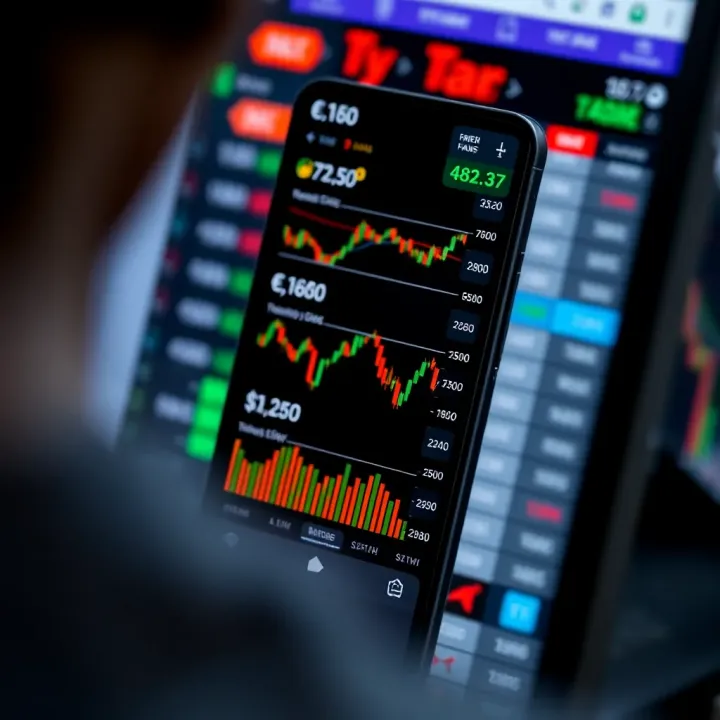
Explore top forex trading apps tailored for Kenyan traders 📱. Learn to choose wisely, ensure security 🔒, and trade confidently in Kenya’s forex market!
Based on 9 reviews