
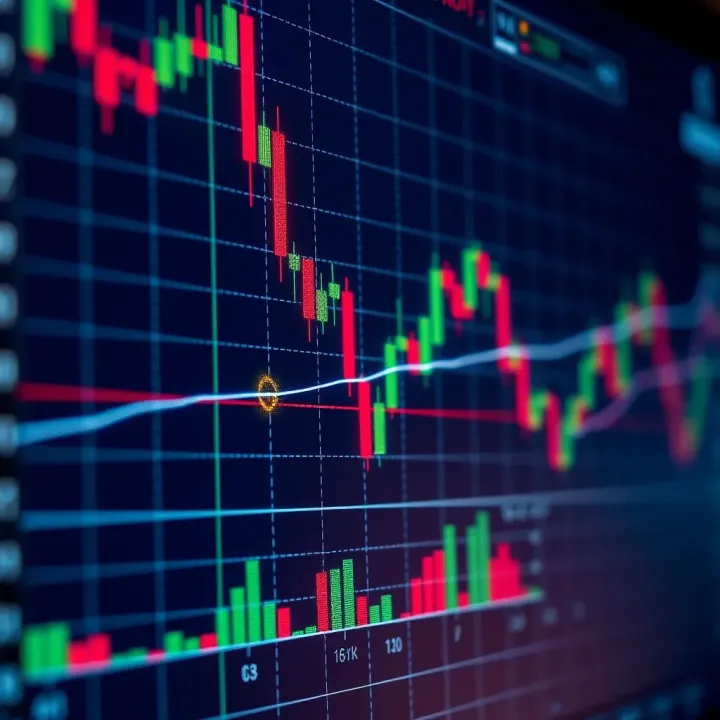
Forex Trading Charts Explained for Kenyan Traders
📊 Master forex trading charts with our practical guide for Kenyan traders! Learn to read charts, use indicators, and choose the right timeframes to boost your strategy.
Edited By
Oliver Brooks
Forex trading, often called foreign exchange trading, is all about swapping one currency for another. The goal is usually to make a profit from the changes in exchange rates between currencies. For example, if you expect the US dollar (USD) to strengthen against the Kenyan shilling (KSh), you might buy USD now and sell later at a higher rate, earning a gain.
The forex market is the biggest financial market globally, with trillions of dollars changing hands every day. Unlike the Nairobi Securities Exchange (NSE), forex trading never sleeps — it runs 24 hours, five days a week, moving around global time zones from Asia through Europe to North America.
At its core, forex trading involves currency pairs. Each pair shows how much of one currency you need to buy one unit of another. Take EUR/USD, the euro to US dollar pair — if the rate is 1.10, it means one euro costs 1.10 US dollars. Traders speculate on whether the rate will go up or down.
Traders use platforms provided by brokers to buy or sell these pairs. When you ‘buy’ a currency pair, you expect the base currency (first currency in the pair) to rise relative to the counter currency (second one). Conversely, ‘selling’ means you expect it to weaken.
Banks and financial institutions dominate forex trading with vast volumes and influence rates.
Forex brokers connect individual traders to the market, offering trading platforms and leverage.
Retail traders like yourself participate with smaller amounts but can still make profits or losses.
Central banks (like the Central Bank of Kenya) intervene sometimes to stabilise their currencies or control inflation.
Forex trading demands understanding the risks involved. While profits are possible, currency markets can be volatile and unpredictable.
With the growth of mobile internet and mobile money like M-Pesa, forex trading has become accessible to everyday Kenyans. Some see it as a way to diversify income beyond the traditional jobs or businesses. However, success depends on education, discipline, and trustworthy brokers.
In the following sections, we will explore common trading methods, risk management, and practical tips tailored for Kenyan traders to make smarter decisions in the forex market.
Understanding forex trading starts with knowing that it's all about exchanging one currency for another. This type of trading is crucial because currencies influence global business, imports, exports, travel, and investment flows. For example, a Kenyan exporter selling tea to the US needs to convert US dollars back to Kenyan shillings, and forex trading determines the rate at which this happens.
Forex trading, also called foreign exchange trading, involves buying one currency while simultaneously selling another. It's a decentralised market where currencies from across the world are exchanged. Unlike stocks, forex operates 24/5, giving traders numerous opportunities. Take, for instance, a trader who believes the euro will strengthen against the US dollar; they might buy euros with dollars hoping to sell later at a profit.
Forex trading is not just for big banks; retail traders in Kenya can access it through online platforms, allowing them to participate in global currency movements.
Currency exchange works through supply and demand influenced by economic activities, interest rates, politics, and market sentiment. Every currency pair, like USD/KES (US dollar to Kenyan shilling), shows how much one currency is worth in terms of another. For example, if the USD/KES rate is 110, it means KS10 buys you one US dollar.
Currency pairs are traded in lots, and price fluctuations create opportunities for profit or loss. Suppose during peak tourist season in Kenya, demand for US dollars rises due to increased spending, the exchange rate might shift, affecting trading positions.
In Kenya, forex trading is often done online through brokers who give access to global currency markets. These platforms also offer tools like charts and news feeds to analyse price movements. Traders need to understand how economic factors, like Kenya's inflation or Central Bank policies, can impact the shilling's strength against other currencies.
By comprehending what forex trading means and how currency exchange works, traders can make informed decisions. This reduces guesswork and helps manage risks — essential for anyone involved in foreign exchange markets, especially retail traders navigating this fast-paced arena.
Understanding the forex market's structure and key currency pairs gives traders a practical advantage. This knowledge helps you navigate trading sessions, identify when liquidity is highest, and focus on currencies with frequent movement. For Kenyan traders, who might trade outside regular banking hours or rely on mobile platforms like M-Pesa, knowing when and what to trade brings better chances to profit.
The forex market is the largest financial market worldwide, operating 24 hours a day across different time zones. It opens in Asia (typically in Tokyo at 12 am GMT), moves to Europe (London from 8 am GMT), then shifts to North America (New York from 1 pm GMT), before cycling back. This rotating system means trading never really stops, but the busiest hours fall when major centres overlap—for example, London and New York sessions between 1 pm and 4 pm GMT see the heaviest trading volumes.
These peak periods matter because higher volume results in narrower spreads—the difference between buying and selling prices—which lowers trading costs. If you were a Nairobi-based trader, this could mean scheduling trades around these windows to avoid high slippage and better capitalise on market moves.
The Asian session often offers different opportunities from London or New York, so knowing global timing helps diversify trading strategies rather than relying on one time frame alone.
Major currency pairs dominate the forex market. These pairs always include the US dollar, pegged against another strong currency such as the euro (EUR/USD), British pound (GBP/USD), or Japanese yen (USD/JPY). For example, EUR/USD is the most traded pair globally, often reflecting key economic news from both the Eurozone and the US.
Besides majors, there are crosses—pairs without the US dollar like EUR/GBP or EUR/JPY that also attract significant attention. Kenyan traders should keep an eye on pairs involving the US dollar and euro, given their liquidity and the influence of economic data releases from these regions.
These pairs tend to have good volatility and trading volume, making them suitable for both short-term and longer-term trades. For instance, during Kenya’s workday, you might find GBP/USD offering more movement during the London session, while USD/JPY moves more during the Asian trading hours.
The forex market runs around the clock, passing through major financial hubs.
Peak overlaps offer best conditions for liquidity and tighter spreads.
Major currency pairs centred on the US dollar provide stable trading opportunities.
Understanding market hours and currency pair behaviour helps Kenyan traders plan effectively and manage risks.
Getting familiar with these basics gives you a more grounded approach rather than just guessing when or what to trade. The market’s rhythm and popular pairs are your tools for better-informed decisions.
Understanding who participates in the forex market and their roles helps you grasp how currency trading operates globally and locally. Each player—from large banks to individual retail traders—has a distinct function that affects market liquidity, pricing, and accessibility.
Banks and financial institutions are the heavyweight players in forex trading. They facilitate most of the market’s volume by buying and selling currencies to support international trade, investments, and speculation. For instance, Kenyan banks like Equity Bank or KCB handle currency conversions for importers and exporters. On the trading floor, major international banks execute huge forex transactions to balance foreign currency reserves or profit from exchange rate movements.
Brokers, on the other hand, act as intermediaries between these large players and retail traders. They provide access to the forex market through trading platforms where people can buy and sell currencies, often using leverage. Brokers charge fees or spreads which cover the service and technology they offer. Choosing a reputable broker licensed by the Capital Markets Authority (CMA) is essential, especially for Kenyan traders, to ensure fair practices and secure transactions.
Retail traders are everyday individuals who trade on forex platforms, often from their homes using computers or mobile devices. In Kenya, retail forex trading has grown significantly due to increased internet penetration and availability of mobile money services like M-Pesa, which facilitate fast deposits and withdrawals. Retail traders usually speculate on currency price changes aiming to make profits from smaller price moves compared to banks.
Access to the forex market for retail traders happens mainly through brokers who provide real-time data, tools, and leverage, sometimes up to 1:100 or higher. This gives traders the ability to amplify potential gains but also increases risks. Unlike banks that can absorb large losses due to their capital, retail traders must carefully manage risk, often using stop-loss orders or limiting trade sizes.
The forex market resembles a busy marketplace where big institutions set the pace, but retail traders have gradually earned their spot, especially in Kenya’s growing digital economy.
By appreciating the distinct roles of banks, institutions, brokers, and retail traders, you get a clearer picture of how the forex market flows. This knowledge helps you navigate the market with realistic expectations and informed strategies suited to your trading goals.
Understanding common forex trading strategies helps traders navigate the fast-moving currency market more effectively. Different approaches suit different goals and risk appetites, so knowing your options is key before putting real money to work. This section breaks down popular methods, showing how traders try to make profits while managing exposure.
Spot trading involves the immediate exchange of currencies at the current market price. It's the simplest form of forex trading and is popular among many Kenyan traders starting out. For example, if a trader expects the US dollar to strengthen against the Kenyan shilling, they might buy USD/KES on the spot market and sell it later at a higher price to make a profit.
On the other hand, the forex market also offers other products such as forex futures, options, and contracts for difference (CFDs). These allow traders to speculate on currency movements without owning the actual currencies. Futures contracts bind the trader to buy or sell at a set price on a future date, useful for hedgers aiming to lock costs. Options give the right but not the obligation to trade later, offering some protection against losses. CFDs track the currency pair’s price movement, enabling leveraged trades with potentially higher returns but increased risk.
Spot trading is straightforward and usually better for shorter-term trades. Meanwhile, futures and options suit more experienced traders or businesses looking to manage currency risks over months. Kenyan traders should assess their familiarity and capital to pick the product that matches their strategy.
To build trading strategies, forex players mainly rely on two types of analysis: technical and fundamental. Technical analysis studies price charts and patterns to predict future movements. For example, recognising a ‘head and shoulders’ pattern might signal a likely reversal, prompting traders to sell. Tools like moving averages, RSI, and Fibonacci retracements help spot entry or exit points.
Fundamental analysis, however, looks beyond prices to economic and political factors influencing currencies. For instance, if the Central Bank of Kenya adjusts its benchmark interest rate, it can impact the shilling’s value. Other drivers include inflation figures, GDP growth, or changes in trade balance. Kenyan traders must watch local developments together with major players like the US Federal Reserve or European Central Bank since forex moves respond to events worldwide.
Combining both analyses often provides a fuller picture. A trader might use fundamental clues to decide which currency pair to focus on, then rely on technical signals to time their trade. This blend helps cut through market noise and avoid impulsive decisions.
Balancing the immediate data from charts with the bigger economic picture builds reliable forex strategies, especially for markets as dynamic as Kenya’s.
By understanding the differences between spot and other forex products, alongside the main analytic methods, traders gain a sound foundation to develop their approach. This knowledge helps manage risks better while aiming to capture profit opportunities in currencies.
Diving into forex trading offers both opportunities and risks, especially for Kenyan traders. The market's accessibility means you can start with relatively small capital, but the volatile nature of currency pairs demands careful attention. Understanding the balance between potential gains and pitfalls helps Kenyan investors make informed decisions and manage expectations.
Forex trading can be profitable for Kenyan traders who approach it with the right strategy and discipline. For instance, fluctuations in the Kenya shilling (KES) against the US dollar (USD) during periods of political uncertainty or economic reports can create short-term trading chances. A trader capitalising on a favourable shift in KES/USD might grow their capital significantly in a day or two.
However, the same volatility poses challenges. Sudden market swings driven by global events or local economic data releases can cause heavy losses. For example, unexpected changes in the Central Bank of Kenya's monetary policy often lead to sharp currency moves. Additionally, forex trading involves leverage, which can magnify both profits and losses — some Kenyan brokers offer leverage up to 1:500, increasing the risks if trades are poorly managed.
Also, forex markets operate 24/5, meaning traders in Kenya must be prepared for trading outside typical office hours if they want to catch key moves, which can affect work-life balance.
Kenyan traders need to pay attention to regulatory frameworks to trade safely. The Capital Markets Authority (CMA) regulates forex brokerage firms operating in Kenya to protect investors from scams and unfair practices. It's smart to choose brokers licensed by CMA or reputable international regulators to ensure your funds are safe.
Responsible trading means not risking more than you can afford to lose and avoiding the temptation to chase quick profits without understanding the market. Using risk management tools like stop-loss orders and limiting leverage reduces the chance of severe losses. Learning and practising with demo accounts before committing real money also helps build confidence.
Forex trading is not a get-rich-quick scheme — it requires commitment, ongoing learning, and respecting the risks involved.
For Kenyans interested in forex, educating oneself about market influences, maintaining discipline, and choosing regulated platforms are key to turning trading into a worthwhile activity rather than a gamble.
📊 Master forex trading charts with our practical guide for Kenyan traders! Learn to read charts, use indicators, and choose the right timeframes to boost your strategy.
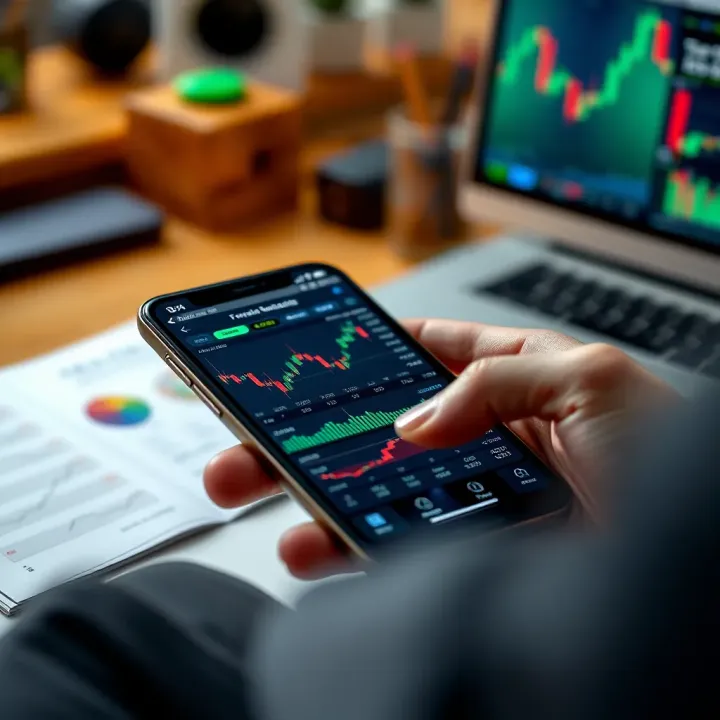
Explore top forex trading apps for Kenyan traders 📱. Learn to choose safe platforms, spot key features, and boost your trading skills effectively.
Explore top forex trading companies in Kenya 🇰🇪, learn about regulators, pick trusted brokers, and get practical tips to start smart and safe 📈💡.
Explore top forex trading apps tailored for Kenyan traders 📱. Learn to choose wisely, ensure security 🔒, and trade confidently in Kenya’s forex market!
Based on 12 reviews