

Top Forex Trading Apps for Kenyan Traders
Explore top forex trading apps for Kenyan traders 📱. Learn to choose safe platforms, spot key features, and boost your trading skills effectively.
Edited By
James Carter
Forex trading means buying one currency while selling another. It happens in pairs, like USD/KES (US Dollar against Kenyan Shilling), where you speculate on which currency will strengthen or weaken.
Imagine you think the US dollar will rise against the Kenyan shilling. You buy USD/KES at 110.00, expecting it to move higher. If the price goes to 112.00 and you sell, you profit from the difference. But if it drops to 108.00, you lose because the dollar weakened.
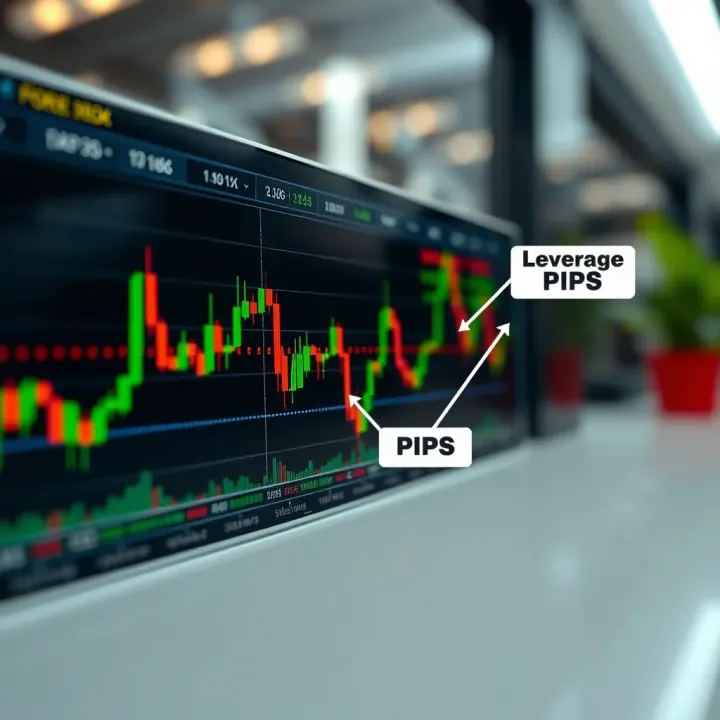
A key term here is pip, short for "percentage in point". It measures the smallest price move in a currency pair, usually the fourth decimal place. So, if USD/KES moves from 110.0000 to 110.0100, that's one pip.
Another important concept is leverage. Forex brokers let you control bigger amounts of currency with a smaller deposit. For example, with 1:100 leverage, KS,000 lets you trade KS00,000. This can boost profits but also magnify losses, so managing risk is vital.
Remember, forex trading involves real risks — you should never trade money you cannot afford to lose.
Trading happens through platforms where you can:
Pick currency pairs to trade
Check real-time prices
Place buy or sell orders
Monitor your profits and losses
Let's say you buy 10,000 units of USD/KES at 110.00. If the rate rises to 111.00, that's a 100 pip gain. At KSh 1 per pip per 1,000 units, your profit is roughly KSh 1,000.
Understanding the maths behind these moves and how leverage affects your exposure is essential. Smart traders use stop-loss orders to limit potential losses and take-profit orders to secure gains automatically.
This practical approach to forex trading helps Kenyan traders confidently navigate the market by knowing what moves prices, how profits and losses form, and the risks involved. As you read on, we will cover strategies and risk management to sharpen your trading skills.
Understanding the basics of forex trading is essential for anyone who wants to participate effectively in the global currency markets. This section sets the foundation by explaining core concepts and terms, making the complex world of forex more approachable. For Kenyan traders, having a clear grasp of these basics is practical—it helps avoid common pitfalls and strengthens decision-making when investing KSh in forex.
Forex trading involves buying and selling currencies in pairs, like the US dollar against the Kenyan shilling (USD/KES). The goal is to benefit from changes in exchange rates. Unlike stocks, forex operates 24 hours a day, five days a week, allowing active traders to respond to global economic news at any time. For example, a Kenyan importer paying for goods from the US might trade forex to manage currency risk and ensure predictable costs.
Forex trading offers opportunities beyond traditional investments available in Kenya, such as stocks or savings accounts. The forex market's high liquidity and accessibility through platforms compatible with mobile devices make it appealing, especially in Nairobi's fast-paced business environment. Kenyan traders use forex not only for profit but also to hedge against foreign currency fluctuations linked to imports, tuition fees for overseas studies, or remittances.
Currencies are traded in pairs because you buy one currency by selling another. Each pair consists of a base currency and a quote currency, shown as USD/KES, EUR/USD, or GBP/USD. The price displayed tells you how much of the quote currency is needed to purchase one unit of the base currency. For instance, if USD/KES is 110, it means 110 Kenyan shillings are required to buy one US dollar.
This concept is crucial because the movement of one currency against another determines your trading outcome. Kenyan traders often focus on pairs involving the Kenyan shilling or global majors like USD, EUR, and GBP.
A pip is the smallest price move in a currency pair, often the fourth decimal place (0.0001) except for some pairs like USD/JPY. It represents the unit of change that traders track to measure their profits or losses. For example, if USD/KES moves from 110.00 to 110.01, that is a one-pip change.
A lot refers to the trade size or volume. Standard lots are usually 100,000 units of the base currency, but many Kenyan platforms offer mini (10,000) and micro (1,000) lots to allow smaller investments. Using smaller lots helps manage risk for traders starting with lower capital.

The bid price is what buyers are willing to pay for a currency, while the ask price is what sellers want. The difference between these two is the spread, which is the broker’s fee in effect. For example, if USD/KES has a bid of 110.00 and an ask of 110.05, the spread is 5 pips.
Knowing the bid-ask spread helps traders understand transaction costs. Kenyan traders often look for brokers offering tight spreads to reduce trading expenses, especially when making frequent trades.
Leverage allows traders to control a larger position than their actual capital by borrowing funds from the broker. For example, a 1:100 leverage means with KSh 1,000 you can control KSh 100,000 in the market. This can amplify profits but also losses, so it must be used carefully.
Margin is the amount of money you need to open and maintain a leveraged position. It's a security deposit with the broker to cover potential losses. Kenyan traders need to understand margin calls that happen when the broker demands more funds to keep positions open if the market moves against the trader.
Remember, while leverage boosts potential gains, it also increases the risk of losing more than your initial investment.
Starting with these basics helps build confidence in forex trading and sets the stage for more advanced strategies and risk management discussed later in the article.
A clear, step-by-step forex trading example is vital for Kenyan traders wanting to grasp how trades unfold in real life. It breaks down complex concepts into manageable parts, making it easier to apply theory in practice. This section covers the crucial stages in trading—from picking a currency pair to determining profit or loss—so you can avoid guesswork and trade smarter.
Choosing the right currency pair sets the tone for your entire trade. Common pairs, like USD/KES or EUR/USD, tend to have better liquidity with smaller spreads, which means lower trading costs. For example, trading USD/KES appeals to many Kenyan traders because economic news from both Kenya and the US influences it directly, offering familiar market dynamics. You want to pick a pair where you understand the factors affecting price movements, including local economics or geopolitical events. Avoid exotic pairs initially; their low liquidity and wider spreads can eat into your profits.
Opening a position means deciding if you think the base currency will rise or fall against the quote currency. If you expect the Kenyan Shilling to strengthen against the US Dollar, you sell the USD/KES pair. Conversely, betting on a weaker shilling means buying the pair. For example, if you buy USD/KES at 110, you speculate the shilling will weaken, so the pair moves above 110. The key is to interpret market signals, such as upcoming economic data or central bank announcements, to make an informed buy or sell choice.
Leverage lets you control a larger position using a smaller amount of capital. Kenyan brokers commonly offer 1:100 or 1:200 leverage. This means with KS0,000 in your trading account, you could control a position worth KS,000,000 or more. While this magnifies profits, it also increases risk, as losses multiply. Suppose you use 1:100 leverage and the market moves against you by 1%, your actual loss could be your entire initial deposit. Always use leverage responsibly and apply stop-loss orders to manage your exposure.
Profit or loss depends on the number of pips moved and your trade size. A pip represents the smallest price change, usually 0.0001 for most pairs. For instance, if you buy USD/KES at 110.00 and sell at 110.50, you gain 50 pips. On a 1 standard lot (typically 100,000 units), that equals a KS,000 profit (50 pips × KS00 per pip). However, if the price moves against you, those pips translate to losses. Keeping track of pip value relative to your lot size helps you measure performance accurately and make decisions on when to close positions.
Understanding these steps equips you with practical skills—choosing the right pair, knowing when to buy or sell, managing leverage, and calculating outcomes—all crucial for profitable forex trading in Kenya.
By following this approach carefully, you’re better positioned to trade confidently and avoid common errors that cost many beginners.
Trading forex successfully requires more than just knowing the basics; Kenyan traders often rely on specific strategies that match their goals and the market rhythms here. Understanding these common approaches helps you make smarter trade choices and manage risks better. Here, we focus on three key strategies: scalping, swing trading, and the use of technical and fundamental analysis.
Scalping is a fast-paced strategy where traders profit from small price changes, usually holding positions for just a few minutes. This suits those who prefer action-packed trading days rather than waiting for long-term market moves. For example, a trader in Nairobi might scalp the USD/KES pair during market overlap hours when volatility is high, aiming for a few pips profit repeatedly. This demands sharp focus and quick decision-making, but it can deliver steady gains if done well. However, scalpers must watch out for transaction costs, like spreads and commissions, which can eat into small profits.
Swing trading takes a more relaxed pace, holding trades from a few days up to several weeks. It focuses on capturing larger price moves within market swings caused by economic news or central bank announcements. Kenyan traders using swing strategies might look at major pairs like EUR/USD or GBP/USD, timing their trades around events such as Federal Reserve interest rate decisions or Brexit developments. This strategy relies less on constant screen time but requires patience and good timing. Its advantage is that it allows traders with busy schedules, like those juggling jobs and family, to participate meaningfully without needing minute-by-minute monitoring.
Combining technical and fundamental analysis gives a fuller picture of the forex market. Technical analysis studies price charts to identify trends, support and resistance levels, and uses indicators like Moving Averages or the Relative Strength Index (RSI). For example, a trader might notice that USD/JPY is bouncing off a previous low, signalling a buying opportunity. Fundamental analysis looks at economic data, political events, or central bank policies that affect currency value. A Kenyan trader aware of rising inflation in the US may predict a dollar strength, adjusting their trade accordingly. Together, these tools help traders avoid relying solely on chance and improve their chances of success.
Effective forex trading in Kenya depends on choosing strategies that fit your lifestyle and market understanding. Whether scalping for quick wins or swing trading to ride broader moves, combining analysis methods sharpens your edge.
By practising these strategies and tailoring them to local market conditions, Kenyan traders can better navigate the forex market’s ups and downs. Remember, no single strategy guarantees profits; ongoing learning and risk control remain essential.
Managing risk in forex trading is a must-have skill for anyone serious about preserving their capital and staying in the game long term. Forex markets can move quickly and unpredictably, so knowing how to control potential losses helps you trade confidently and avoid wiping out your account in a single trade. Kenyan traders, in particular, benefit from solid risk management because local incomes may not allow continuous losses without major setbacks.
Stop-loss and take-profit orders are your frontline defence against unexpected market swings. A stop-loss automatically closes your trade when the price hits a certain loss level, protecting you from further drops. For example, if you buy USD/KES at 110.50 and set a stop-loss at 110.00, your trade will close at that lower price, limiting your loss to 50 pips. On the flip side, a take-profit order locks in your gains by closing your position once the price reaches a target profit level. If the market is volatile, having these orders fixed means you don’t have to stare at your screen all day, and you shield yourself from emotional decisions.
Leverage allows you to control bigger positions than your actual capital, but it can be a double-edged sword. Using high leverage, like 1:100, means that even a small price move against you could cause big losses, sometimes wiping your entire deposit quickly. It’s wise to use modest leverage, for instance 1:10 or 1:20, and keep your position sizes manageable. Kenyan traders can start with low leverage settings to reduce exposure, especially when still learning. Remember, it’s better to grow your account steadily than risk it all for a quick win.
Even with perfect strategies, trading psychology plays a huge role in risk management. Fear and greed often lead traders to refuse taking losses or to overtrade after a win. Sticking to your plan and maintaining discipline prevents emotional choices — like chasing a losing trade or doubling down impulsively. Keeping a trading journal to review your decisions can build self-awareness and help you identify where emotions affect your trades. Many successful Kenyan traders balance ambition with caution, knowing that patience and rationality keep their pockets safer.
Managing risks isn’t just about avoiding loss — it’s about making your money last long enough to take advantage of real opportunities in the forex market.
By applying stop-loss and take-profit orders, using sensible leverage, and mastering your own psychology, you set a foundation that protects you from the unpredictable nature of forex trading. These risk measures are not optional, but essential for anyone aiming to trade profitably amid Kenya’s dynamic forex scene.
Starting forex trading in Kenya is straightforward but requires careful choices, especially when selecting your broker, setting up an account, and managing payment methods. This section walks you through these practical steps so you can begin trading confidently.
Picking a reliable forex broker is the first key step. Look for brokers licensed by reputable authorities like the Capital Markets Authority (CMA) in Kenya or internationally recognised regulators such as the UK’s Financial Conduct Authority (FCA). This ensures your funds are safe and trading is fair. For example, well-known brokers like XM, Pepperstone, or HotForex offer easy account opening and provide local customer support.
Transparent pricing and clear terms are crucial. A broker with tight spreads, no hidden fees, and good execution speed is ideal. Check reviews and test the broker’s demo account to see if the platform suits your trading style. Some brokers even offer Swahili language support, which helps if you’re more comfortable with local languages.
Once you've chosen a broker, opening a trading account is mostly an online process. You'll need to submit your identification documents, such as your national ID or passport, proof of residence, and sometimes income proof. Kenyan brokers or those servicing Kenya keep the process straightforward.
Funding your account can start from as low as KSh 1,000, depending on the broker. It's wise to begin with a small amount to get used to trading dynamics before committing larger sums. Most brokers offer multiple account types—standard, mini, or micro—which fit different budgets and risk appetite.
One big advantage for Kenyan traders is using local payment solutions such as M-Pesa. Many brokers accept M-Pesa payments, making deposits and withdrawals fast, convenient, and cost-effective compared to international bank transfers. For instance, a broker integrating M-Pesa allows you to fund your account anytime using your mobile phone, without needing a bank visit.
Tip: Make sure your broker supports M-Pesa Paybill or Till number for smooth transactions. Always double-check transaction details to avoid delays in crediting your trading account.
Besides M-Pesa, some brokers accept bank transfers and debit/credit cards, but local mobile money payments save both time and extra charges. This practical feature removes barriers for many Kenyan traders and opens the door for more inclusive participation in forex markets.
Getting these three steps right will put you on solid ground to start trading forex in Kenya. Remember, reliable brokers combined with accessible funding options lead to better trading experiences and reduce unnecessary risks.
Explore top forex trading apps for Kenyan traders 📱. Learn to choose safe platforms, spot key features, and boost your trading skills effectively.

Explore top forex trading companies in Kenya 🇰🇪, learn about regulators, pick trusted brokers, and get practical tips to start smart and safe 📈💡.
Explore top forex trading apps tailored for Kenyan traders 📱. Learn to choose wisely, ensure security 🔒, and trade confidently in Kenya’s forex market!

📚 Discover essential books for learning forex trading in Kenya! From basics to advanced tips, master strategies and risk management confidently.
Based on 11 reviews