
Smart Forex Trading Tips for Kenyan Traders
📈 Discover practical forex trading tips tailored for Kenyan traders. Learn risk management, analysis methods, and avoid pitfalls for better trades. 💹
Edited By
Sophie Reynolds
Forex trading in Kenya has gained significant popularity, especially among young hustlers and seasoned investors alike. For many, the appeal lies in the ability to trade currencies like the US dollar, euro, or British pound while sitting at home or in a local cyber café. However, success in forex requires more than just luck or following trends. It demands a solid grasp of market fundamentals, keen risk management, and understanding of how local factors affect the global currency swings.
Kenyan traders often face unique challenges, such as fluctuating exchange rates influenced by local economic events, political stability, and foreign remittance flows. For instance, the Central Bank of Kenya’s policies, inflation rates, or even election periods can shift the forex market rapidly. Ignoring such elements can lead to costly mistakes.

When approaching forex, it’s vital to treat it as a serious business, not just a get-rich-quick scheme. Start by building a clear trading plan that outlines your goals, risk tolerance, and strategies. Use demo accounts on platforms like MetaTrader 4 or 5 to hone your skills without risking actual money. Once you move to live trading, consider starting small and increasing your exposure cautiously.
Successful forex trading depends greatly on controlling losses and protecting capital. Many traders burn through their funds because they lack clear stop-loss rules or over-leverage their accounts.
Some practical tips for Kenyan forex traders include:
Understand market analysis: Familiarise yourself with technical indicators such as Moving Averages and RSI, as well as fundamental factors like government reports and economic calendars.
Manage your risk: Never risk more than 2% of your trading capital on a single trade, and use stop-loss orders religiously to limit losses.
Stay updated with Kenyan market news: Local developments like CBK announcements, IMF programmes, or changes in foreign exchange controls can impact liquidity and price movements.
Use trusted brokers: Choose brokers regulated by reputable authorities such as the Capital Markets Authority (CMA) in Kenya or international bodies to avoid scams and ensure safe transactions.
Compared to other markets, forex is highly liquid and operates 24 hours during weekdays. That means Kenyan traders can take advantage of global market movements after local business hours. However, this also means staying alert and disciplined helps prevent emotional trades based on sudden swings.
Ultimately, honing your skills in forex trading comes down to continuous learning, patience, and adapting to both global shifts and local realities. Start simple, keep your risk tight, and aim for consistent, sustainable growth rather than instant wins.
Grasping the basics of forex trading prepares Kenyan traders for the sometimes volatile but potentially rewarding foreign exchange market. This foundational understanding helps traders avoid costly mistakes and make sound decisions based on clear knowledge instead of guessing or hearsay. For example, knowing how prices are quoted in pairs rather than stand-alone currencies prevents confusion when placing trades.
The forex market is a global, decentralised market where currencies are bought and sold. Unlike the Nairobi Securities Exchange, forex operates 24 hours a day across different time zones, starting from Asia, then Europe, and finally the Americas. For Kenyan traders, this means trading can happen any time, day or night. Currency prices move based on supply and demand influenced by factors like interest rates, geopolitics, and economic data. When you buy one currency, you are simultaneously selling another—this is why forex instruments are always quoted in pairs, for example, USD/KES.
Major currency pairs involve the most traded currencies globally, such as the US Dollar (USD), Euro (EUR), British Pound (GBP), Japanese Yen (JPY), and Swiss Franc (CHF). For instance, EUR/USD is the most actively traded pair, prized for tight spreads and liquidity. For Kenyan traders, the USD/KES (US Dollar to Kenyan Shilling) pair is crucial because it directly reflects import-export costs and remittance flows. Each major pair behaves differently; some are more volatile while others offer steadier movements, so understanding these traits aids in choosing pairs that fit your trading style.
Forex trading comes with its own set of terms that can be puzzling initially but are worth mastering. Here are some key terms:
Pip: The smallest price move a currency pair can make, usually 0.0001 for most pairs.
Spread: The difference between the buying (ask) and selling (bid) price. Tighter spreads reduce trading costs.
Leverage: Allows you to control a larger position than your capital. For example, a leverage of 1:100 means KSh 1,000 controls KSh 100,000.
Lot: Standardised unit size in forex; a standard lot is 100,000 units of the base currency.
Bid and Ask Price: Bid is the price to sell, ask is the price to buy.
Without a clear understanding of these basics, trading forex can feel like a shot in the dark. Getting these down first builds a sturdy base to develop more advanced strategies.
Understanding these fundamentals helps Kenyan traders navigate the forex market more confidently and avoid common pitfalls. It also sets the stage for learning how to build a robust trading plan, manage risk wisely, and apply relevant analysis techniques that will all positively affect trading outcomes.
A well-structured trading plan acts like a roadmap guiding your forex journey. Without one, you risk wandering aimlessly in the volatile forex market, making decisions based on gut feeling or sudden tips. Kenyan traders face unique market conditions, such as fluctuations in the KSh and varied liquidity during local trading hours, which makes having a clear plan even more essential. A solid plan helps you focus on goals, manage risk, and keep control even when the market throws surprises.

Before placing your first trade, define what success means to you. Setting realistic goals means looking at what is achievable with your capital, time, and experience. For example, expecting to double your KSh 10,000 deposit in a week is not reasonable and may lead to overtrading or risky moves. Instead, aim for steady growth—say 5-10% monthly returns—and understand that losses are part of the game. Realistic targets encourage patience and long-term thinking, reducing the chances of emotional trading.
Your trading style should match your personality and daily routine. There are several common styles to consider:
Scalping: Quick trades lasting minutes, requiring constant focus.
Day Trading: Opening and closing positions within the same day.
Swing Trading: Holding trades for several days to weeks to capture medium-term trends.
Position Trading: Long-term trades based on fundamental analysis.
If you have a full-time job in Nairobi or a similar setting, scalping might be tough. Swing trading or position trading may suit better since they demand less screen time. Try different approaches in demo accounts first, then pick what feels sustainable for you.
Consistency means following your plan every day, not just when the market looks favourable. Discipline keeps you from chasing losses or deviating from your strategy after a few bad trades. Many Kenyan traders fall into chasing quick profits after hearing of lucky wins from friends or online forums, which often ends in losses.
Build discipline by keeping a trading journal where you record every trade, why you entered, and the result. Over time, this will spotlight habits hurting your profits and habits that work. Remember, even the most successful traders in Kenya and worldwide lose trades; what counts is sticking to a proven plan and controlling emotions.
A trading plan is your shield and compass in the forex market—protect it and let it guide you steadily forward.
Having these elements in place establishes a firm foundation. It increases your chances of trading profitably and sustainably in Kenya’s forex scene rather than chasing hunches or risky shortcuts.
Managing risk is key to staying in the forex market long enough to make consistent profits. Many traders, especially beginners, focus more on potential gains and forget that protecting their capital is just as important. In Kenya, where forex trading is growing fast, understanding how to manage risk can mean the difference between a thriving trading side hustle and burning through your savings.
Stop-loss and take-profit orders are basic tools every trader should master. A stop-loss order automatically closes your trade if the market moves against you by a set amount, limiting your losses. Think of it as an insurance policy. For instance, if you enter the USD/KES trade at 110.00, setting a stop-loss at 109.50 ensures you don’t lose more than 0.50 KES per unit. On the other hand, a take-profit order locks in your gains when the price hits your target. You might set this at 110.80 to secure a profit before the market reverses. Using these orders keeps your trading plan intact even when emotions run high or market moves suddenly.
Position sizing – deciding how much money to risk per trade – is often overlooked but is crucial to managing risk. A good rule is not to risk more than one to two per cent of your trading capital on any single trade. So if you have KSh 100,000, risking KSh 1,000 to KSh 2,000 per trade helps protect your account from big losses. Many Kenyan traders jump in with full capital on a single trade and end up wiping out quickly. Use position size calculators available on platforms like MetaTrader or websites to get precise numbers considering your stop-loss size.
Emotions like fear and greed push traders to hastily enter or exit trades without a clear plan. This behaviour often leads to bigger losses. Managing your risk properly reduces emotional stress by setting clear exit points beforehand. Making decisions based on facts and your trading rules — not on gut feelings — can save you money in the long run. For example, if markets suddenly swing due to unexpected news, stick to your stop-loss policy rather than doubling down trying to recover losses quickly. Discipline is hard but pays off.
Successful forex trading in Kenya isn’t about chasing big wins but steadily protecting your capital through smart risk management. Incorporate stop-loss and take-profit orders, use proper position sizes, and keep emotions out of your trades to improve your chances over time.
Risk management lets you treat forex trading as a plan, not a gamble.
Mastering forex trading calls for more than guesswork; applying solid analysis techniques helps you make more informed decisions. Both fundamental and technical analyses provide valuable insights into the factors that influence currency prices. Kenyan traders who blend these approaches can spot promising opportunities and reduce the risk of unexpected losses.
Fundamental analysis looks at economic, political, and social events that affect currency values over time. For example, Kenya shilling (KES) fluctuations often respond to data like inflation rates, Central Bank of Kenya (CBK) policy changes, GDP growth, and export-import balances. When CBK adjusts interest rates, it influences the flow of capital; a rate hike might strengthen the shilling by attracting foreign investment, while a cut could weaken it.
Beyond Kenya, major currencies like the US dollar (USD) react sharply to reports such as US Nonfarm Payrolls or European Central Bank announcements. Knowing the release schedule of these reports and understanding their implications can help you avoid sudden market moves or exploit them profitably. Keep an eye on geopolitical developments in East Africa too, as political uncertainty in the region can cause volatility in local currency pairs.
Technical analysis focuses on price patterns and volume to predict future movements. Tools like candlestick charts, moving averages, and Relative Strength Index (RSI) provide clues on trends and reversals. For instance, if the EUR/USD pair approaches a 200-day moving average, some traders watch closely for a bounce or cross, signalling potential buy or sell actions.
Kenyan traders using platforms like MetaTrader 4 or the Safaricom-supported M-Pesa enabled apps can access these charts anywhere. Familiarity with common chart patterns — head and shoulders, double tops, or flags — helps traders jump in with greater confidence. Volume indicators are also useful; a surge in volume accompanying a price breakout suggests stronger conviction behind the move.
Relying on just one method limits your perspective. Combining fundamental and technical analyses allows you to cross-check signals for higher accuracy. For example, if fundamental analysis notes upcoming interest rate decisions likely to boost the USD, the technical chart might confirm the start of an uptrend in USD/KES.
A practical approach is to use fundamental analysis to identify potentially strong currencies or pairs and then apply technical analysis to time your entry and exit points. This layered strategy reduces guesswork and improves your chance of profitable trades, especially in Kenya's fast-evolving forex market.
By understanding both the "why" behind currency moves and the "when" to act, Kenyan traders stand a better chance against market unpredictability.
In all, applying these analysis techniques sharpens your trading edge. It helps you respond to local and global events and leverage chart insights, making your forex trading both smarter and more resilient.
To trade forex successfully, relying on trustworthy resources and efficient tools is essential. These resources help you make informed decisions and execute trades smoothly, especially considering the fast-moving nature of forex markets. Kenyan traders should prioritise selecting platforms and information sources that are credible and well-suited to local needs.
Choosing the right forex broker can define your trading journey. A trusted broker offers transparent pricing, fair spreads, and reliable execution without frequent slippages. Regulators like the Capital Markets Authority (CMA) oversee some brokers operating in Kenya, so it's wise to go for those registered with CMA or licensed internationally by authorities such as the Financial Conduct Authority (FCA). For instance, many Kenyan traders favour brokers like FXPesa and HotForex due to their local presence, acceptability of M-Pesa payments, and accessible customer support. Always avoid brokers promising guaranteed profits or unusually high leverage as they often turn out to be scams. Assess the broker's fee structure carefully – hidden commissions or withdrawal charges can erode your profits quickly.
In Kenya, mobile trading is becoming increasingly popular because most traders prefer managing trades on the go. Apps like MetaTrader 4 (MT4) and MetaTrader 5 (MT5) are widely accepted for their user-friendly interface and comprehensive charting tools. These platforms allow you to monitor live prices, set stop-losses, and execute trades right from your phone. Kenyan brokers customarily offer mobile versions integrated with M-Pesa, which makes deposits and withdrawals seamless. Make sure your chosen app is secure with encrypted connections and regularly updated to avoid technical hiccups.
Markets react swiftly to economic news such as changes in interest rates by the Central Bank of Kenya or geopolitical events in trading partner nations. Staying ahead means accessing real-time news feeds and economic calendars that highlight important data releases. Websites like Investing.com or Reuters provide updated Kenyan shilling-related news and global announcements that affect forex pairs like USD/KES or EUR/USD. Economic calendars help you prepare for scheduled events like GDP announcements or unemployment data which could cause volatility. Bookmark these resources and set notifications for key dates to avoid missing crucial trading opportunities.
Consistently using reliable brokers, mobile platforms, and timely economic data can greatly improve your ability to make smart forex trades. These tools help you react quickly while protecting your capital, especially in Kenya’s dynamic trading environment.
By carefully integrating these resources into your forex routine, you build a stronger footing that can withstand market swings and uncertain moments. Always vet your tools before committing funds, and keep learning from credible sources to sharpen your trading skills.
📈 Discover practical forex trading tips tailored for Kenyan traders. Learn risk management, analysis methods, and avoid pitfalls for better trades. 💹

Explore top forex trading apps for Kenyan traders 📱. Learn to choose safe platforms, spot key features, and boost your trading skills effectively.

Explore top forex trading companies in Kenya 🇰🇪, learn about regulators, pick trusted brokers, and get practical tips to start smart and safe 📈💡.
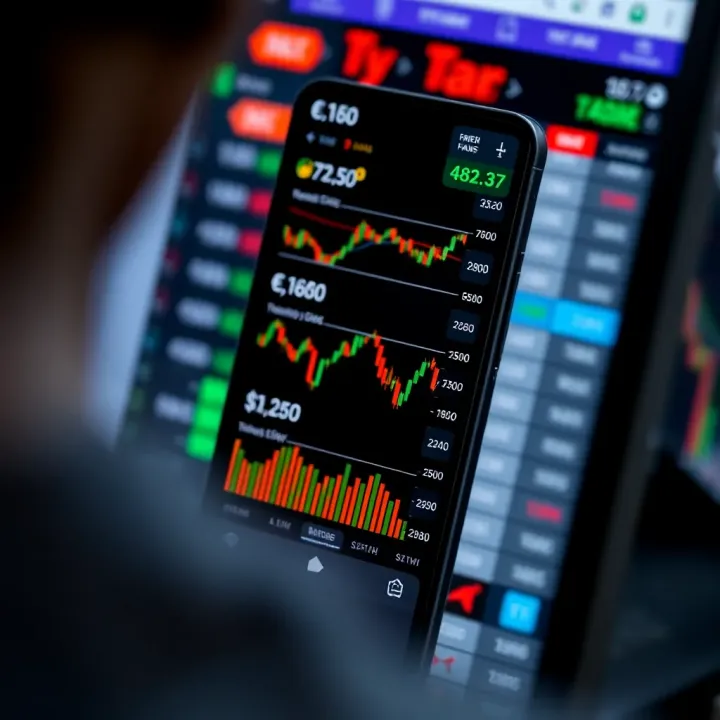
Explore top forex trading apps tailored for Kenyan traders 📱. Learn to choose wisely, ensure security 🔒, and trade confidently in Kenya’s forex market!
Based on 15 reviews