

Top Forex Trading Apps for Kenyan Traders
Explore top forex trading apps for Kenyan traders 📱. Learn to choose safe platforms, spot key features, and boost your trading skills effectively.
Edited By
James Carter
Forex trading opens up chances to earn from currency fluctuations, and in Kenya, this market is gaining traction fast. Whether you're an experienced broker, an analyst, or just starting as a trader, understanding practical strategies can boost your success and help you manage risks effectively.
Trading currencies isn’t a guessing game; it requires solid strategies tailored to real market behaviour. Kenyan traders face unique challenges such as volatile regional economic events, exchange rate risks affecting imports and exports, and sometimes limited access to smooth data feeds. Recognising this, using proven strategies and accessible learning tools like downloadable PDFs can make a big difference.

Key types of forex trading strategies include:
Trend-following: Capturing gains by entering trades in the direction of a lasting market trend. For example, following the strengthening US dollar against the Kenyan shilling during global risk-off periods.
Range trading: Exploiting price movements within defined support and resistance levels, suitable when major news drivers pause and price moves sideways.
Breakout trading: Identifying moments when currency prices break through established barriers, which often signals the start of strong momentum.
Managing risk is non-negotiable. A Kenyan trader could limit losses by setting stop-loss orders at levels where the market's move invalidates the trade idea. Risking only 1-2% of your trading capital per trade is a common approach to avoid big setbacks.
Remember that continuous learning is vital. Markets shift based on global events and local policies such as CBK interest rate changes or currency regulations. Downloadable resources can provide updated strategies and practical exercises to sharpen your skills.
Practical tips for Kenyan traders:
Use reliable forex platforms compatible with local payment methods like M-Pesa.
Keep a trading journal to track your progress and refine strategies.
Stay updated with economic calendars featuring announcements from the US Federal Reserve, ECB, and CBK.
Avoid overtrading; focus on quality setups rather than many weak positions.
By mastering these fundamentals and using locally relevant tools, Kenyan forex traders can approach the market confidently, handle risk better, and steadily grow their KSh earnings.
Forex trading strategies help traders make sense of the volatile currency markets. These strategies serve as a blueprint, guiding decisions on when to enter or exit trades based on market behaviour and analysis. For traders in Kenya, having a clear understanding of these strategies can improve timing and reduce guesswork, turning forex trading into a more disciplined and potentially profitable exercise.
Successful forex strategies often rely on identifying patterns and market conditions to target consistent profits while managing risks. For instance, knowing when the Kenya shilling (KSh) strengthens or weakens against the US dollar influences the timing of trades, especially for companies or individuals dealing with imports and exports.
At their core, forex trading strategies aim to provide clear steps to maximise profit while minimising risk. They set rules for picking the right moments to buy or sell currencies. Traders who follow defined strategies avoid impulsive decisions driven by market noise or emotions. For example, a Kenyan trader using a strategy that reacts to economic news such as CBK monetary policy changes can better anticipate currency moves and respond accordingly.
A well-structured strategy also helps in targeting specific goals, such as daily profit thresholds or protecting capital with strict stop-loss limits. This discipline is particularly useful in fast-moving forex markets where prices can change every second.
Most effective strategies share some common features. First, they clearly identify entry and exit signals. These could be technical indicators like moving averages crossing over or chart patterns signalling reversals. Second, risk management is always inbuilt — using stop-loss orders to limit downside or adjusting position sizes based on the account balance.
Another common element is adaptability. Markets don’t behave the same way every time. Successful strategies allow room to adjust depending on market volatility, trending phases, or range-bound conditions. For Kenyan traders, this could mean switching rules during periods when the KSh is reacting unpredictably to global events or local inflation news.
Trend-following strategies involve spotting when a currency pair is moving steadily up or down, then trading alongside that movement. For example, if USD/KSh is strengthening due to a surge in US economic data, a trend-following trader would look for opportunities to buy, expecting the trend to continue.
On the other hand, range-bound strategies work when the market isn’t making clear progress in either direction but fluctuates between support and resistance levels. Here, a trader might sell near the top of the range and buy near the bottom, profiting from predictable price swings. This can be practical when the KSh is stable amid steady local economic conditions.
Scalping is like quick hustling—traders make many small trades, holding positions for minutes or even seconds to capture tiny price moves. Kenyan traders using scalping might rely on fast mobile internet and tight spreads offered by local brokers.
Swing trading involves holding trades for several days or weeks, aiming to catch medium-term price swings. It suits those who cannot monitor markets constantly but want to profit from bigger moves, such as during quarterly economic reports impacting currency pairs.
Position trading is long-term, where traders hold positions for weeks or months. This approach fits investors who base decisions on fundamental factors like interest rate changes or political stability in Kenya and abroad.

In summary, understanding the various forex trading strategies helps you select the style that matches your time availability, risk appetite, and market outlook. Combining practical goals, solid entry and exit rules, and risk controls builds a strong foundation for trading confidently in Kenyan forex markets.
Forex trading strategy PDFs offer a straightforward way to organise and store valuable information that traders can return to whenever they want. Their structured layout helps you grasp complex strategies step-by-step without scrolling endlessly through web pages. In Kenya, where internet connectivity might sometimes be patchy, having downloadable guides means you can study offline, whether you are at home in Nairobi or during a boda boda ride in Kisumu.
These PDFs often highlight key points using tables, charts, and bullet points that make it easier to understand timing, entry, and exit rules. For example, a PDF may include diagrams showing how different currency pairs react during specific market hours, enabling you to spot the best times to trade KSh/USD or KSh/EUR pairs. This clarity cuts through the noise that beginners often face.
Access to clear, organised information
The primary advantage of using forex strategy PDFs is that they distil trading concepts into manageable chunks. Rather than sifting through lengthy articles, you get focused content on specific methods like scalping or swing trading. For instance, a Kenyan trader interested in position trading can find a PDF that outlines step-by-step processes, including how to spot trends relevant to the East African region.
By consolidating different elements—such as risk management, signal confirmations, and platform instructions—into one document, these PDFs act as handy reference guides. This is much better than relying on scattered blog posts that may offer conflicting advice or shallow insights.
Ability to learn at own pace and review
One of the best things about PDFs is that they let you set your own learning speed. If you are new to forex, you can repeatedly read the sections on entry and exit rules without feeling rushed. You may even annotate the document or highlight parts that resonate with your trading style.
For traders balancing their work schedules or studies, this flexibility means you can revisit a strategy late at night or during weekends. Rather than forgetting important rules, a well-organised PDF becomes your personal tutor that you can review before placing any trade.
Evaluating source credibility
Not all PDFs are created equal, so it pays to check where the document comes from. Ideally, look for materials published by reputable Kenyan brokers or well-known forex educators with real track records. For example, if a PDF is provided by a licensed broker operating under Capital Markets Authority (CMA) guidelines, you can trust its content more than random downloads on unofficial sites.
Also, watch out for PDFs that promise guaranteed profits or use exaggerated claims—these are often red flags pointing to unreliable content. Legitimate guides focus on explaining risks and sound trading principles.
Checking content relevance and clarity
A reliable forex strategy PDF should align with your skill level and the markets you trade. For instance, a beginner in Kenya dabbling only in major currency pairs might not benefit from highly advanced technical analysis techniques used in global day trading.
Moreover, clarity is key. Effective PDFs avoid jargon-heavy language without explanation. They provide clear examples, perhaps referencing real market conditions like how the Kenyan shilling reacts to Ministry of Finance announcements. If the PDF includes stepwise instructions, illustrations, or case studies relevant to local contexts, it boosts your chances of mastering the strategies presented.
Use forex strategy PDFs as practical tools—not just reading materials. Choose those from trustworthy sources that are clear and updated to the current market environment, and review them regularly to sharpen your trading skills thoughtfully.
A strong forex trading strategy hinges on clear, well-defined components that guide your decisions and safeguard your capital. Without these core elements, trading can quickly turn into guesswork, which often leads to losses rather than gains. These components—entry and exit rules, along with risk management principles—work together to help you make informed trades and protect your investments.
Identifying trade entry signals means recognising the right moments to open a trade based on certain market conditions or technical indicators. For example, a trader might use moving average crossovers or relative strength index (RSI) levels to decide when to buy or sell a currency pair. This part is crucial because entering at the wrong time can increase risk and reduce potential profits. Kenyan traders often watch the US dollar against the Kenyan shilling (KSh/USD) closely, looking for patterns during local economic news releases to make timely entry decisions.
Setting exit points and taking profit involves deciding when to close a position to lock in gains or minimise losses. This includes setting take-profit orders to automatically sell when the price hits a favourable level, and stop-loss orders to prevent losing more than a certain amount. For instance, a trader may enter a USD/KSh trade at 110 and set a take-profit at 112 and a stop-loss at 109 to secure reasonable profit and limit downside. Having clear exit rules helps avoid the emotional pitfalls of holding onto losing trades or taking profits too early.
Position sizing refers to determining how much capital to put into a single trade relative to your total trading account. It’s a tool to manage risk, making sure no single trade can wipe out a large portion of your funds. Suppose you have a KS00,000 account and decide to risk 2% per trade; you would then only risk KS,000 on any one position. This helps preserve your capital over time, especially when you encounter a string of losing trades.
Stop-loss placement is about setting a specific price point where you exit a trade to avoid further losses. It’s an essential discipline. Without a stop-loss, losses can spiral out of control, especially in a volatile market. For example, if you buy EUR/USD at 1.1000, placing a stop-loss at 1.0950 limits your loss to 50 pips, preventing unexpected swings from exhausting your account.
Maintaining risk-to-reward balance means ensuring the potential reward from a trade is worth the risk taken. A common rule is aiming for at least a 1:2 risk-to-reward ratio, where the expected profit is double the possible loss. For example, risking KS,000 to make KS,000 is a balanced approach that keeps your trading sustainable over many trades. This discipline helps Kenyan traders build steady gains rather than chasing quick wins and risking heavy losses.
Successful forex trading relies on discipline in following these core components consistently. They transform random guessing into strategic decisions based on sound principles.
In summary, clear entry and exit rules combined with solid risk management form the backbone of any sustainable forex trading strategy. Understanding and applying these components help traders protect their funds and increase their chances of success in Kenya’s dynamic forex market.
Forex trading in Kenya requires a clear understanding of local market specifics and how they influence trading choices. Strategies designed globally might not fit well without adjusting for factors like local currency volatility, economic events, and available trading tools. Kenyan traders stand to gain more by adapting strategies to these realities, improving their chances for profitable trades.
The Kenyan Shilling (KSh) to US Dollar (USD) exchange rate plays a huge role in forex trading here. KSh/USD rates influence everything from import costs to inflation, affecting broader investor confidence. For example, when the Shilling weakens against the Dollar, importers face higher costs, leading to inflation pressure and changing market sentiments. Traders need to monitor this currency pair carefully since its movements often reflect larger shifts in economic stability.
Changes in the KSh/USD pair can create trading opportunities or risks. Suppose inflation data points to rising costs; the Central Bank of Kenya might raise interest rates to stabilise the Shilling. Such moves often create volatility, which, if well understood, traders can use to their advantage by timing entries or exits more precisely. Ignoring this local context might result in losses even if using a global strategy.
Local economic events—like government budget announcements, election outcomes, and major infrastructure projects—impact forex markets noticeably in Kenya. For instance, the annual budget statement often shapes investor sentiment by revealing the government's fiscal health and spending priorities. Positive outlooks can strengthen the Shilling and boost market confidence; negative surprises may trigger sell-offs.
Similarly, political developments, especially in election years, cause swings in the forex market due to uncertainty. Traders who keep track of these events gain an edge by adjusting their positions beforehand or protecting trades with tight risk management. Without factoring in Kenyan-specific events, global forex strategies could overlook critical triggers affecting local market moves.
MetaTrader (MT4 or MT5) remains the most popular platform among Kenyan forex traders due to its user-friendly interface, custom indicators, and automated trading options. Many Kenyan brokers offer MetaTrader access, bridging global trading tools with local service. Selecting trusted local brokers is key because they understand Kenyan regulations and provide support in local languages, making trading smoother.
Choosing a local broker who offers MetaTrader benefits you with faster transaction processing and easier communication in case of issues. For example, brokers like Exness and HotForex have a strong Kenyan presence and accept local KSh accounts, which simplifies deposits and withdrawals. Combining reliable platforms with reputable local brokers tailors the trading experience to Kenyan needs.
M-Pesa dominates mobile payments in Kenya and its integration with forex brokers has transformed how Kenyans fund their trading accounts. Depositing via M-Pesa is instant and accessible even to those outside major cities. This ease of funding means you don’t have to worry about delays or complicated international transfers.
Besides M-Pesa, some brokers accept bank transfers through Kenyan banks, Airtel Money, or even Paybill and Till numbers linked directly to trading accounts. This variety is especially useful for traders who want seamless transactions without incurring high transaction costs or long wait times. For example, using M-Pesa means you avoid forex losses on transfer fees and can top up your trading accounts anywhere, anytime.
Tailoring your forex strategy to Kenyan market nuances and available tech isn't just smart; it’s necessary. Understanding KSh/USD dynamics, local economic events, and integrating familiar platforms plus payment methods puts you ahead in trading with confidence.
Continuous learning is key for any forex trader aiming to stay ahead. The forex market changes quickly, influenced by global events, economic data, and local factors like Kenyan shilling stability. Keeping your skills fresh allows you to adapt your trading methods to current conditions rather than relying on old habits that might no longer work.
Looking back at your completed trades helps reveal what works and what does not. By logging details such as entry and exit points, reasons for entering trades, and the outcome, you get clear evidence about your strategy’s strengths and weaknesses. For example, if most of your losses come from holding positions during volatile economic reports, you might decide to avoid trading during those times. Traders who review their records regularly can identify patterns in their behaviour and market reaction, allowing for smarter decisions moving forward.
Successful traders don’t stick rigidly to one plan. Instead, they adjust their strategies based on real-world feedback. If a particular approach leads to consistent losses, it may be time to tweak entry rules, stop-loss levels, or position sizes. Suppose you’ve noticed your stop-loss orders often trigger prematurely in choppy markets; you might widen the stop or add additional confirmation indicators before entering a trade. This flexibility lets you refine your trading, improving profitability and reducing avoidable risks.
While PDFs offer great foundational information, interactive platforms like online courses and webinars provide up-to-date insights and practical demonstrations. Many Kenyan traders benefit from webinar sessions where instructors analyse live market movements using platforms like MetaTrader or TradingView. Joining online trading communities, especially those focused on African or Kenyan markets, also exposes you to diverse trading styles and peer support. These forums enable sharing of timely local insights, such as how upcoming Kenyan events might sway currency pairs.
Attending physical seminars or joining forex clubs enriches your learning by connecting you with experienced traders face-to-face. In Nairobi or Mombasa, you can find seminars covering technical analysis or risk management, often hosted by brokers or financial institutions. Forex clubs allow members to share experiences, offer mentorship, and even practice live trading together. This hands-on environment helps solidify knowledge, build confidence, and cultivate discipline, especially for traders new to forex or those who prefer collaborative learning.
Continuously improving your trading skills is more than just absorbing information — it’s about actively applying lessons, reassessing your approach, and engaging with a community to sharpen your edge in the market.
Explore top forex trading apps for Kenyan traders 📱. Learn to choose safe platforms, spot key features, and boost your trading skills effectively.

Explore top forex trading companies in Kenya 🇰🇪, learn about regulators, pick trusted brokers, and get practical tips to start smart and safe 📈💡.
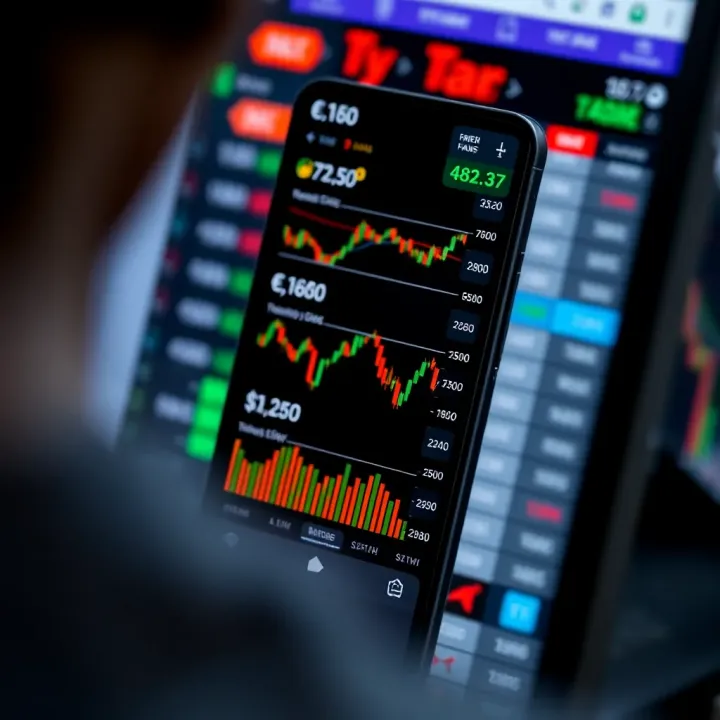
Explore top forex trading apps tailored for Kenyan traders 📱. Learn to choose wisely, ensure security 🔒, and trade confidently in Kenya’s forex market!

📚 Discover essential books for learning forex trading in Kenya! From basics to advanced tips, master strategies and risk management confidently.
Based on 9 reviews