

Binary Options Trading Guide for Kenya
Explore how binary options trading works in Kenya 🇰🇪. Learn about legal rules, key risks ⚠️, scam alerts 🚨, and tips to trade wisely 📈.
Edited By
Charlotte Bennett
Integrating TradingView into your binary options trading setup can significantly enhance your decision-making. TradingView offers real-time, interactive charts with a wide range of technical indicators, which are essential for spotting entry and exit points in fast-paced binary options markets.
Unlike basic charting tools that some binary platforms provide, TradingView supports advanced features like custom scripts and alerts. This means you can tailor your technical analysis to match specific strategies, especially those suited to Kenyan markets, where currency pairs like USD/KES and commodities such as tea and coffee play a major role.
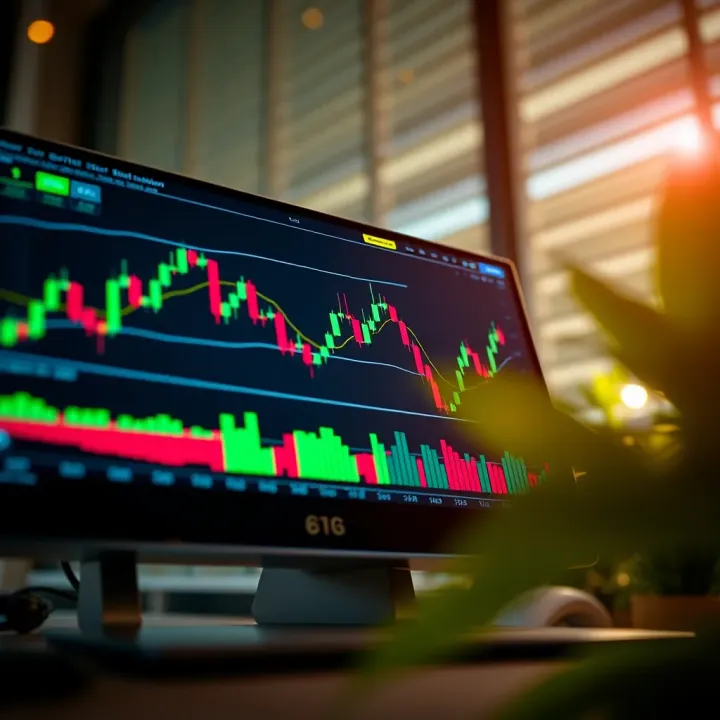
Getting started is straightforward: TradingView provides an embeddable widget or API that your platform can incorporate. This allows seamless syncing without switching tabs, helping traders stay focused and respond quickly.
To implement TradingView charts, you need to:
Register for a TradingView account to access API keys.
Choose the appropriate chart widget based on your platform’s architecture.
Embed the widget with custom parameters, such as timeframes ranging from 1 minute to 1 day, suited for binary option expiry times.
You can also customise chart appearance and indicators, aligning with common Kenyan trading preferences. For instance, adding Moving Average Convergence Divergence (MACD) or Relative Strength Index (RSI) helps capture momentum changes in currency and commodity pairs relevant locally.
From a practical angle, combining TradingView's analytics with popular Kenya payment methods like M-Pesa and bank transfers streamlines trade execution. This approach reduces lag and keeps your trades timely.
Overall, using TradingView enhances chart accuracy, provides flexibility through custom tools, and helps traders better evaluate market conditions specific to East Africa. The technical setup is manageable for developers familiar with web platforms, making it a solid choice to upgrade your binary options trading environment.
This article will next explore the technical steps and practical tips to make the most out of TradingView’s interface within binary options frameworks used in Kenya’s thriving trading community.
TradingView offers a powerful edge for those involved in binary options trading. Its versatile platform provides detailed charting and analysis tools that can help traders spot market movements more clearly and execute smarter trades. For binary traders, timing and accuracy are everything — and TradingView delivers on both by combining ease of use with rich data sets.
TradingView’s charts stand out because of their clarity and customisation. Kenyan traders, for example, can adjust the charts to show different time frames—from 1-minute to daily—which is crucial for binary options where contracts often last just a few minutes to hours. The platform supports multiple chart types like candlesticks, Heikin Ashi, and Renko, all of which present price movements differently and can highlight trends or reversals. Another practical benefit is the wide variety of drawing tools such as trendlines and Fibonacci retracements, helping traders to make informed decisions quickly.
The fact that traders can overlay several indicators—like RSI (Relative Strength Index) and MACD (Moving Average Convergence Divergence)—onto these charts means they can spot overbought or oversold conditions with ease. For example, a Kenyan trader using M-Pesa and Safaricom shares might watch the candlestick breakouts with RSI signals on a 15-minute chart to decide whether to place a ‘call’ or ‘put’ option.
TradingView goes beyond simple visualisation; it feeds traders with actionable insights. Its social community also allows sharing of trade ideas and live charts, which can be invaluable in catching subtle market shifts or testing hypotheses. Instead of guessing, a trader can use TradingView to combine quantitative signals with qualitative crowd wisdom.
Moreover, TradingView supports scriptable indicators via its Pine Script language. This means traders can tailor-make strategies that fit their trading style or risk appetite. For example, a developer working on a binary options platform might program a custom alert that notifies users when a currency pair hits a certain RSI threshold within a five-minute expiry window.
Kenyan traders face unique challenges like fluctuating forex rates, occasional internet slowdowns, and tight trading windows. TradingView's efficient data streaming and offline capabilities can handle varying internet speeds, ensuring traders don’t miss critical signals even with intermittent connectivity.
The platform’s seamless integration with multiple brokers and asset classes gives Kenyan traders access to global markets alongside local stocks and forex. For instance, traders tracking Safaricom shares or US dollar rates against the shilling can use TradingView to incorporate locally relevant economic events into their binary options strategies.
With TradingView, Kenyan traders leverage local market knowledge combined with world-class charting and community insight, enhancing their chances to make profitable binary options trades.
Integrating TradingView also aligns with the growing digital shift in Kenya’s trading environment, where many investors manage trades from mobile devices. The platform’s responsive design ensures a smooth experience whether on a laptop in Nairobi or a mobile phone in Eldoret.
By focusing on precision, adaptability, and local needs, TradingView proves to be a valuable tool for binary options trading in Kenya.

Setting up TradingView for binary options platforms is a key step to improve your trading accuracy and efficiency. Getting this right means you can access clear, interactive charts and technical tools straight from your trading dashboard, making it easier to analyse market movements and spot opportunities fast. For Kenyan traders, where market volatility can be high and timing is everything, having TradingView correctly integrated ensures you won’t miss crucial price shifts.
TradingView offers ready-made widgets and libraries that developers can embed directly into trading platforms. These include interactive charts, technical indicators, and watchlists. The widgets are easy to customise in size and style, which helps keep your trading interface neat and user-friendly. For example, a binary options site targeting Nairobi traders might integrate a lightweight widget that loads quickly even on slower internet connections. This also supports layering multiple charts or adding custom studies without slowing down the platform.
To make TradingView function smoothly with a binary options platform, it needs to connect with the broker’s API (application programming interface). This connection allows chart signals and market data to sync with trade execution systems. For instance, if a trader spots a bullish signal on a TradingView chart, the platform’s API should allow them to place a call option immediately without switching apps. A robust API connection means there’s less delay between analysis and action, reducing the risk of missed trades due to technical lag.
Real-time data is the backbone of binary options trading, where seconds matter. Integrating TradingView with live price feeds ensures charts show up-to-the-second values. This can be challenging if the broker’s data source differs from TradingView’s. To tackle this, platforms often implement synchronisation protocols that reconcile data streams and keep the information uniform across all user interfaces. For Kenyan traders dealing largely with forex or commodities on binary platforms, real-time data means better timing on trades and sharper risk management.
Proper setup of TradingView within a binary options platform not only boosts the analytical power but can also enhance client confidence through stable, reliable, and real-time trading experiences.
In short, carefully setting up TradingView with the right widgets, API connections, and data syncing will help turn raw price movements into actionable insights for binary trading in Kenya and beyond.
Customising TradingView is essential for making the platform suit the particular demands of binary options trading. Unlike traditional investments, binary trading relies heavily on short-term movements, so having the right chart setup, indicators, and interface adjustments can significantly impact decision-making and execution speed. Kenyan traders, in particular, benefit from customisations that factor in local market timing and trading styles.
For binary options, timing is everything. Traders must select chart types and time frames that align with the brief expiry periods typical in binary contracts. Candlestick charts tend to be the favourite because they visually show open, close, high, and low prices clearly – vital for spotting patterns quickly.
Kenyan traders often deal with fast trades lasting from 1 minute up to 30 minutes. Therefore, adjusting TradingView to display 1-minute or 5-minute charts helps capture relevant price action without clutter. Besides candlesticks, line charts can be useful for viewing overall trends at a glance during longer expiry periods. Traders should experiment with these charts to find the most intuitive setup for their strategy.
Not all indicators suit binary options, so choosing wisely is key. Popular ones include the Relative Strength Index (RSI), Bollinger Bands, and Moving Averages. RSI helps spot overbought or oversold conditions, signalling potential price reversals ideal for binary calls or puts.
Bollinger Bands show volatility and possible breakout points, guiding traders on when to enter or avoid trades. Moving Averages smooth out price fluctuations to identify trends, which is useful when binary trades span several minutes.
Traders should avoid cluttering charts with too many indicators; three at most is practical. Kenyan traders can combine RSI with Bollinger Bands to balance momentum and volatility insights, leading to more informed binary option decisions.
TradingView’s interface can be customised to fit Kenyan users’ preferences and trading environments. For example, adjusting colour themes to reduce eye strain matters, especially if trading during night hours on devices exposed to harsh lighting.
Organisation of watchlists, alerts, and drawing tools should be straightforward to allow quick decision-making. Integration with local time zone settings helps sync chart data with Nairobi time for accurate market timing.
Besides desktop setups, many Kenyan traders use mobile devices. Ensuring the layout adapts well to smaller screens without losing critical information must be part of the customisation process. Simple UI with clear icons and responsive charts helps avoid errors caused by confusing displays during fast trades.
Customising TradingView for binary options trading isn’t just about aesthetics; it shapes how effectively you interpret data and respond to market moves. Properly adjusting charts, indicators, and interface based on Kenyan trading habits can boost your trade accuracy and speed.
Using TradingView effectively can greatly improve your binary options trading outcomes if you approach it with clear strategies and tools. The platform provides powerful charts and indicators, but knowing how to interpret these insights practically is key. This section looks at how traders can read signals correctly, manage risks using TradingView’s features, and apply real examples to make sound trading decisions.
TradingView offers an array of signals generated by technical indicators such as RSI, MACD, Bollinger Bands, and moving averages. For binary options, where you often predict short-term price movements, it’s crucial to interpret these signals with precision. For instance, when the RSI (Relative Strength Index) crosses above 70, it may suggest overbought conditions; traders could consider this a cue to place a "put" option anticipating a price drop. Conversely, an RSI below 30 indicates oversold conditions, signalling a possible "call" option.
However, relying on one indicator alone can be misleading. Combining signals, such as an MACD crossover with Bollinger Bands squeezing, helps confirm potential moves, reducing false trades. Kenyan traders should calibrate these signals to local market hours and volatility patterns, as markets like the NSE have distinct trends compared to global markets.
Risk control is vital in binary trading where losses can quickly accumulate. TradingView helps by enabling traders to visually set stop-loss and take-profit levels through chart annotations, although direct order execution may happen on the broker’s platform. Using TradingView’s alert system can warn you when an asset price hits critical thresholds, allowing timely decisions.
Keep your trade sizes consistent, and never risk more than a small percentage of your trading capital per option. With TradingView’s historical data, simulate trades to identify potential risk zones. For example, if a currency pair often reverses after hitting a moving average level, plan your trades around this to avoid unnecessary losses.
Let’s say you’re trading binary options on the EUR/USD pair. TradingView charts show a clear double-top pattern, confirmed by the stochastics indicator signalling overbought momentum. You might decide to execute a "put" option expecting a downward reversal within the next one to five minutes. Such setups increase the odds compared to guessing blindly.
Similarly, during the Kenyan market’s morning session when volatility on stocks like Safaricom often spikes, a well-timed "call" option on uptrends identified through volume spikes and price action can deliver solid returns.
Using TradingView not only sharpens trade timing but also helps Kenyan traders adapt strategies to market behaviour, whether in forex, indices, or local equities, improving the chances of profitable binary trades.
By translating chart signals into concrete binary options strategies and managing risks effectively, TradingView becomes less of a tool for just viewing data and more of a practical aid in the decision-making process.
Implementing TradingView in binary options trading platforms comes with practical hurdles that traders and developers must anticipate. Troubleshooting common problems ensures smoother operation and maximises the benefits of TradingView’s analytical tools. Addressing issues like data latency, broker integration, and security protects the trading experience from disruptions and risks.
Data latency can seriously affect binary options trading since timing is everything. If chart updates delay even by a few seconds, traders may miss critical entry or exit points, leading to losses. Kenyan traders relying on internet connections that are sometimes unstable due to network congestion or weather conditions should consider using wired broadband or reliable 4G services for steady access.
To reduce latency, enabling faster websocket connections where available or using local servers closer to TradingView’s data centres can help. Also, avoid running multiple heavy applications on the same system during trading, as this can slow down data processing.
Caching issues in browsers or trading platforms can also cause stale data display. Clearing cache regularly or using private browser modes aids in receiving the latest market data.
Different brokers provide varying API standards, which can create friction when connecting TradingView tools directly. Some Kenyan brokers may not fully support TradingView’s widget integration or lack open API documentation, leading to limited real-time trading signals.
A practical step is to choose brokers known for smoother TradingView connectivity or employ middleware solutions that translate TradingView data into broker-compatible formats. Testing the integration through demo accounts before live trading helps unearth issues early.
In cases where direct integration isn’t feasible, traders can use TradingView for market analysis while executing trades on the broker’s platform, though this demands quicker manual coordination.
Binary options trading platforms handle sensitive user data and financial transactions, so safeguarding this information is critical. Integrating external tools like TradingView requires vigilance to prevent data breaches or unauthorised access.
Implementing secure authentication protocols, such as OAuth or two-factor authentication, ensures only verified users access trading accounts. Additionally, brokers and developers should encrypt API communication channels to protect data in transit.
Kenyan traders should also be wary of phishing attempts or fake TradingView widgets from untrusted sources that could compromise login credentials. Regularly updating software and using official TradingView resources reduces such risks.
In summary, understanding these common challenges and addressing them proactively helps Kenyan traders and platform developers make the most of TradingView’s capabilities while maintaining efficient and secure binary options trading setups.
Explore how binary options trading works in Kenya 🇰🇪. Learn about legal rules, key risks ⚠️, scam alerts 🚨, and tips to trade wisely 📈.

Discover effective binary options trading strategies tailored for Kenyan traders 📈. Learn risk management, analysis techniques, and practical tips for success.

Explore binary options trading in Kenya 🇰🇪 with insights on legal rules, platform selection, risks, and proven strategies to trade safely and smartly.
Learn the key differences between forex trading and binary options in Kenya 🇰🇪. Understand how they work, risks, rewards, regulations, and what fits your goals.
Based on 6 reviews