
Binary Search Algorithm Explained Simply
🔍 Explore the binary search algorithm: learn how it works, when to use it, implementations in coding, and tips to boost efficiency in your projects.
Edited By
Thomas Gray
A binary counter is one of the simplest yet most practical circuits in digital electronics. It essentially counts pulses or clock signals, representing numbers in binary form (using only 0s and 1s). In many devices—from simple timers to complex microcontrollers—binary counters keep track of events by increasing their count with each input pulse.
The counter advances its output by one unit every time it receives a pulse. Each output bit represents a binary digit, and collectively the bits display numbers from zero upwards. For example, a 4-bit binary counter counts from 0000 (decimal 0) to 1111 (decimal 15), then resets to zero to repeat the cycle.
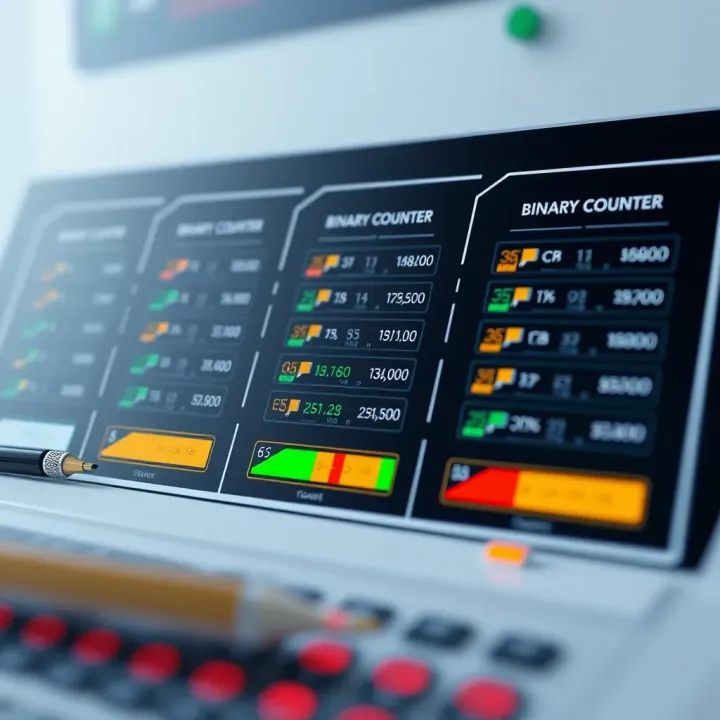
Understanding how a binary counter works is key if you're working with digital circuits, beginners included. The two most common types of binary counters are asynchronous (ripple) counters and synchronous counters. Ripple counters are simple, with each flip-flop triggered by the previous one’s output, making them slower for higher bit counts. Synchronous counters, on the other hand, use a common clock signal for all flip-flops, ensuring faster and more reliable counting.
Besides counting, binary counters serve practical uses in Kenyan industries and technology, such as:
Timing circuits: to measure durations in manufacturing process control
Frequency division: helping break down high-frequency signals for easier management
Event counting: tracking quantities like items produced in an assembly line or vehicles passing a point
For example, in Nairobi factories, binary counters embedded in control panels help manage conveyor speeds by counting motor revolutions. In classrooms, students use simple binary counters on breadboards to grasp digital logic concepts hands-on.
A common challenge is ensuring that counters do not miss pulses, especially in noisy environments or when pulses come too fast. Choosing the right counter type and implementing proper signal conditioning solves many such issues.
Going forward, this article will outline how binary counters are constructed, their specific applications, and how to troubleshoot common faults. The goal is to provide Kenyan engineers, students, and hobbyists with useful insights for both study and practical projects.
Understanding the basic principles behind binary counters is essential for grasping how modern electronic devices keep track of sequences, timings, and events. These digital circuits are foundational in systems like digital clocks, production line counters, and microcontroller-based projects, especially relevant for engineers and students working in Kenya's growing tech and manufacturing sectors.
A binary counter is a digital circuit that counts upwards in binary digits each time it receives an input pulse. Its main purpose is to keep track of the number of occurrences of an event, such as clock pulses or button presses, converting them into binary values. For example, in a digital clock, a binary counter helps tally seconds and minutes by incrementing its count regularly.
The counting mechanism relies on sequential logic. When a clock pulse arrives, the counter increases its binary output by one, effectively adding to the previous state. This operation depends on flip-flops—circuit elements that store a single bit of data, toggling from 0 to 1 or vice versa when triggered. Because these flip-flops are connected in series, they pass along changes, enabling the counter to represent larger numbers with multiple bits.
Binary numbers use only two symbols: 0 and 1. This base-2 system is natural for digital electronics since circuits have two states—on (1) and off (0). In Kenya, understanding this system is vital for anyone working with microcontrollers or digital logic, as it simplifies the interpretation of electronic signals.
Each digit in a binary number corresponds to a power of two, starting from the right with 2⁰, then 2¹, 2², and so on. This means the binary number 1011 equals 1×8 + 0×4 + 1×2 + 1×1, which totals 11 in decimal. Thus, the binary counter’s state directly represents how many pulses it has counted.
The relation between binary digits and count values allows digital devices to process information efficiently. For example, a 4-bit binary counter can count from 0 (0000) up to 15 (1111), covering sixteen distinct states. This simple concept underpins more complex counting and timing functions used in Kenyan industries, from traffic light controllers to simple digital meters.
Tip: When designing or troubleshooting counters, always check how many bits are involved since this defines the counter’s maximum count range and suitability for your application.
Understanding these basics sets the stage for building, using, and interpreting binary counters effectively in real-world electronics projects.
Understanding the core operation of a binary counter is key to grasping how digital devices track events or passage of time. At its heart, the binary counter converts incoming electrical pulses into a binary number sequence, which represents a count. This process is central to many applications, from timing circuits to digital meters.
Clock signals act like the heartbeat of a binary counter. They provide regular pulses that tell the counter when to update its value. In Kenyan electronics labs or even simple DIY projects, the clock often comes from a crystal oscillator, generating precise timing intervals. Without this steady input, the counter wouldn’t know when to move to the next number.
This timing is crucial in devices like digital clocks or frequency counters, where accuracy and consistency determine performance. For example, in a digital clock built using a binary counter, the clock signal determines every second’s passage, allowing the circuit to count up properly and keep time.
Every clock pulse triggers the counter to increment its binary value by one. Imagine you have a 4-bit counter: it starts at 0000 and moves to 0001 with the first pulse, then 0010, and so on, until it reaches 1111 (decimal 15), after which it resets.
This incrementation is fundamental for counting events like cars passing a checkpoint or products on a conveyor belt. In fact, you’ll find such counters embedded in production line equipment in Kenya’s factories, counting items efficiently without human error, thanks to this simple yet effective mechanism.
Flip-flops are the basic units that hold individual bits of information in a binary counter. Each flip-flop stores either a 0 or 1 and changes state based on incoming clock pulses. Think of them as tiny switches that toggle to record count progress.
In practical terms, a 4-bit binary counter uses four flip-flops connected in sequence, each representing a bit from least significant to most significant. Flip-flops enable the stable and reliable storage of binary states in circuits, such as those found in embedded systems or teaching kits in Kenyan colleges.
A ripple counter updates its flip-flops in sequence, where the output of one flip-flop triggers the next. While simpler and cheaper to build, ripple counters experience slight delays called propagation delay, causing timing inaccuracies at high speeds.
Synchronous counters, on the other hand, update all flip-flops simultaneously, controlled by a common clock signal. This design reduces delays, making synchronous counters preferred in faster, more precise applications like communication devices or digital measurement tools used in Kenya’s tech sector.
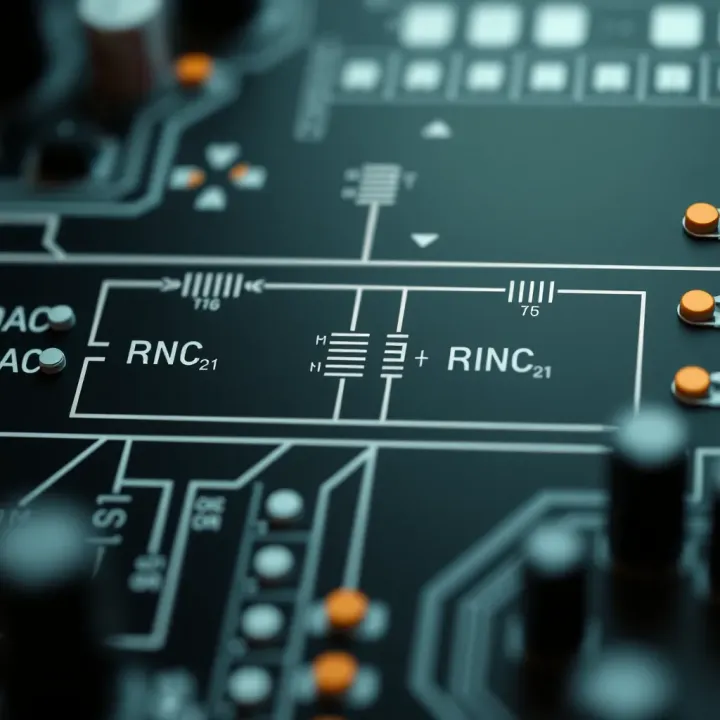
Choosing between ripple and synchronous counters depends on the application’s speed and accuracy needs. For example, a ripple counter suits low-speed timers or counters in agricultural equipment, while synchronous counters fit high-speed data acquisition tasks.
Overall, knowing how clock signals, flip-flops, and counter types work together helps in designing and troubleshooting efficient binary counters suited to various Kenyan electronics contexts.
Understanding the types of binary counters and how they differ is essential for choosing the right one in your digital circuit design. Each type has unique features that affect speed, complexity, and reliability. Whether you're working on a digital clock, a production line counter, or a communication device, selecting the appropriate counter type impacts performance and ease of implementation.
An asynchronous binary counter, often called a ripple counter, operates by passing the clock signal from one flip-flop to the next in sequence. When the first flip-flop toggles, it sends a pulse to the next, causing it to toggle after a slight delay. This cascading effect continues through all flip-flops, making the output count increase by one for every input pulse.
This approach is simple and cost-effective for small bit-width counters but introduces cumulative delay with each stage because the flip-flops don't switch simultaneously. In practical terms, this means the counter can respond slowly when counting high-frequency pulses, which might not suit fast digital applications.
Ripple counters are easy to design and require fewer components, making them a popular choice for simple or low-speed count applications. For instance, they are suitable for hobbyist electronics projects or educational demonstrations where speed isn't critical.
However, the main drawback is the propagation delay that accumulates as the signal ripples through the chain. This delay limits their use in timing-critical circuits. Also, asynchronous counters can produce glitches in their output, causing errors if downstream circuits read the count value during a transition.
Synchronous binary counters address the limitations of ripple counters by ensuring all flip-flops receive the clock pulse simultaneously. By synchronising the clock inputs, each stage toggles in unison, eliminating the cumulative delay seen in asynchronous designs.
This synchronisation drastically improves counting speed and accuracy. The performance gain matters, especially in systems that require high-speed counting or precise timing, such as digital clocks, communication modems, or high-frequency measurement devices.
Synchronous counters are preferred in applications where timing is crucial and outputs must be stable. For example, in the Kenyan jua kali sector, equipment monitoring production lines may use these counters to ensure accurate event counts without errors.
Moreover, digital systems like microcontrollers and programmable logic devices favour synchronous counters because their outputs align perfectly with the system clock. This coordination simplifies integration and reduces the risk of timing errors in complex circuits.
Choosing between asynchronous and synchronous counters depends on speed requirements and circuit complexity. While asynchronous counters suit simpler and slower tasks, synchronous counters offer reliability and speed for more demanding applications.
Understanding how to build and implement binary counters is key for anyone working with digital electronics. These counters form the backbone of many timing and counting applications, from simple timers to complex data handling systems. Knowing how to design and put together a counter circuit lets you customise solutions to specific needs, save costs by using available components, and troubleshoot problems effectively on your own.
A 4-bit binary counter uses four flip-flops connected in series to count pulses, producing binary outputs from 0000 to 1111 (0 to 15 decimal). Each flip-flop toggles its state when triggered, often by a clock pulse, with the output of one flip-flop serving as the clock input for the next in asynchronous designs. This simple setup is ideal for learning and practical uses, such as timing events or creating frequency dividers.
Designing such a counter involves understanding how each flip-flop stores one bit of information and how the pulses move through them. You can build this using basic JK or T flip-flops combined with NAND, NOR, or AND gates to control counting and reset functions, ensuring the circuit behaves predictably.
In Kenyan labs and workshops, certain integrated circuits (ICs) are popular for building binary counters because of their availability and reliability. The 74LS90 decade counter IC, for instance, can be configured to work as a 4-bit binary counter, making it easier to assemble without designing from scratch. Similarly, the 74LS93 IC is often used for straight binary counting.
Using these ICs reduces complexity, since the internal flip-flops and logic gates are all integrated, saving space and time. For students and hobbyists working in Nairobi or places like Eldoret and Kisumu, these ICs are commonly found in electronics shops, making it practical to learn and experiment.
A stable power supply is essential for any digital circuit, including binary counters. Fluctuations in voltage can cause abnormal toggling or missed counts. In Kenyan conditions, where power interruptions and voltage drops are common, using voltage regulators or battery-backed supplies helps maintain consistent output.
Signal integrity also matters; noise from nearby equipment, unshielded cables, or poor grounding can cause false triggering. Twisting clock lines and using proper decoupling capacitors help reduce this noise. This attention to detail ensures your counter performs reliably, especially in practical settings like school labs or jua kali workshops.
When using mechanical switches to provide input pulses, switch bounce can cause multiple unwanted pulses because the contacts don't close cleanly. This leads to inaccurate counting. To fix this, debounce techniques are used.
Debouncing can be done in hardware using RC filters (a resistor and capacitor) or specialised ICs like the 555 timer set up as a monostable multivibrator. In some cases, software debouncing is possible if the counter is part of a microcontroller system. For Kenyan learners without access to microcontrollers, hardware debouncing is the straightforward way to improve their binary counter's accuracy and avoid frustrations caused by noisy inputs.
Proper circuit design practices directly impact the reliability of binary counters. Taking care with power quality, signal noise, and input methods avoids common pitfalls and ensures your binary counter works as expected every time.
Binary counters play a practical role in many everyday electrical devices and industrial systems. They help track and record events by counting pulses, which makes them essential in timing and measurement applications. Their reliability and simplicity mean they are widely used in Kenyan electronics workshops, schools, and manufacturing sites where clear, accurate counting is needed without complex machinery.
Digital clocks depend heavily on binary counters to keep track of time intervals. These counters increment with every input pulse generated by a stable clock oscillator, usually working in cycles to count seconds, minutes, and hours. For instance, a 1 Hz input pulse increments the second counter once every second. After 60 counts, it resets and triggers the minute counter, and so on. This straightforward pulse counting keeps clocks accurate and easy to maintain.
In a Kenyan household or office where affordable and dependable digital clocks are common, such counters ensure timekeeping devices function without constant adjustment. This is crucial especially in areas where power fluctuations occur, as binary counters can easily resume correct counting once the system stabilises.
To make the counted time usable, binary counters connect to display units such as seven-segment LEDs. The binary output signals are decoded and converted into readable digits, showing hours, minutes, and seconds clearly. This integration involves simple logic gates or dedicated decoder ICs that translate binary numbers into decimal displays, making it easy for users to read the time.
This setup is common in affordable digital watches and timer devices available in Kenyan markets. A well-designed binary counter-display combination reduces power consumption and component cost, which matters for local manufacturers targeting budget-conscious buyers.
In industrial settings such as factories assembling products or packaging items, binary counters track how many units pass a point. For example, sensors detect items on a conveyor belt and send pulses to a binary counter. Each pulse represents one item, and the counter accumulates the total, helping supervisors monitor output quickly and reduce manual errors.
This process is especially useful in smaller Kenyan factories, where simple electronic counters can replace tedious manual scoring. The clarity and accuracy provided help in effective stock management and timely fulfilment of orders.
Binary counters are also used as frequency dividers, splitting high-frequency signals into lower frequencies useful for communication electronics like radios and mobile devices. By counting input pulses and outputting signals at divided rates, these counters enable stable carrier signals, clock sources, or timing references necessary for clear and reliable communication.
For instance, in base stations or local radio transmissions common in Kenya’s urban and rural areas, binary counters embedded in circuits help maintain consistent frequencies. This improves signal clarity and reduces interference, which is critical in crowded frequency bands and dense communication networks.
Binary counters combine simplicity and precision, making them fundamental in many devices you encounter daily. Whether keeping time or measuring activity, they provide robust counting tools that are easy to implement and maintain in Kenyan technological environments.
When dealing with binary counters in practical settings, it’s not unusual to face some common challenges that can disrupt normal operation. Understanding these issues and knowing how to fix them will save both time and resources, especially when troubleshooting circuits on the spot. Kenyan engineers and technicians, whether working in university labs or jua kali workshops, often encounter glitches that slow down their projects. This section highlights typical problems like glitches, timing errors, and how to address them effectively.
Electronic noise in binary counters can come from various sources such as electromagnetic interference (EMI), poor grounding, or even fluctuations in the power supply. For instance, when the circuit is placed near heavy machinery or high-current cables—a common scenario in industrial settings—stray signals may induce unwanted pulses causing the counter to miscount. This interference can look like random jumps in the count or unexpected resets, which is frustrating when precision counts matter.
In Kenyan electronic shops, where locally assembled circuit boards might not have sophisticated noise filtering, these problems are even more common. Noise can also affect the signal lines between components, leading to improper state changes and unreliable output.
A frequent source of trouble is the timing mismatch between flip-flop stages, known as synchronization errors. In ripple counters, the delay in switching from one stage to the next can cause temporary incorrect outputs that confuse subsequent parts of a system. Such errors become critical in applications like digital clocks or frequency dividers where exact timing is non-negotiable.
For example, in a digital clock design based on a ripple counter, if the stages aren’t well synchronised, the displayed time may flicker or momentarily show incorrect digits. This can erode trust in the device’s reliability. Synchronisation issues are less severe in synchronous counters but still need attention during design and testing phases.
To mitigate noise problems, applying proper shielding is an effective step. Shielding involves enclosing sensitive parts of a circuit in a conductive material that blocks external electromagnetic fields. For DIY projects or small Kenyan workshops, wrapping the circuit board in aluminium foil connected to the ground can reduce interference notably.
More advanced builds use metal enclosures or specially designed PCB layouts with ground planes to achieve this effect. The key is ensuring the shield is correctly grounded to avoid creating more noise. Proper shielding guarantees that the binary counter receives clean input pulses, stabilising its operation even in noisy environments.
Debouncing is essential when counters rely on mechanical switches or buttons for clock pulses. A physical button doesn’t produce a clean, single pulse but rather multiple rapid on/off signals due to mechanical bounce. Without debounce, the binary counter mistakenly counts several pulses at once.
Simple hardware debouncing using RC (resistor-capacitor) filters or dedicated debounce ICs can smooth out the signal before it reaches the counter. In Kenya, many practical electronics workshops teach the use of inexpensive components like capacitors and Schmitt triggers to achieve this.
Besides hardware, software debouncing methods exist for microcontroller-based counters. Ensuring stable pulse inputs improves accuracy, especially in user-operated controls common in timer devices or event counters.
Addressing glitches and timing issues early helps prevent cascading failures in digital circuits. Practical measures like shielding and debouncing create more reliable, professional-grade binary counters suited to Kenyan environments.
By combining awareness of these common faults with proper fixes, engineers can build and maintain efficient binary counters that perform consistently in various applications.
🔍 Explore the binary search algorithm: learn how it works, when to use it, implementations in coding, and tips to boost efficiency in your projects.

📊 Discover binary trading basics, risks, and tips for Kenyan traders. Learn how to trade assets by predicting price moves within set times safely and confidently.

📚 Explore the binary search algorithm step-by-step 🧩, learn where to use it, efficiency tips ⚡, common mistakes to avoid, and coding advice.

📈 Discover how forex trading works, from currency pairs and pricing to trading platforms, key strategies, and risks. Gain practical insights for Kenya’s financial market.
Based on 14 reviews