
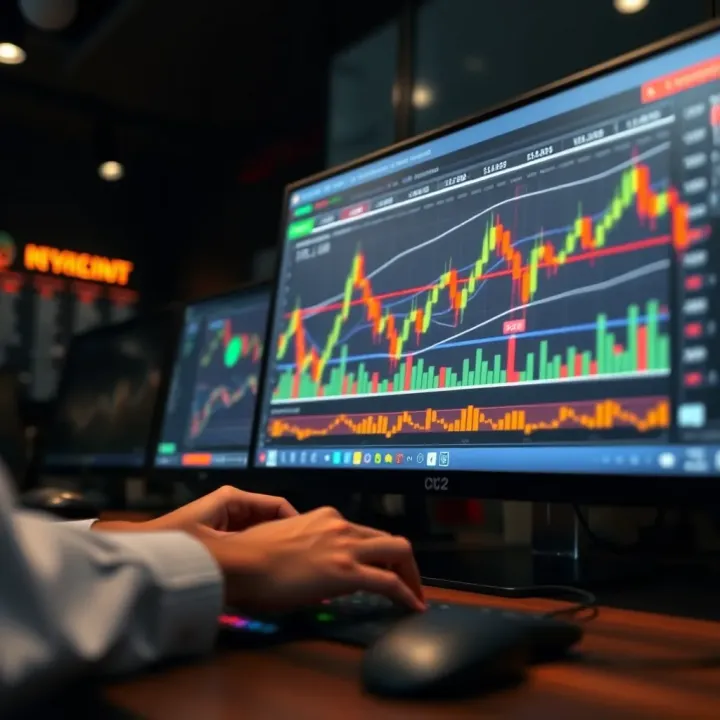
Understanding Forex Trading Bots: A Practical Guide
🤖 Explore forex trading bots: how they work, types, benefits & risks. Get tips for smart automation and boost your trading strategy effectively.
Edited By
Thomas Gray
Forex trading and gambling often get mixed up, especially by those new to the financial world. On the surface, both involve risk and the chance to win or lose money quickly, but they differ sharply in their foundation and practice.
At its core, forex trading is the buying and selling of currencies on the foreign exchange market with the aim of making a profit from changes in currency rates. It is a global market that operates 24 hours, driven by economic indicators, geopolitical events, and market sentiment.

Gambling, on the other hand, depends mostly on luck or chance outcomes, like in a casino game or betting. While you might use some strategies in gambling, the outcomes are generally unpredictable and independent of systematic analysis.
Understanding this difference is key to developing discipline and managing risks effectively in forex trading.
Use of Analysis: Traders use technical analysis (studying charts and price patterns) and fundamental analysis (examining economic news and indicators) to inform decisions. This effort aims to tilt the odds in their favour.
Risk Management: Effective traders know how much they can afford to lose on each trade and set stop-loss orders to limit losses. Gambling lacks such structured risk controls.
Consistency and Strategy: Forex trading is based on strategies tested over time. While no strategy guarantees profits, combining knowledge and discipline improves the chance of success.
Market Influence: External factors like interest rates, inflation, and political stability influence currency prices. Traders study these to forecast movements, unlike gambling, which relies on entirely random events.
Trading forex involves real financial risk, often amplified by leverage – borrowing to increase your trade size. Kenyan traders using platforms like Safaricom’s KCB M-Pesa must be cautious with leverage, as it can disastrously amplify losses.
Moreover, the forex market can be volatile, with sudden price swings triggered by unexpected news. Traders must stay informed and prepared for rapid changes.
Use demo accounts to practice without risking real money.
Develop a trading plan with clear entry and exit points.
Avoid chasing losses; stick to your strategy.
Keep abreast of global events impacting currencies like the USD, Euro, or East African shilling.
Always consider transaction costs, including spreads and commissions.
By treating forex trading as a serious financial activity rather than a game of chance, Kenyan traders can make informed decisions and limit risks. The line between trading and gambling becomes clear once you prioritise knowledge, discipline and risk management.
Understanding what forex trading involves is key to seeing how it differs from gambling. Forex, or foreign exchange, deals with buying and selling currencies. For traders in Kenya and beyond, knowing the basics and mechanics of this market is the foundation for making informed decisions and managing risks.
Forex trading centres around currency pairs, like USD/KES (US dollar against Kenyan shilling) or EUR/USD (Euro against US dollar). Each trade involves buying one currency and selling another simultaneously. For example, if you expect the US dollar will strengthen against the Kenyan shilling, you might buy USD/KES to profit from this move. Practical knowledge of popular pairs and their behaviour helps traders spot opportunities and avoid pitfalls linked to local or global economic events.
The forex market includes banks, corporations, governments, and individual traders. In Kenya, commercial banks and forex brokers play a big role by providing access to global currency markets. Retail traders using platforms like MetaTrader or cTrader join international players in this 24-hour market. Recognising these participants helps you understand market liquidity and price movements that impact your trades, especially when major events like CBK monetary policy changes happen.
Platforms have made forex accessible to almost anyone with internet and a device. Safaricom customers, for instance, can fund trading accounts using M-Pesa, making the forex market more reachable than ever for Kenyans. Platforms offer tools for charting, order execution, and risk management, which are essential for disciplined trading. Choosing a reliable platform regulated by CMA Kenya or global authorities is crucial to protect your funds.
Trades happen through brokers acting as intermediaries. You place orders to buy or sell a currency pair at a price the market offers. Orders could be instant (market orders) or set to trigger at specific price points (limit or stop orders). Understanding these execution methods lets you react smartly to sudden price changes instead of gambling on luck.
Leverage allows traders to control larger positions than their actual capital, using borrowed funds from brokers. For example, a 1:100 leverage means you can trade KS00,000 with just KS,000 in your account. While this amplifies profits, it also increases potential losses, sometimes wiping out your margin (the collateral). Managing leverage wisely is vital; reckless use often turns trading into gambling.
Good traders rely on technical and fundamental analysis to predict price movements. Technical analysis looks at charts and price patterns, while fundamental analysis considers economic indicators like inflation, interest rates, and political stability. Kenyan traders, for instance, might monitor CBK announcements or US Federal Reserve moves to anticipate forex shifts. This analytical approach replaces guesswork with strategy.
Successful forex trading depends heavily on understanding both the market's basics and the mechanics of trading, rather than relying on chance.
Know the currency pairs relevant to your trading style.
Recognise the key players influencing market liquidity.
Use trustworthy platforms with good execution and support.
Execute trades using proper order types to reduce risk.
Apply leverage carefully, respecting margin requirements.
Base decisions on solid market analysis, not hunches.
Grasping these elements helps anyone see forex trading as a skill-based activity, markedly different from pure gambling.
Understanding what constitutes gambling helps distinguish it from activities like forex trading. This clarity is key because it shapes how we view risks, the role of skill, and expected behaviours. Defining gambling isn't about labelling; it's about recognising traits that can impact financial decisions.
Chance versus skill plays a major role in identifying gambling. Gambling generally relies heavily on chance, meaning the outcome hinges more on luck than on any skill or strategy. Take roulette, for example, where each spin’s result is unpredictable and unaffected by previous spins. In contrast, activities involving skill, like chess, ensure the player’s knowledge and tactics largely determine success. In practice, this means gambling usually doesn’t reward preparation or analysis.
This distinction matters practically because traders and investors want to avoid depending purely on chance. Unlike gambling, forex trading allows for skill-based inputs like fundamental and technical analysis, which can improve decision-making and reduce random outcomes.
The house edge and odds further clarify what gambling entails. The house edge is the percentage of each bet that the gambling operator expects to keep over time. For instance, a Nairobi pool betting game might have a house edge that guarantees the operator profit despite short-term wins by players. This mathematical advantage ensures consistent losses for gamblers over time.
In forex trading, there is no inherent "house" taking a fixed cut on every trade. Instead, brokers might charge commissions or spreads, but the trader’s profitability depends on market movements and strategy, not a built-in disadvantage.
Common gambling forms in Kenya include games like the lottery (e.g., Kenya National Lottery), matatu betting pools, and poker games. These activities typically rely on luck, with minimal skill influencing outcomes. They can lead to quick wins but also swift losses, often without a clear path to improve one’s odds beyond guesswork.
Risk-taking and impulsive decisions often define gambling behaviour. Many gamblers act on hunches or emotional urges rather than calculated plans. For instance, someone might place a high stake on a football match without research, hoping for a lucky payout. This impulsiveness can result in severe financial trouble, especially without limits.
Addiction patterns are common among habitual gamblers. The desire to recoup losses or chase excitement frequently leads to repeated betting, ignoring the real risks involved. This behaviour is driven by changes in brain chemistry, leading to cravings that resemble those in substance addiction.
Emotional influence on outcomes is strong in gambling. Wins may create euphoria, prompting more bets, whereas losses can cause frustration or desperation, pushing gamblers further into risky bets. This cycle often blinds players to the odds and good sense.
Recognising these psychological traits helps traders avoid falling into gambling-like traps in forex markets, such as impulsive trades or chasing losses.
Overall, this section highlights the central features of gambling: heavy reliance on chance, structural odds against the player, and psychological behaviours that can harm financial wellbeing. Understanding these helps Kenyan traders see how forex trading can differ, especially when approached with discipline and informed strategies.
Understanding the differences between forex trading and gambling is important because both involve financial risk, but the way risk is managed and decisions are made sets them apart. Many people confuse the two because forex trading can seem like speculation or chance, yet it relies on analysis, strategy, and risk controls. For Kenyan traders, recognising these differences helps avoid reckless behaviour and encourages informed decision-making.
Fundamental and technical analysis form the backbone of forex trading strategies. Fundamental analysis looks at economic indicators like interest rates, inflation, and geopolitical events to predict currency movements. For instance, when Kenya's Central Bank changes its policy rate, traders might anticipate how the Kenyan shilling will respond. Technical analysis, on the other hand, studies price charts, patterns, and indicators such as moving averages to forecast market direction. This data-driven approach contrasts with gambling's reliance on luck.
Developing a solid trading plan is essential for success in forex. This plan outlines entry and exit points, position sizes, and acceptable risk levels. By setting clear rules, a trader prevents emotional decisions during rapid market changes—common among Kenyan traders new to the currency market. For example, a trader might decide to exit a position if losses reach 2% of their capital, limiting exposure.
Risk management is vital and distinguishes forex trading from gambling. Traders use tools like stop-loss orders to cap potential losses and avoid wiping out their accounts. Proper risk management means only risking a small percentage of the trading capital on any single trade, ensuring longevity in the market. In contrast, gambling often involves risking large amounts without mechanisms to control losses.
At times, forex trading can look like gambling, especially when traders engage in speculative or high-risk trades without adequate knowledge. Examples include chasing quick profits on volatile pairs or betting on price swings without clear analysis. Such behaviour is similar to betting on a roulette wheel, where chance dominates.
Trading without research or discipline leads to outcomes close to gambling. Kenyan traders who jump into the market based on tips or hearsay, without understanding market drivers, essentially gamble their money. Without planning or strategic execution, success is more about luck than skill.
Using excessive leverage irresponsibly is another way forex can mimic gambling. Some brokers offer high leverage, allowing traders to control large positions with small capital. Overusing leverage magnifies both gains and losses, often resulting in rapid account depletion if a trade goes against the trader. In Kenya, popular platforms like MetaTrader commonly offer leverage options, so it's critical to use them cautiously.
Forex trading is a skill-based activity relying on analysis and discipline, but without careful risk management and strategy, it can quickly turn into gambling.
Identifying these differences helps Kenyan traders approach forex with knowledge and caution, avoiding the pitfalls associated with chance-based betting.
Understanding the risks and rewards involved in forex trading is vital for anyone wanting to engage in this market. The potential to make profits attracts many, but the risks of losses are just as real. Recognising these factors helps traders make informed decisions and avoid pitfalls that can wipe out their savings.
Profit opportunities in currency fluctuations arise because forex prices move constantly due to economic, political, and market events. Traders can buy a currency when they expect its value to rise and sell when they predict a fall, aiming to capitalise on these changes. For example, a Kenyan trader might buy US dollars before a strengthening dollar trend and sell later to gain profit. These price swings provide opportunities even in short time frames, which many traders find appealing.
Long-term growth prospects also exist for disciplined traders who build strategies focusing on consistent gains rather than quick wins. Some Kenyan investors use forex trading as part of their wider investment portfolio, combining it with stocks or real estate. By managing risk properly and using fundamental analysis, traders can grow their capital steadily over months or years. Long-term approaches often avoid the emotional extremes of daily trading.
Examples from Kenyan traders show both successes and losses. Some traders in Nairobi credit their profits to careful study of global markets and disciplined money management. Others warn about rash decisions and following tips without verification. The experiences shared on Kenyan trading forums, WhatsApp groups, or in forex training sessions reflect the realities of balancing rewards with risks in forex.
Market volatility means currency prices can shift suddenly due to news, policy changes, or geopolitical events. While this volatility creates profit chances, it also brings unpredictable losses. In 2015, Kenyan traders faced sharp swings when the Swiss franc unexpectedly surged. Those without proper stop-loss orders suffered heavy losses. Volatility demands constant market monitoring and stress resilience.
Overtrading and overconfidence trap many beginners. When a trader sees early wins, there is temptation to increase trade size or frequency without solid strategy. Such behaviour often leads to burning through capital quickly. Kenyan traders have reported chasing losses after a bad trade, which only deepens the financial damage. Maintaining discipline and trade limits keeps emotions in check.
Scams and unregulated brokers continue to be a major hazard. Some entities promise high returns and easy money but disappear with clients’ funds. Kenyan regulators like the Capital Markets Authority (CMA) caution against brokers lacking proper licences. Choosing regulated firms and verifying their credentials protects traders from fraud, which otherwise can shatter trust in forex trading.
Safeguarding yourself with knowledge and caution in forex trading helps tilt the odds in your favour, but remaining aware of the risks is just as essential as chasing the rewards.
By appreciating these rewards and risks, Kenyan traders can approach forex trading more realistically and build their skills for sustainable success.
For Kenyan forex traders, adopting best practices is not just about improving profits but also about navigating the unique market challenges safely. Following a well-structured approach reduces the chances of losses and helps manage the risks that come with currency trading. Given the volatility of forex markets and various unscrupulous operators, having clear guidelines tailored to the Kenyan context can make all the difference.
Education forms the backbone of successful forex trading. In Kenya, traders can access various online courses through platforms like Udemy or local institutions offering finance and investment training. It's essential to pick courses that cover fundamental concepts such as technical analysis, currency pair dynamics, and use of trading platforms. Practical guides from established brokers or regulators can also provide insights suitable for Kenyan market realities.
Before investing real money, practising on demo accounts offered by brokers like FXPesa or HotForex is vital. These accounts simulate real market conditions without financial risk, allowing traders to test strategies and understand platform functionalities. This hands-on experience sharpens decision-making and builds confidence, reducing impulsive, costly mistakes once actual funds are involved.
Kenya's forex market is regulated by the Capital Markets Authority (CMA), which sets guidelines to protect traders against fraud and malpractice. Understanding these regulations helps traders choose licensed brokers and avoid scams. For instance, non-CMA authoriszed brokers might offer suspiciously high leverage or unrealistic returns, a red flag for scams. Staying updated on CMA announcements and following legal frameworks keeps your trading activities secure and compliant.
Clear, achievable trading goals keep expectations in check and foster long-term growth. Instead of aiming for big wins overnight, Kenyan traders should set daily or weekly profit targets and loss limits. For example, deciding to close positions if losses hit 2% of the trading capital helps protect against massive setbacks. This kind of self-discipline prevents chasing losses and encourages steady, manageable progress.
Employing tools like stop-loss and take-profit orders is crucial for risk control. These automate exit points based on pre-set price levels, limiting losses or securing profits without constant monitoring. Besides, diversifying trades across several currency pairs reduces exposure to any single market shock. Many Kenyan traders combine these tools with leverage carefully, avoiding overexposure that can wipe out accounts quickly.
The forex market’s swings can trigger fear or greed, leading to impulsive trades that often end badly. Keeping emotions out of trading is easier said than done but achievable through strategies like sticking to a trading journal or predefined plans. For example, if a trader loses a few trades, resisting the urge to double trade for quick recovery is key. Developing patience and discipline ensures decisions arise from analysis, not momentary feelings.
Consistency in education, disciplined strategies, and regulatory awareness form the pillars of successful forex trading for Kenyans. These practices help separate trading from gambling, translating effort into potential gains rather than mere luck.
By following these best practices, Kenyan traders stand a better chance of navigating the forex market wisely and sustainably.
🤖 Explore forex trading bots: how they work, types, benefits & risks. Get tips for smart automation and boost your trading strategy effectively.
📊 Master forex trading charts with our practical guide for Kenyan traders! Learn to read charts, use indicators, and choose the right timeframes to boost your strategy.
Explore key differences between binary options and forex trading 📊. Learn market operation, risks, and strategies to choose what fits your goals better in Kenya 🇰🇪.
📈 Learn to spot key forex chart patterns to predict price moves. Improve your trading skills with practical tips tailored for Kenya's forex market.
Based on 12 reviews