

Top Forex Trading Apps for Kenyan Traders
Explore top forex trading apps for Kenyan traders 📱. Learn to choose safe platforms, spot key features, and boost your trading skills effectively.
Edited By
Amelia Scott
Forex trading has steadily gained traction in Kenya, attracting people from various backgrounds, including investors, brokers, and enthusiasts. However, navigating this market requires practical knowledge and reliable resources. That’s where forex trading PDF notes come in handy. These notes condense crucial concepts, strategies, and trading tips into a portable, easy-to-access format that’s perfect for both beginners and those sharpening their skills.
Kenyan traders face a unique set of challenges and opportunities when engaging in forex markets. Factors such as local economic indicators, the strength of the Kenyan Shilling (KES), and regulatory requirements through agencies like the Capital Markets Authority (CMA) shape trading decisions. These specific dynamics need clear explanations and realistic examples, which forex PDF notes can effectively deliver.

Using forex trading notes helps you build a solid foundation without getting overwhelmed by jargon or unnecessarily complex material.
Convenience: You can access these notes offline, making them useful even in areas with unreliable internet.
Structured Learning: Good PDF notes follow a clear sequence—from basic terminology to advanced risk management—ideal for self-paced study.
Reference Material: Experienced traders can quickly revisit key strategies during market hours without sifting through lengthy texts.
Fundamental Concepts: Definitions of currency pairs, pips, spreads, leverage, and margin tailored with examples like USD/KES or EUR/USD.
Market Mechanics: How the forex market opens, closes, and reacts to economic reports from Kenya and abroad.
Trading Strategies: Practical approaches such as swing trading or scalping, considering common volatility in East African markets.
Risk Management Techniques: Setting stop-loss orders and managing position sizes to protect your capital.
Useful Tools & Platforms: Overview of popular brokers accessible in Kenya, including their integration with M-Pesa for deposits and withdrawals.
Understanding these components in a concise format equips you to approach forex trading with confidence. Whether you’re a Nairobi-based broker, a hustler looking for extra income, or an analyst following global currency shifts, forex PDF notes provide a toolkit suited to your needs.
Starting with a clear, focused resource helps you avoid common pitfalls like emotional trading or falling for scams. The next sections will unpack these areas further, offering actionable insights based on the Kenyan trading environment.
Mastering the basics of forex trading is essential for anyone serious about making consistent gains in this fast-moving market. Knowing how the forex market operates, its key players, and terminology lays a strong foundation that helps you avoid costly mistakes. For Kenyan traders, where access to real-time information and market platforms varies, understanding these fundamentals ensures you trade with confidence rather than guesswork.
Forex trading involves buying and selling currencies to profit from changes in exchange rates. It’s the largest financial market globally, with a daily trading volume that exceeds US$6 trillion. Unlike stock markets, forex doesn’t have a central exchange; instead, it operates over-the-counter (OTC) through a global network of banks, brokers, and traders.
For instance, if you believe the US dollar will strengthen against the euro, you buy USD/EUR currency pair. This speculation drives demand and supply in the forex market.
Currencies are traded in pairs such as EUR/USD, USD/JPY, and GBP/USD. The first currency is the base currency, while the second is the quote currency. The exchange rate shows how much of the quote currency is needed to buy one unit of the base.
Major players in the forex market include central banks like the Central Bank of Kenya (CBK), commercial banks, hedge funds, corporations engaging in cross-border trade, and retail traders using online platforms. For Kenyan traders, understanding these players helps grasp why and when certain currency pairs move, influenced by factors like monetary policy decisions or trade balances.
The forex market runs 24 hours daily, five days a week, opening in Wellington and closing in New York. The market moves through four major sessions: Sydney, Tokyo, London, and New York. Liquidity peaks when sessions overlap, for example, London and New York in the afternoon Nairobi time, offering tighter spreads and better trading opportunities.
For Kenyan traders, recognising these hours helps plan trading around when the market is most active, improving execution and reducing slippage.
Brokers act as intermediaries between traders and the forex market. They provide access to currency markets, trading platforms like MetaTrader 4 or 5, and tools for technical analysis. Choosing a reliable broker regulated by recognised bodies—such as the Capital Markets Authority (CMA) in Kenya—protects your funds and ensures fair trading practices.
Trading platforms are where you place orders, monitor charts, set stop losses, and more. They directly affect your trading experience. For example, Safaricom’s integration with M-Pesa for deposits and withdrawals is one key convenience for Kenyan traders funding their accounts.
Understanding the market structure and the role of brokers sets you on the right path to make informed decisions rather than relying on guesswork or hearsay.
By mastering these basics, you equip yourself to navigate forex trading with clarity, especially in the Kenyan context where market timing, regulatory awareness, and platform choice are critical.

Understanding the key concepts and terminology in forex trading is essential for any trader aiming to navigate the Kenyan market confidently. These terms form the building blocks of trading knowledge, allowing you to make informed decisions and communicate effectively with brokers and fellow traders. Without a solid grasp of these basics, even the best strategies can fall flat.
Pips, lots, and leverage are among the foundational terms every trader must know. A pip (percentage in point) represents the smallest price movement of a currency pair, usually the fourth decimal place (0.0001). For example, if the USD/KES rate moves from 109.5500 to 109.5600, that jump of 0.0010 equals 10 pips. Understanding pips helps traders measure profit or loss precisely.
A lot refers to the quantity of currency units in a trade. The standard lot is 100,000 units of the base currency, but Kenyan traders often start with mini lots (10,000 units) or micro lots (1,000 units), which require less capital and lower risk exposure. Leverage allows traders to control larger positions with smaller deposits. If your broker offers 1:100 leverage, you can trade KSh 100,000 worth of currency by putting down just KSh 1,000. While it boosts potential profits, it equally magnifies losses, so Kenyan traders must use leverage cautiously to avoid wiping out their accounts.
Bid, ask, and spread describe how forex prices work. The bid price is the amount the market is willing to pay for a currency, while the ask price is what sellers are asking. The difference between them is the spread, which is essentially the broker's fee. For example, if the EUR/USD bid price is 1.1234 and the ask is 1.1237, the spread is 3 pips. Narrow spreads mean lower trading costs, which is important for day traders or scalpers in Kenya who make many trades daily.
Market orders vs pending orders describe how you enter or exit trades. A market order executes immediately at the current market price, useful when you want to buy or sell quickly. For instance, if you see a sudden drop in USD/KES and want to buy to catch a reversal, you’d place a market order.
Pending orders are set to trigger once a certain price level is reached, allowing traders to automate entries or exits without watching the screen constantly. For example, if you believe USD/KES will fall to 108.00 and bounce back, you could set a pending buy order at 108.00.
Stop loss and take profit orders are crucial for controlling risk and locking in gains. A stop loss automatically closes a trade when the price moves against you by a set amount, protecting your capital from heavy losses. Suppose you buy GBP/USD at 1.3000 and set a stop loss at 1.2950; the trade will close if the price falls 50 pips, limiting your loss.
Conversely, a take profit order closes a trade when a favourable target is met, securing your profits. Using the same example, if you set a take profit at 1.3100, your position closes once this price is reached, ensuring you don’t miss out if the market reverses later.
Mastering these terms and order types equips Kenyan traders with the tools to trade smarter and manage risk effectively.
By understanding these core concepts, you reduce guesswork and gain confidence in executing trades with precision, which is essential for success in Kenya’s fast-moving forex environment.
Using PDF notes effectively can make a real difference in how quickly and confidently you grasp forex trading concepts. These notes serve as a handy guide that you can refer back to anytime, helping you build your skills at your own pace. Rather than jumbling through hours of videos or scattered online articles, a well-organised PDF keeps things clear and focused — especially useful when trading during noisy Nairobi matatu rides or in busy cafés.
One major benefit of PDF notes is portability. You can easily save them on your phone, tablet, or laptop without relying on constant internet access. For example, if you’re travelling between towns or have limited data, you can still review key trading terms, strategies, or charts offline. This convenience is especially helpful for Kenyan traders who might face spotty network coverage away from urban centres.
Moreover, PDF notes let you highlight, bookmark, or add personal comments directly within the file. When you revisit your notes, you won’t waste time searching through lengthy texts. Instead, you can quickly zero in on sections like managing leverage or understanding spreads — common areas where beginners often hesitate.
Forex trading is complex, so breaking it into manageable steps helps avoid overwhelm. PDF notes often organise content sequentially, starting from basics like currency pairs and moving towards more advanced techniques such as risk management. This step-by-step layout mirrors how you would learn forex in a classroom but at your own speed.
For instance, one day you might master how to interpret candlestick charts, and the next, practise setting stop loss orders. Having everything structured in one place means you can track progress, ensuring you don’t rush through crucial topics or miss essential components.
Before diving into the notes, it’s wise to set clear learning goals. Decide what you want to achieve within a week or month, whether it’s understanding leverage, practising demo trades, or grasping market analysis. Setting these targets keeps your study disciplined and focused.
For example, a Kenyan trader might aim to fully understand the difference between market orders and pending orders within two weeks. Linking goals to real trading challenges experienced in Kenya’s market, like navigating volatile forex pairings or using local brokers, makes learning practical and relevant.
Theory alone won't cut it in forex trading. The best PDF notes include examples illustrating real trade setups, margin calculations, or how breaking news affects currency prices. Working through these examples helps you apply concepts properly.
Besides that, engage in practice exercises such as mock trades on demo accounts or chart analyses based on Kenyan shilling forex pairs. This hands-on approach consolidates learning, helping prevent costly mistakes once you start trading with real money.
Remember, consistent practice alongside structured notes turns knowledge into confidence, which is crucial when navigating Kenya’s dynamic forex landscape.
In short, treating PDF notes not just as reading material but as a learning toolkit positions you better for success in forex trading. Tailor your approach, keep track of progress, and blend theory with practice to build solid trading skills.
Understanding effective trading strategies is a must for anyone serious about forex trading. These strategies guide your decisions, helping you know when to enter or exit trades, manage risks, and make profits in volatile markets. The PDF notes condense this knowledge into practical methods that beginners and experienced traders alike can apply, providing clear examples and step-by-step guidance.
Trend following and breakout strategies are popular because they ride on market momentum. Trend following means identifying currency pairs moving steadily upwards or downwards and trading in that direction. For example, if the USD/KES (US Dollar against Kenyan Shilling) is showing a consistent upward movement, a trader buys expecting the trend to continue. The strategy relies on recognising the strength of momentum rather than predicting exact turning points.
Breakout strategies focus on price levels where the market breaks key support or resistance. Suppose EUR/USD has been trading between a range of 1.1000 to 1.1100 for days. A breakout above 1.1100 signals a possible new upward movement, prompting traders to enter a buy position. The goal is to catch the early wave when the price shifts from consolidation to a trending state.
Range trading and scalping suit traders preferring quick in-and-out trades. Range trading takes advantage of currencies oscillating within a defined band, buying near support and selling near resistance. For instance, if GBP/USD is moving between 1.2800 and 1.2900, a trader buys near 1.2800 and aims to sell near 1.2900 repeatedly.
Scalping, on the other hand, involves making several tiny trades in a short span, targeting small price movements. It demands sharp focus and quick execution. For a Kenyan trader watching USD/JPY on a 1-minute chart, scalping might mean entering and exiting trades within minutes to capture just 5-10 pips per trade.
Using charts and indicators helps traders visualise market conditions. Charts display price movements over different timeframes, and indicators like Moving Averages or RSI (Relative Strength Index) provide signals on potential reversals or continuation. For example, when the 50-day moving average crosses above the 200-day moving average on USD/CAD, it might signal a buying opportunity.
Traders rely on these tools to confirm trends or spot overbought/oversold conditions. PDF notes often teach the practical use of indicators, allowing traders to tailor them to their preferred style without getting overwhelmed by complexity.
Impact of economic news and reports cannot be overlooked. Economic indicators like Kenya’s GDP growth rate, US Federal Reserve interest rate decisions, or employment reports often trigger sharp currency movements. Understanding the timing and expected outcomes of these reports helps traders avoid surprises.
For instance, a positive GDP report from the US may strengthen the dollar, affecting pairs like USD/KES. Traders use economic calendars to plan trades around such news, either stepping aside to reduce risks or capitalising on increased volatility. The notes guide you on how to interpret these reports within your trading strategy.
Effective forex trading blends strategy with analysis and news awareness. Using strategies from the notes equips you to make informed decisions, control risks, and adapt to changing market conditions confidently.
Managing risks is a key part of trading forex. Without a solid risk plan, traders in Kenya can easily lose money, especially given the volatile nature of currency markets. That is why good forex trading PDF notes always stress risk management as part of a successful trading routine. They help traders make decisions that protect their capital while still allowing for profit opportunities.
Position sizing and leverage control take centre stage in managing forex risks. Position sizing involves deciding the amount of capital you commit to a single trade. This stops you from betting too much on one position and losing it all in just a single move. For example, if your trading account has KSh 100,000, a practical position size might be 1-2% (KSh 1,000 to KSh 2,000). This limits possible losses and keeps you in the game longer.
Leverage, which means trading with borrowed money, can magnify both profits and losses. Kenyan traders often find leverage tempting because it means controlling larger currency amounts with a smaller deposit. However, PDF notes highlight the need to use leverage carefully. Over-leveraging can wipe out accounts quickly, so keeping leverage low is generally safer, especially for beginners.
Setting stop losses and understanding the risk-reward ratio are practical tools covered in trading notes to help safeguard investments. A stop loss is a pre-set order to close a losing trade at a specific level. This avoids runaway losses when the market moves unexpectedly. For example, if you buy the USD/KES at 110 and want to limit loss to 50 pips, you place a stop loss at 109.50. This way, your maximum loss is fixed, which is vital in keeping losses manageable.
The risk-reward ratio compares potential loss to potential gain on a trade. Good notes recommend aiming for a risk-reward ratio of at least 1:2 or better. This means you expect to earn twice as much as what you risk in every trade. This strategy ensures that even if you lose half your trades, overall you can still make profits.
Recommended websites and communities act as ongoing support networks, allowing traders to keep learning and sharing insights. Sites like the Capital Markets Authority Kenya (CMA Kenya) provide regulatory updates, while trading forums and social media groups dedicated to forex in Kenya offer real-time tips and peer support. These communities can help you stay updated with market news or broker reviews, which is crucial for making informed choices.
Understanding local regulations and broker considerations is another critical resource area. Kenya's Capital Markets Authority regulates forex trading to some extent, but the market remains loosely controlled compared to other financial sectors. Choosing brokers authorised or recognised by CMA or having good reputations reduces risks of fraud. Also, Kenyan traders need to check if brokers allow easy funding and withdrawals through M-Pesa or local bank transfers, which affect the trading experience directly.
Managing risks smartly and tapping into relevant local resources often makes the difference between consistent profits and costly mistakes in forex trading.
In summary, forex trading PDF notes that cover risk management and practical resources empower Kenyan traders to navigate the market safely. With proper position sizing, leverage control, stop losses, and support from well-informed communities, you can protect your investments while exploring trading opportunities.
Explore top forex trading apps for Kenyan traders 📱. Learn to choose safe platforms, spot key features, and boost your trading skills effectively.

Explore top forex trading companies in Kenya 🇰🇪, learn about regulators, pick trusted brokers, and get practical tips to start smart and safe 📈💡.
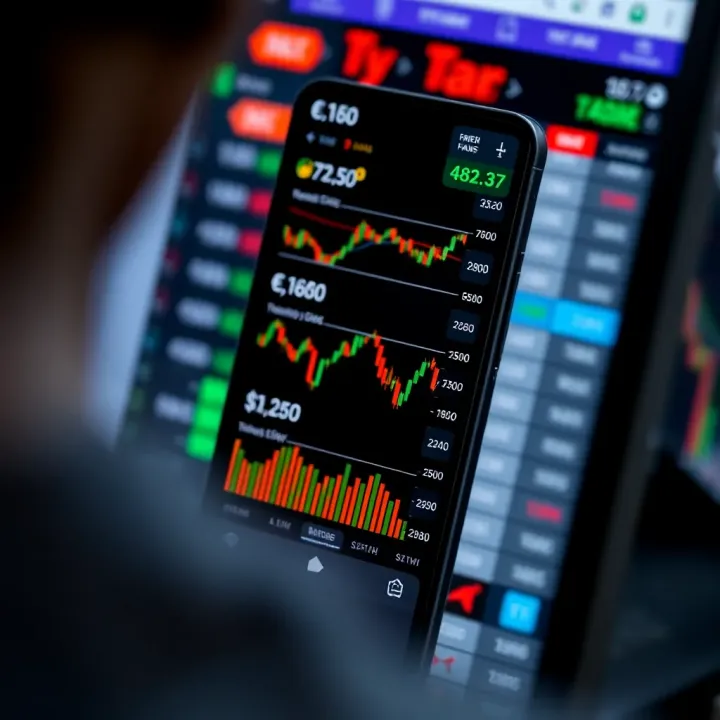
Explore top forex trading apps tailored for Kenyan traders 📱. Learn to choose wisely, ensure security 🔒, and trade confidently in Kenya’s forex market!

📚 Discover essential books for learning forex trading in Kenya! From basics to advanced tips, master strategies and risk management confidently.
Based on 7 reviews