
Forex Binary Trading Guide for Kenyan Traders
📈 Discover how forex binary trading works in Kenya! Learn key strategies, legal tips, and risks to trade smart and stay informed in this volatile market.
Edited By
Benjamin Davies
Forex trading is a 24-hour market that moves with the sun across the globe. Unlike the Kenyan stock market, which has set opening and closing times, forex never really shuts down. Still, knowing when the market is active matters a lot if you want to trade smartly from Kenya.
Trading hours are divided into four main sessions: Sydney, Tokyo, London, and New York. Each session overlaps at times, creating windows with higher trading volumes and volatility. These are the moments when opportunities often arise, but risks can also increase.
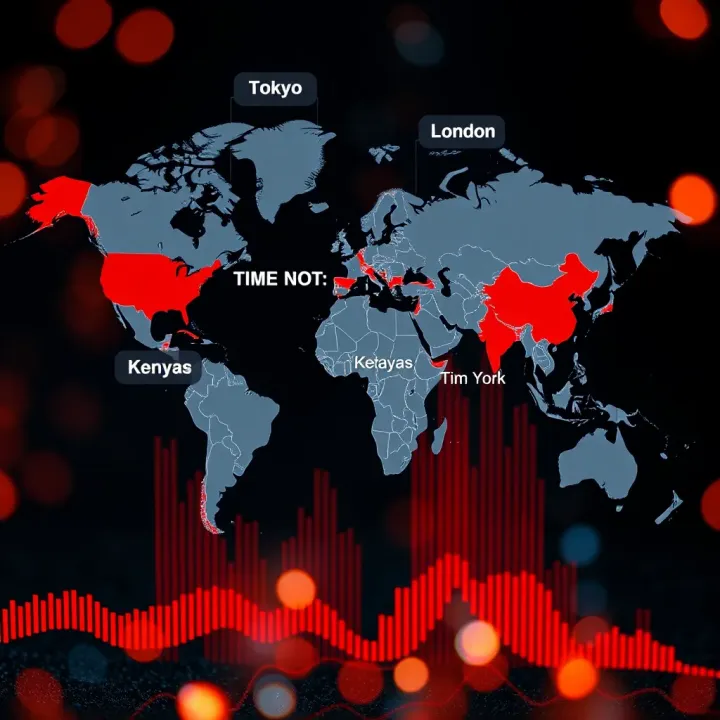
Kenya operates on East Africa Time (EAT), which is UTC+3. This means Kenyan traders must adjust their schedule to the global clock to catch the busiest periods. For example, the London session, which tends to lead price movements, runs from 10 am to 7 pm EAT. The New York session overlaps with London between 3 pm and 7 pm EAT, often creating a flurry of activity.
Understanding these time zones helps you decide when to trade or step back. Trading during overlap hours typically offers better spreads and more liquidity, beneficial for forex trading strategies.
Here’s how the four forex sessions line up with Kenyan time:
Sydney: 12 am to 9 am EAT
Tokyo: 3 am to 12 pm EAT
London: 10 am to 7 pm EAT
New York: 3 pm to 12 am EAT
The London and New York sessions generally show the highest market activity, which means more chances for profit but also faster market moves. Conversely, the Sydney and Tokyo sessions might be quieter and suit slower-paced strategies.
When planning your trades, consider your personal availability and risk tolerance alongside forex hours. Remember, the market’s full cycle repeats every day except weekends and certain holidays where sessions close early or pause.
In short, aligning your trading hours with these sessions, especially the London–New York overlap, can help you capitalise on increased volatility and liquidity. Kenyan traders who schedule their activities accordingly tend to manage their risk better and spot opportunities more clearly.
Understanding how forex trading hours operate is key for Kenyan traders aiming to navigate the market efficiently. Since forex trading involves global finance, markets open and close at different times across continents. Knowing these hours helps traders time their moves to benefit from market fluctuations, avoid low liquidity periods, and manage risks better.
Forex trading runs non-stop during weekdays because of the global time zones involved. While one market closes, another opens elsewhere, creating a nearly continuous trading window. For example, when the Sydney market winds down, Tokyo’s session starts, followed by London and then New York. This cycle provides Kenyan traders the flexibility to find opportunities at various times, unlike traditional stock markets that have fixed opening hours.
This constant operation contrasts sharply with stock exchanges that typically run for about eight hours a day on weekdays. For instance, the Nairobi Securities Exchange (NSE) operates from 9:30 am to 3:00 pm EAT. In forex trading, you can be active before or after NSE hours, allowing for trading even when local exchanges are closed.
Forex markets majorly depend on four financial centres: London, New York, Tokyo, and Sydney. London’s session is usually from 10:00 am to 7:00 pm EAT and is known for heavy trading volume. New York follows roughly 3:00 pm to 12:00 am EAT, overlapping with London for a few hours. Meanwhile, Tokyo opens around 12:00 am and closes at 9:00 am EAT, and Sydney runs from 10:00 pm to 7:00 am EAT.
These sessions matter because different currencies behave uniquely during each period. The London session influences the Euro (EUR), British Pound (GBP), and Swiss Franc (CHF), while the New York session impacts the US Dollar (USD) heavily. A trader focusing on the USD/KES pair might therefore pay close attention to New York and London hours for optimal trading times.
Overlap periods happen when two major sessions are active simultaneously. The London-New York overlap from 3:00 pm to 7:00 pm EAT often shows the highest trading volumes and price moves. For Kenyan traders, this is a golden window where volatility rises, creating more chances for profit but also demanding sharp risk management. In contrast, the Sydney-Tokyo overlap tends to be quieter but still offers steady liquidity.
Knowing when the market opens and closes globally allows you to plan trades around the busiest hours, when spreads narrow and price movements are clearer, improving chances for success.
In summary, grasping the 24-hour market cycle with its main centres and overlaps equips Kenyan traders to trade smarter, avoid low activity pitfalls, and seize better opportunities across time zones.
Understanding forex trading sessions helps Kenyan traders plan their activities around the times when market volatility and liquidity are most favourable. The global market breaks down into three major sessions—Asian, European, and North American—each with their unique characteristics. By aligning trades with these sessions, Kenyan traders can better manage risks and potentially capture the best price movements.
The Asian session kicks off with Tokyo and Hong Kong driving much of the market activity. Tokyo is particularly influential because it is Asia's financial hub, and many currencies linked to Asian economies, such as the Japanese yen (JPY) and the Australian dollar (AUD), show heightened activity during these hours. For a Kenyan trader operating on East Africa Time (EAT), this session runs roughly from 12 am to 9 am.
Hong Kong’s market overlaps with Tokyo’s and adds depth due to the presence of many international banks and trading firms. This influence means that trades involving the Hong Kong dollar (HKD) or Chinese yuan (CNY) can be more active during this period.
During the Asian session, volatility tends to be moderate compared to other sessions but can spike during key economic announcements out of Japan, China, or Australia. Liquidity is generally lower than in the European and North American sessions, which means spreads—the difference between buy and sell prices—may widen.
As a practical example, a trader focusing on the AUD/USD pair might find the best opportunities early in the Asian session when Australian market news is released. Kenyan traders might prefer to avoid placing large trades late in this session because volume tapers towards the end, increasing the risk of sudden price swings.
London's session stands out as the most active forex period globally. It opens around 10 am EAT and runs to about 7 pm EAT. Being the centre for many major bank operations and financial institutions means London's market sees high liquidity and crisp price movements.
Kenyan traders often watch the London session closely because it handles most EUR, GBP, and CHF trading activities. Its dominance means major price trends often begin or develop here, and London's opening often resets market expectations after the quieter Asian hours.
Pairs involving the euro (EUR), British pound (GBP), and Swiss franc (CHF) typically see their highest volume and tightest spreads during this session. For instance, EUR/USD and GBP/USD pairs may experience significant trends in this time, making the London session the go-to period for traders whose strategies depend on volume and volatility.
Moreover, the overlap with the end of the Asian session and later with the start of the North American session creates some of the busiest and most profitable windows for active traders.
The North American session corresponds with the New York market hours, roughly running from 3 pm to 12 am EAT. As the second-largest forex centre, New York heavily influences movements in USD pairs. For Kenyan traders, this session often represents the latter part of their trading day or evening.
Economic releases, such as US jobs reports or Federal Reserve announcements, typically occur during this session and often set the trend for the rest of the 24-hour cycle.
Liquidity in the North American session remains high, particularly in USD-related pairs. Volatility may spike during overlapping hours with London (3 pm to 7 pm EAT), offering Kenyan traders the chance to capitalise on rapid price moves.
Outside of overlaps, volumes can thin out, but key news events can still cause sizeable swings. Understanding these trends helps traders decide when to enter or exit positions, manage stop losses, and capitalise on high-movement periods efficiently.
Pro tip: Kenyan traders often combine session insights with economic calendars to catch the best moves during impactful announcements, making their trading routines more effective and risk-aware.
By grasping the value and timing of these forex sessions, Kenyan traders gain practical tools to navigate the global market better and improve their trading outcomes.
Understanding forex trading hours in East Africa Time (EAT) helps Kenyan traders sync their activities with global market movements. Forex markets operate across different time zones, so converting these to Kenyan time ensures you don't miss key trading opportunities or enter during low activity periods. By knowing when major sessions open and close relative to EAT, you can plan your trades better and manage risks effectively.
Kenya is three hours ahead of GMT, operating on East Africa Time (EAT). This means the forex sessions based in London, New York, Tokyo, and Sydney occur at times that need conversion for Kenyan traders. For instance, the London session typically runs from 10:00 am to 7:00 pm EAT, while the New York session takes place from 3:00 pm to midnight EAT. The Asian sessions such as Tokyo occur late at night to early morning Kenyan time, roughly 12:00 am to 9:00 am EAT.
Time differences are practical knowledge to avoid trading when the market is quiet or highly volatile unexpectedly. For example, if you want to trade the USD/EUR pair when London and New York overlap, you should focus on the 3:00 pm to 7:00 pm window EAT because that's when liquidity and price moves peak.
Adjusting for daylight saving time (DST) abroad is another key factor. Kenya does not observe DST, but countries like the United States and the United Kingdom do. During the Northern Hemisphere's summer months, the New York session shifts one hour earlier relative to EAT, from 2:00 pm to 11:00 pm EAT, and the London session runs from 9:00 am to 6:00 pm EAT. Not adjusting your clock for these shifts can cause missed opportunities or trades during unexpected quiet times.
For a trader based in Nairobi, the best hours to trade are when two major sessions overlap — primarily the London/New York overlap from 3:00 pm to 7:00 pm EAT. This period has the highest trading volume, narrower spreads, and volatile price shifts that present clear opportunities. Another good slot is the early morning from 6:00 am to 9:00 am EAT, which aligns with the end of the Asian session and the start of the European session.
Balancing trading with daily routines is crucial for consistency in forex. Since the market is open 24 hours, you could be tempted to trade at odd hours. However, setting a trading schedule that suits your lifestyle, such as focusing on the afternoon overlap session or early mornings, helps manage fatigue and decision-making quality. For those with day jobs or studies, trading during these peak times means you don’t have to sacrifice rest or other commitments.
Aligning your trades with Kenyan time and global market hours enhances your chances of success and reduces the risk of trading during illiquid or volatile periods.
Timezone conversions matter: Nairobi is EAT, which is GMT+3.
DST adjustments: Keep track of UK and US daylight saving shifts.
Prime trading windows: 3:00 pm–7:00 pm EAT and 6:00 am–9:00 am EAT.
Being aware of these elements will help you trade smarter, not harder.
Choosing the right time to trade forex is essential if you want to boost your chances of making a profit. Different periods in the 24-hour market have varying volumes, liquidity, and volatility. Kenyan traders, in particular, must understand how their local time fits into these global trading rhythms to plan sensible strategies that suit their routines and risk appetite.
Higher trading volumes usually mean tighter spreads. This happens because more buyers and sellers are active, making it easier to execute trades at better prices. For example, during the London-New York overlap period, forex pairs like EUR/USD or GBP/USD often have lower spreads. This favours Kenyan traders by reducing transaction costs and increasing the chances of entering and exiting trades without significant price slippage.
Moreover, high volume tends to bring better price stability and more predictable movement. For instance, sharp swings caused by thin trading in quiet hours are less common when volumes rise. As a result, trading during high-volume hours gives you a clearer picture of market direction and reduces the risk of sudden, unexpected price jumps.
Kenyan traders operate on East Africa Time (EAT), which closely aligns with the London session in the mornings and the New York session in the afternoon. The overlap between these two sessions, roughly from 3 pm to 7 pm EAT, is the busiest time globally. Currency pairs like USD/KES, EUR/USD, and GBP/USD see heightened activity, providing ample trading opportunities.
Traders should target these overlapping hours for better liquidity and tighter spreads. This is when news announcements from Europe and the US often hit the market, causing notable price movements. On the flip side, the Sydney-Tokyo overlap offers less volume but can be useful for those who prefer quieter market phases to test strategies or trade less volatile pairs like AUD/USD or USD/JPY.
Trading during low liquidity hours, typically when major markets are closed or transitioning, can be risky. In EAT terms, this is often late night to early morning, around midnight to 5 am. During these times, fewer traders are active, which widens spreads and increases slippage. For Kenyan traders, this means paying more to enter or exit trades, and price execution might be less reliable.
Less liquidity also makes the market more sensitive to even small orders, causing exaggerated price moves. This unpredictability can hit stop losses prematurely or trap traders with false breakouts. Savvy traders often avoid these times unless they have a specific strategy designed to exploit low-volume volatility.
Price gaps occur when the market opens with a sudden jump in price, skipping some levels altogether. These often happen after weekends or holidays when there’s no trading activity and new information builds up. Kenyan traders might notice gaps forming early Monday mornings or following major news when the Asian session opens.
Gaps carry risk because they can lead to unexpected losses if a stop loss is skipped or limit orders are not filled at expected prices. Managing this means keeping an eye on the calendar for major events and avoiding holding positions during vulnerable periods. Using alerts and adjusting trade sizes can help mitigate the impact of sudden gaps.
Tip: Align your trading schedule with high-volume hours overlapping your local time. This keeps spreads low and improves trade execution, while steering clear of thin-market hours reduces risk and costly surprises.
By understanding when the forex market is most active and when it slows down, you can plan smarter trades that fit your lifestyle in Nairobi and beyond. The key is to trade when the market offers the best chance for favourable prices and stay cautious during quiet or volatile times.
Managing forex trades across various trading sessions requires a clear understanding of how each session behaves and affects market dynamics. Knowing when to trade and when to pause can significantly improve your chances of making profits while limiting losses. For Kenyan traders, this means aligning trading strategies with session characteristics and adjusting risks according to market activity.
Aligning strategies with session characteristics is about recognising the unique behaviour of each forex trading session and tailoring your approach accordingly. For example, during the London session, major currencies like the British pound and euro often experience high volatility, offering good opportunities for short-term trades. In contrast, the Asian session tends to be quieter, so breakout strategies may be less effective. A practical approach could be focusing on trend-following during London and New York sessions while preferring range-bound strategies for the Asian session.
Adjusting risk based on market activity means varying your exposure depending on the typical market movement of each session. When volatility is high, such as during the overlap between London and New York sessions, traders might reduce their position sizes to manage risk better or set tighter stop losses. Conversely, in low liquidity periods like late New York or early Asian sessions, it's wise to avoid large positions as price gaps and erratic moves are more common. Kenyan traders could, for example, avoid placing new trades late at night (EAT) when market activity slows down globally.
Trading platforms with session timers have become invaluable for forex traders. Platforms like MetaTrader 4 and 5 clearly show session openings and closings, helping traders schedule their entries and exits around these times. This visual aid reduces guesswork and helps maintain discipline. For Kenyan traders juggling work or studies, seeing exactly when sessions begin can guide effective time management.
Mobile apps and alerts provide another layer of convenience. Apps such as TradingView or Forex Factory offer real-time notifications about session starts, market news, and volatility spikes. Kenyan traders who are often on the move can set alerts to avoid missing important market openings or overlapping periods characterised by increased trading opportunities. Using such tools ensures you stay connected without needing to sit in front of the screen all day.
Being aware of different forex sessions and using tools to monitor market hours enables Kenyan traders to plan smarter, manage risks, and capitalise on the most active market windows.
📈 Discover how forex binary trading works in Kenya! Learn key strategies, legal tips, and risks to trade smart and stay informed in this volatile market.

📈 Discover top forex trading classes in Kenya! Learn market basics, choose the right course, and navigate legal tips for smarter trading success.

Explore how forex brokers operate in Kenya 🇰🇪, what to look for, trader-friendly platforms, fees 💰, regulations 📜, and smart risk management tips.

Explore top forex trading apps in Kenya 📱, compare features, security ✅, and learn how to start trading while navigating local regulations and risks.
Based on 5 reviews