

Forex Trading Basics for Kenyan Traders
Learn forex trading basics in Kenya 💹. Understand market structure, key terms, strategies, risk management & legal tips to trade confidently.
Edited By
Henry Dawson
Forex trading can seem like a tough puzzle to crack, especially when you encounter jargon like "pips," "leverage," or "spread." For Kenyan traders, understanding these terms isn’t just helpful—it’s essential for making smart decisions in a fast-moving market.
This section breaks down the most common forex trading terms you’ll come across. By knowing what these words mean and how they impact your trades, you’ll be better positioned to manage risks and spot opportunities.
Getting a solid grasp of forex vocabulary is like having a reliable map before starting a journey—it guides your moves and helps avoid costly mistakes.
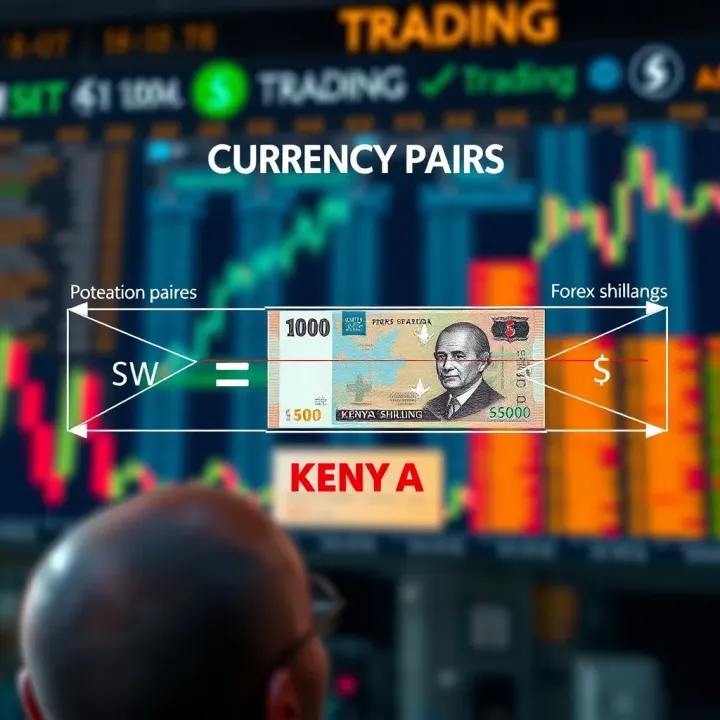
Forex trading always involves two currencies, known as a currency pair. For example, when you see USD/KES, it means you’re trading the US Dollar against the Kenyan Shilling. The first currency (USD) is the base currency, and the second (KES) is the quote currency. If USD/KES is quoted at 115, it means one US Dollar costs 115 Kenyan Shillings.
A pip is the smallest price movement in a currency pair, usually equivalent to 0.0001 for most pairs. So, if USD/KES moves from 115.0000 to 115.0100, it has moved by 100 pips. Understanding pips helps you calculate your profit or loss with precision.
The spread is the difference between the buying (ask) price and selling (bid) price. It’s basically the broker’s fee. For instance, if USD/KES has a bid price of 115.00 and an ask price of 115.05, the spread is 5 pips. Narrow spreads usually mean better trading conditions.
Leverage lets you control a large position using a smaller amount of your own money. For example, with 1:100 leverage, putting down KS,000 lets you trade KS00,000 worth of currency. It can increase gains but also magnifies losses, so Kenyan traders should use it carefully.
A “lot” is the standardized amount of currency you buy or sell. A standard lot is 100,000 units of the base currency. Smaller lots like mini (10,000 units) and micro (1,000 units) allow you to trade with less capital.
Knowing these core terms sets the stage for understanding forex trading better. In the next sections, we will explore more advanced concepts with practical examples tailored for Kenyan traders.
Grasping the basics in forex trading is crucial, especially if you want to trade effectively and avoid costly mistakes. In Kenya, where currencies from East Africa and international markets intersect, knowing the basics like currency pairs, pips, and lot sizes gives you a solid foundation. For example, understanding how the Kenyan shilling (KES) pairs with the US dollar (USD) helps you see how local and global factors influence your trades.
When you see a currency pair like USD/KES, the first currency, USD, is the base currency and the second, KES, is the quote currency. The price quoted shows how much of the quote currency you need to buy one unit of the base currency. So, if USD/KES is trading at 115, it means one US dollar costs 115 Kenyan shillings. Knowing this helps you understand what you gain or lose when the price moves.
This distinction is practical during trading because it tells you which currency you are buying and which one you are selling. For Kenyan traders, keeping track of such pairs helps decide when to enter or exit trades based on economic events affecting either currency.
Major pairs include the most traded currencies globally, such as EUR/USD, USD/JPY, and GBP/USD. These pairs tend to have lower spreads and better liquidity, which means you can trade them more easily with less cost.
Minor pairs don’t involve the US dollar but include other major currencies, like EUR/GBP or AUD/NZD. Exotic pairs combine a major currency with that of an emerging or smaller economy, such as USD/ZAR (South African rand) or EUR/TRY (Turkish lira).
For Kenyan traders, exotic pairs like USD/KES might have wider spreads and more volatile price swings, which affects trading costs and risks. Choosing which pairs to trade depends on your strategy, risk appetite, and the market conditions.
A pip is the smallest price change you typically see in a currency pair. For most pairs, one pip equals 0.0001 of the price. For example, if USD/KES moves from 115.0000 to 115.0001, that’s one pip. Pipettes are even smaller fractions, down to one-tenth of a pip (0.00001).
Understanding pips lets you measure your profits or losses accurately. Suppose you buy USD/KES at 115.0000 and sell at 115.0500. That’s a movement of 500 pips. Knowing this helps you calculate your gain in Kenyan shillings, depending on your trade size.
Forex trading does not happen in single units; instead, you trade in lots. A standard lot is 100,000 units of the base currency. Mini lots are 10,000 units, and micro lots are 1,000 units.
For beginners or those with smaller capital, micro or mini lots make more sense because they limit exposure. For instance, trading a standard lot on USD/KES at 115 means you’re controlling KSh 11,500,000, which can be quite risky. Starting with micro lots helps you manage risk better while learning the ropes.
Knowing these basic terms in forex trading helps Kenyan traders make better decisions, manage risks, and approach the market with confidence. Whether you are trading USD/KES, EUR/USD, or other pairs, these foundations are what guide your trading journey.
Understanding key trading metrics and concepts is vital for anyone seeking success in forex trading. These elements not only affect how trades are executed but also influence profitability and risk management. For Kenyan traders especially, grasping terms like spread, commission, leverage, margin, bid, and ask prices helps navigate the dynamic forex market more confidently.
The spread refers to the difference between the bid price (what buyers are willing to pay) and the ask price (what sellers want) of a currency pair. In practical terms, the spread represents the cost of entering a trade. For example, USD/KES might have a spread of 3 pips, meaning you immediately start with a slight loss as the market must move in your favour to break even.
Many brokers also charge a commission per trade, usually a fixed amount or a percentage of the trade size. This commission is on top of the spread. Kenyan traders should carefully compare brokers’ spreads and commissions, as these costs eat into profits, especially for those trading frequently or using small lot sizes.
Leverage allows traders to control a larger position with a smaller amount of actual funds. For instance, if you have KSh 10,000 and trade with 1:100 leverage, you can control a position worth KSh 1,000,000. This magnifies both potential profits and losses.
Leverage is attractive as it lowers the capital needed to enter the market. However, it must be used wisely. Kenyan traders using high leverage can experience big swings in their accounts, sometimes wiping out balances quickly if the market moves against them.
Margin is the amount of money you need to keep in your trading account to maintain leveraged positions. If your losses approach the margin you put up, the broker may issue a margin call, requiring you to add more funds or close some positions.
In Kenya, where forex is often traded online through platforms like MetaTrader, margin calls happen automatically. Ignoring these warnings can lead to forced closure of positions, locking in losses. Understanding this risk encourages traders to use leverage conservatively and always keep a buffer in their accounts to avoid liquidation.
The bid price is the highest price a buyer is willing to pay for a currency, while the ask price is the lowest price a seller will accept. The difference between the two is the spread, as explained earlier.
For Kenyan traders who watch forex charts online or use apps, recognising bid and ask prices helps interpret market activity accurately. For example, when selling a currency pair, you receive the bid price, and when buying, you pay the ask price. This quick understanding lets you spot market trends and decide when to enter or exit trades effectively.
Tip: Keep an eye on spreads during Kenyan market hours, especially if trading USD/KES or EUR/USD, since spreads may widen during low liquidity periods, increasing trading costs.
By mastering these trading metrics and concepts, you can manage your forex trades better, reducing costs and avoiding unnecessary risks. These basics build a strong foundation for making informed decisions in the tough but rewarding world of forex trading.
Understanding the types of orders and how they are executed is fundamental for every forex trader, especially in Kenya where market conditions can change swiftly. Orders dictate how and when your trades enter or exit the market, impacting your risk and potential profit. Proper use of different order types allows you to take advantage of market movements without constantly watching the charts.
A market order is the simplest type, where your trade executes immediately at the current market price. This suits traders seeking instant entries or exits, for example when reacting to a sudden news event affecting the US dollar or euro. However, market prices can shift quickly, leading to some slippage — a slightly different execution price than expected.
Pending orders, by contrast, let you set a specific price at which you want the trade to open later. This removes the pressure of monitoring the screen constantly. There are two main types:
Limit Orders
Stop Orders
A limit order allows you to buy or sell at a better price than the current market. For example, suppose the EUR/USD pair is trading at 1.0860 but you believe it will dip to 1.0800 before strengthening. You set a buy limit order at 1.0800. If the price falls there, your order will execute, ensuring a cheaper entry than if you bought at market price.
This order suits traders who want to enter or exit at a target price, avoiding premature trades. Kenyan traders often use limit orders when waiting for retracements after major economic reports from the US or Europe.
Stop orders trigger once the price moves to a specified level, usually to capture momentum or cut losses. If you anticipate a breakout above 1.0900 in EUR/USD, a buy stop order here will activate only after the price rises past that point, helping you join the trend.
Conversely, a sell stop order might sit below current price, activating to sell if price falls, commonly used as a risk management tool. For instance, you could place a stop sell order at 1.0700 to limit losses if the market turns against your position.
Stop loss and take profit orders are protective tools that automatically close trades at specified prices to manage risk and secure profits.
Stop Loss: Closes a trade if the market moves against you, capping potential losses. For example, if you buy USD/KES at 110 and want to limit loss to KSh 500, you set a stop loss at 109.50.
Take Profit: Closes a trade once it has reached a desired profit level, locking in gains before the market reverses.
Kenyan traders should always use these tools to guard against sudden forex swings, especially given the volatility around events such as CBK’s interest rate decisions.
There are two main methods of executing orders in forex trading:
Instant Execution: Your order fills immediately at the quoted price or it’s rejected if price changes. This method is straightforward but may not fill during high volatility.
Market Execution: The trade executes at the best available price, which can differ slightly from the quoted price. It’s useful when prices move fast, such as during US market open.
Choosing the right execution method affects your trading strategy and the likelihood of slippage or order rejection. Kenyan traders often prefer market execution for fast-moving pairs like USD/JPY and instant execution for more stable pairs like EUR/GBP.
Mastering order types and execution methods helps you trade smarter, not harder. With the right orders, you can trade confidently knowing your entry, exit, and risk are under control even when you are away from your device.
By understanding these concepts, Kenyan traders can better navigate the volatile forex market and protect their investments effectively.
Market analysis terms give Kenyan forex traders the tools to read the market properly and make better trading decisions. These terms help you understand why prices move, spot opportunities, and manage risks smartly. Without grasping market analysis, trading is like driving blind in Nairobi traffic—it’s risky and unpredictable.
Economic indicators are data points that show the health of a country’s economy, influencing its currency value. For example, Kenya’s GDP growth rate or inflation figures can impact the Kenyan shilling. If inflation rises sharply, the Central Bank of Kenya (CBK) might increase interest rates to stabilise prices, which usually strengthens the shilling against other currencies.
Traders watch indicators like employment rates, trade balances, and consumer confidence in various countries they trade currencies from. These numbers give clues about future currency movements. For instance, if the US releases strong employment data, the US dollar may gain strength, affecting forex pairs like USD/KES.
Central banks control monetary policy, mainly through setting interest rates. The CBK’s decision to raise or lower rates directly affects forex markets. Higher interest rates attract foreign investors seeking better returns, boosting the currency’s demand.
For Kenyan traders, following rate changes from the CBK, the US Federal Reserve, or the European Central Bank is essential because these decisions shift currency values. For example, if the Federal Reserve signals a rate hike, the dollar often strengthens, which can impact Kenyan traders holding USD pairs.
Support and resistance levels mark price points where currencies tend to stop moving lower or higher, respectively. Imagine the shilling falling to 110 KES/USD several times but failing to go lower; this level acts as support.
Traders use these levels to decide when to enter or exit trades. Buying near support or selling near resistance can improve chances of profit. In Nairobi’s forex community, recognising strong support and resistance avoids entering trades that might quickly reverse.
Trend lines connect significant highs or lows to show the market’s direction. An upward trend line for USD/KES means money is flowing into the dollar, which traders can use to follow the market momentum.
Candlestick patterns offer visual cues about market sentiment in a short timeframe. For example, a "hammer" pattern after a downtrend can suggest a price bounce. Kenyan traders using local platforms like FXPesa or AvaTrade Kenya often rely on these signals to time their trades effectively.
Market sentiment reflects how traders collectively feel—whether optimistic or fearful. Tracking sentiment helps foresee price swings. For example, political uncertainty in Kenya before elections can raise fear, leading to forex volatility.
Volatility measures how much prices swing over time. High volatility means bigger risks but also bigger opportunities. Kenyan traders should watch volatility to decide position sizes and when to avoid the market, like during major announcements or unstable periods.
Understanding market analysis terms sharpens your edge. It’s not enough to know the words but to read what the market is telling you through data, charts, and trader mood. This knowledge guides better timing, risk control, and profit-taking in forex trading.
Managing risk and understanding the psychological side of trading are as critical as knowing the market itself. In forex trading, especially for Kenyan traders, controlling losses and handling emotions can make the difference between consistency and frequent losses. Good risk management protects your capital, allowing you to trade another day, while solid trading psychology helps you stick to your plan even when the market moves unexpectedly.
The risk-reward ratio compares the potential loss in a trade to the possible gain. For example, if you're willing to lose KSh 1,000 to make KSh 3,000, your risk-reward ratio is 1:3. Kenyan traders often overlook this when chasing quick profits but keeping it in mind helps you pick trades that offer favourable returns relative to the risk. A common approach is to only enter trades where the reward is at least twice the risk, so even if you lose some trades, overall profits can still build up.
Position sizing refers to how much of your trading capital you put into a single trade, while exposure is your total risk across open trades. Suppose you have KSh 100,000 in your trading account; risking 2% per trade means you would risk just KSh 2,000 on any one trade. This limits potential losses and prevents a bad run from wiping out your account. Proper position sizing also considers leverage use—overleveraging can expose you to bigger losses than your account can handle.
Fear and greed are the most common emotions that affect traders worldwide. Fear might stop you exiting a losing trade because you hope the market will turn, leading to bigger losses. Greed, on the other hand, might push you to ignore your exit plan as you chase bigger profits, risking your capital unnecessarily. In practice, controlling these urges can mean the difference between a disciplined trader and one who suffers repeated setbacks. For instance, a Kenyan trader might hold on to a USD/KES position too long after a sudden drop, hoping it recovers instead of cutting losses promptly.
Discipline means sticking to your trading plan, including how much risk you take and when you enter or exit trades. Without discipline, impulsive decisions often lead to losses. Patience complements discipline by allowing a trader to wait for clear trading signals rather than rushing into the market due to FOMO (fear of missing out). For example, a disciplined trader in Nairobi might wait for the EUR/USD to break a confirmed resistance level before opening a position, rather than jumping in on a hunch.
Balancing risk management with strong trading psychology creates a foundation for sustainable trading, especially in volatile markets like forex where emotions can lead to costly mistakes.
By mastering these aspects, Kenyan traders can trade more confidently, protect their capital, and avoid common psychological traps that many beginners fall into.
Learn forex trading basics in Kenya 💹. Understand market structure, key terms, strategies, risk management & legal tips to trade confidently.

📘 Discover essential forex trading tips from top books tailored for Kenyan traders. Learn strategies, risk management, and psychology to boost your success!
Learn smart forex risk management strategies tailored for Kenyan traders 🇰🇪. Protect your capital and boost your trading results with practical, easy-to-follow tips.
🤖 Explore how bot forex trading works in Kenya, uncover benefits & risks, plus tips for choosing reliable bots and managing automated trades wisely.
Based on 14 reviews